

The layout of Petrified Forest reminds me of the way Yellowstone is – essentially one main road that, if you follow it in one direction, you’ll see all of the main things it has to offer. It makes it so simple, and it’s so helpful in a place where cell signal is mostly absent.
The Crystal Forest is a 0.8 mile loop on an asphalt-paved trail, around some cool logs and stumps, with tons of beautiful desert views.
There are signs at all of the traiheads in Petrified Forest that remind you to be in your car by 5:30pm because the park closes before sunset.

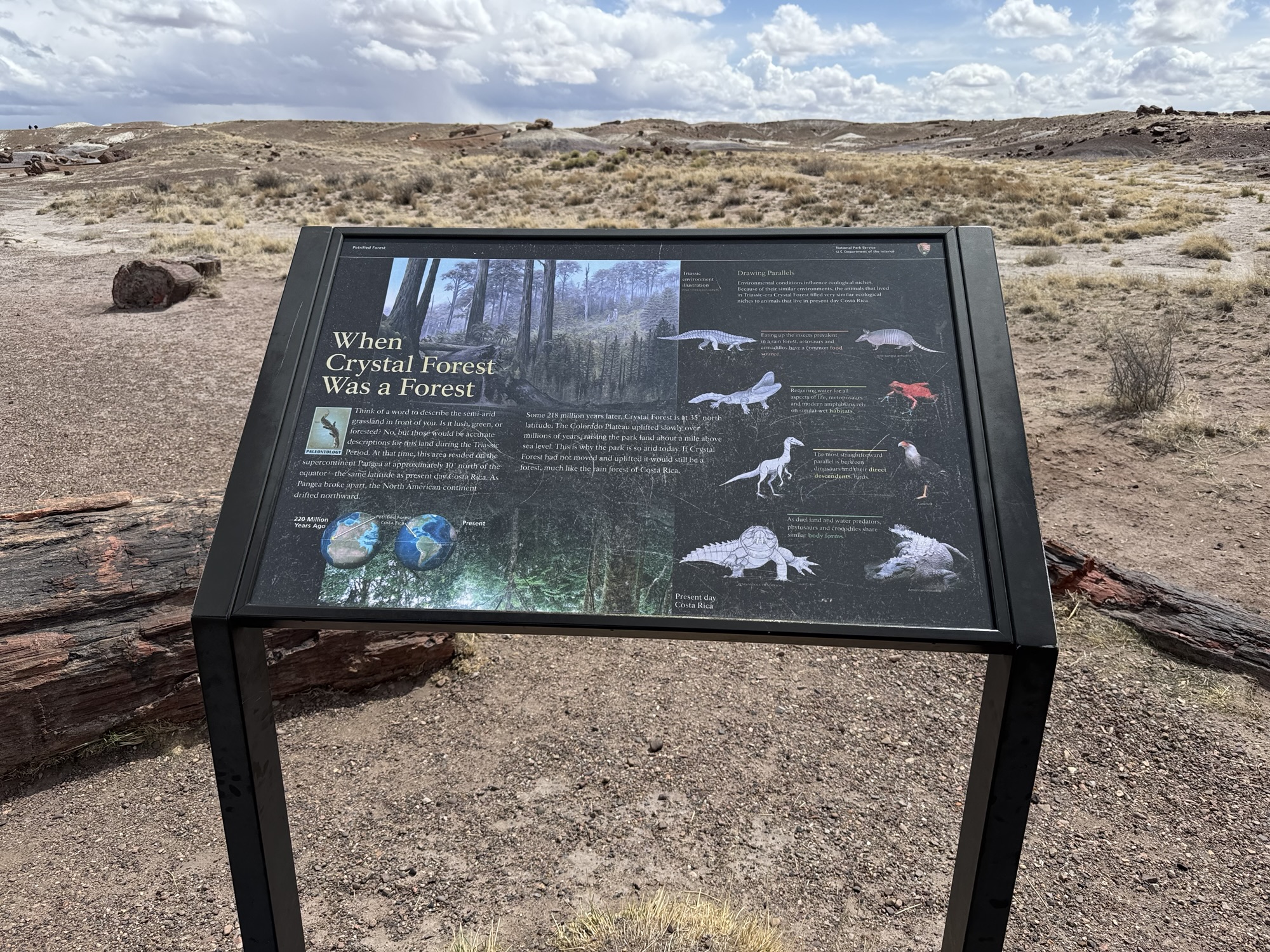
The signs mostly focus on the interaction this place had with dinosaurs. It’s so hard to wrap your head around the fact that they were here too.
The black one above says this:
“When Crystal Forest was a forest – Think of a word to describe the semi-arid grassland in front of you. Is it lush, green, or forested? No, but those would be accurate descriptions for this land during the Triassic Period. At that time, this area resided on the super-continent Pangea at approximately 10 degrees north of the equator – the same latitude as present day Costa Rica. As Pangea broke apart, the North American continent drifted northward.
Some 218 million years later, Crystal Forest is at 35 degrees north latitude. The Colorado Plateau uplifted slowly over millions of years, raising the park land about a mile above sea level. This is why the park is so arid today. If Crystal Forest had not moved and uplifted, it would still be a forest, much like the rain forest of Costa Rica.”
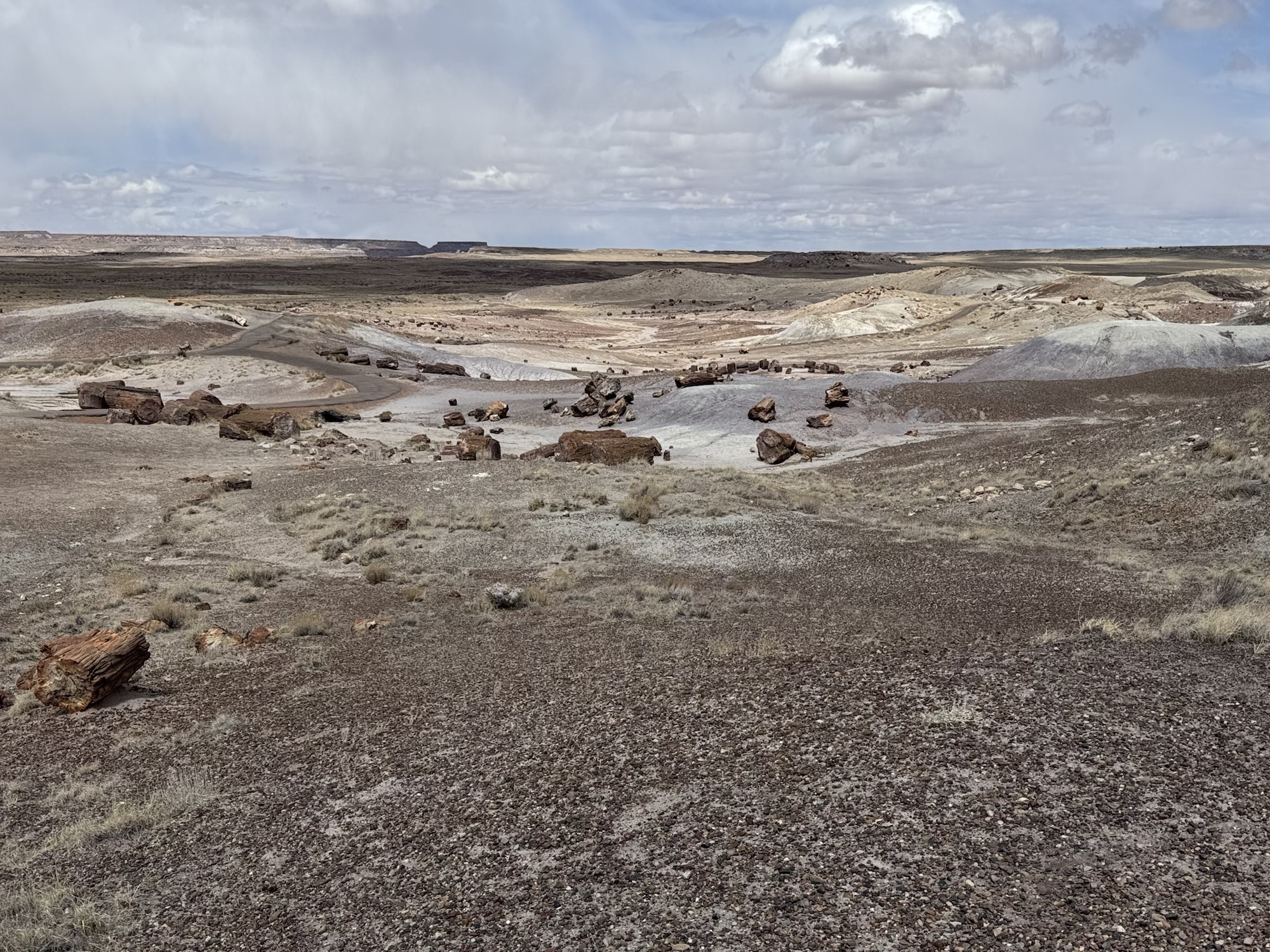
Overall, this is yet another of Petrified Forest’s really awesome (and quick) places to visit for the pretty views and pretty rocks. It does get HOT because of having absolutely no shade whatsoever, even when it’s technically “cold” outside. The sun here is wild.
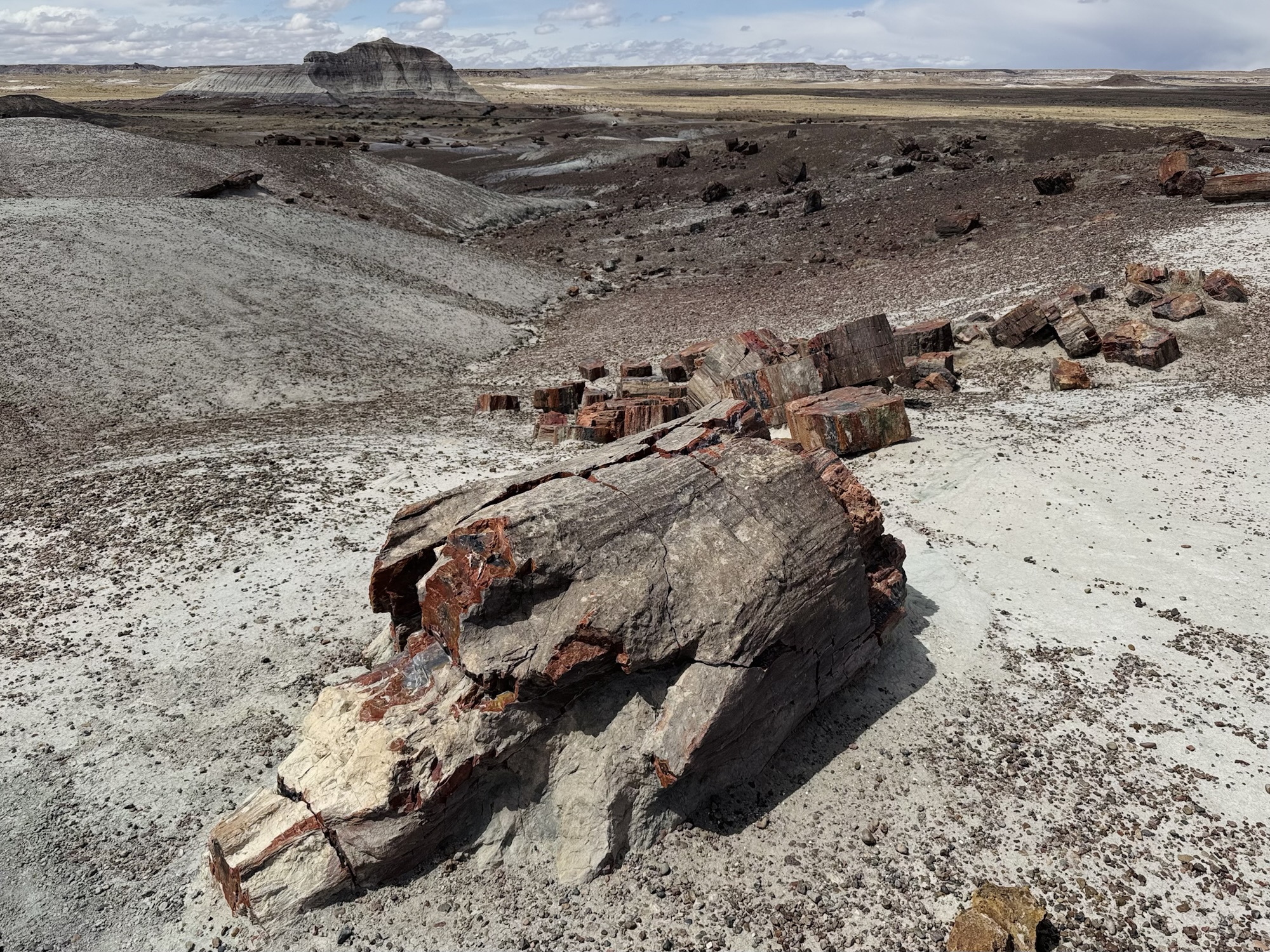
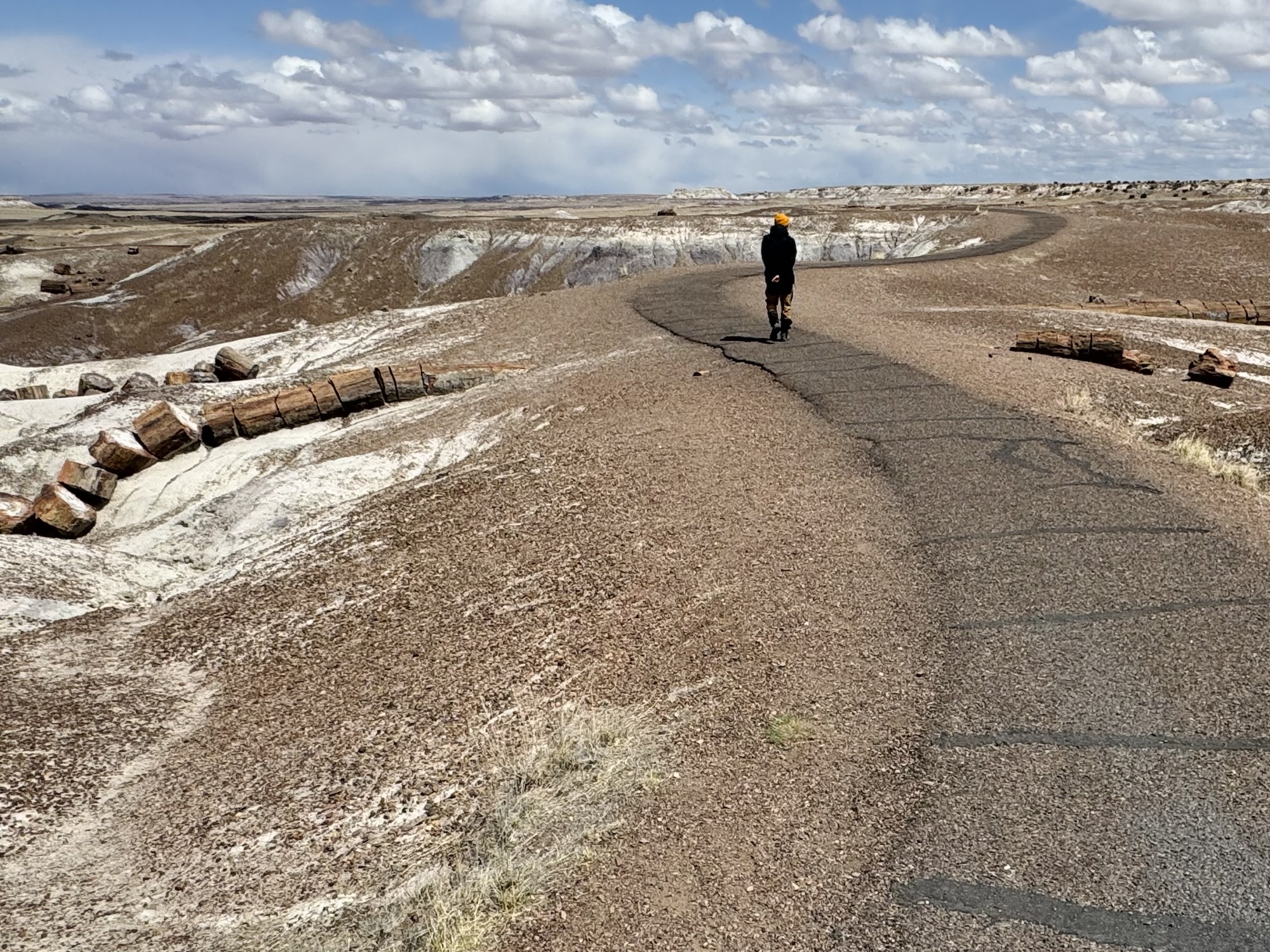
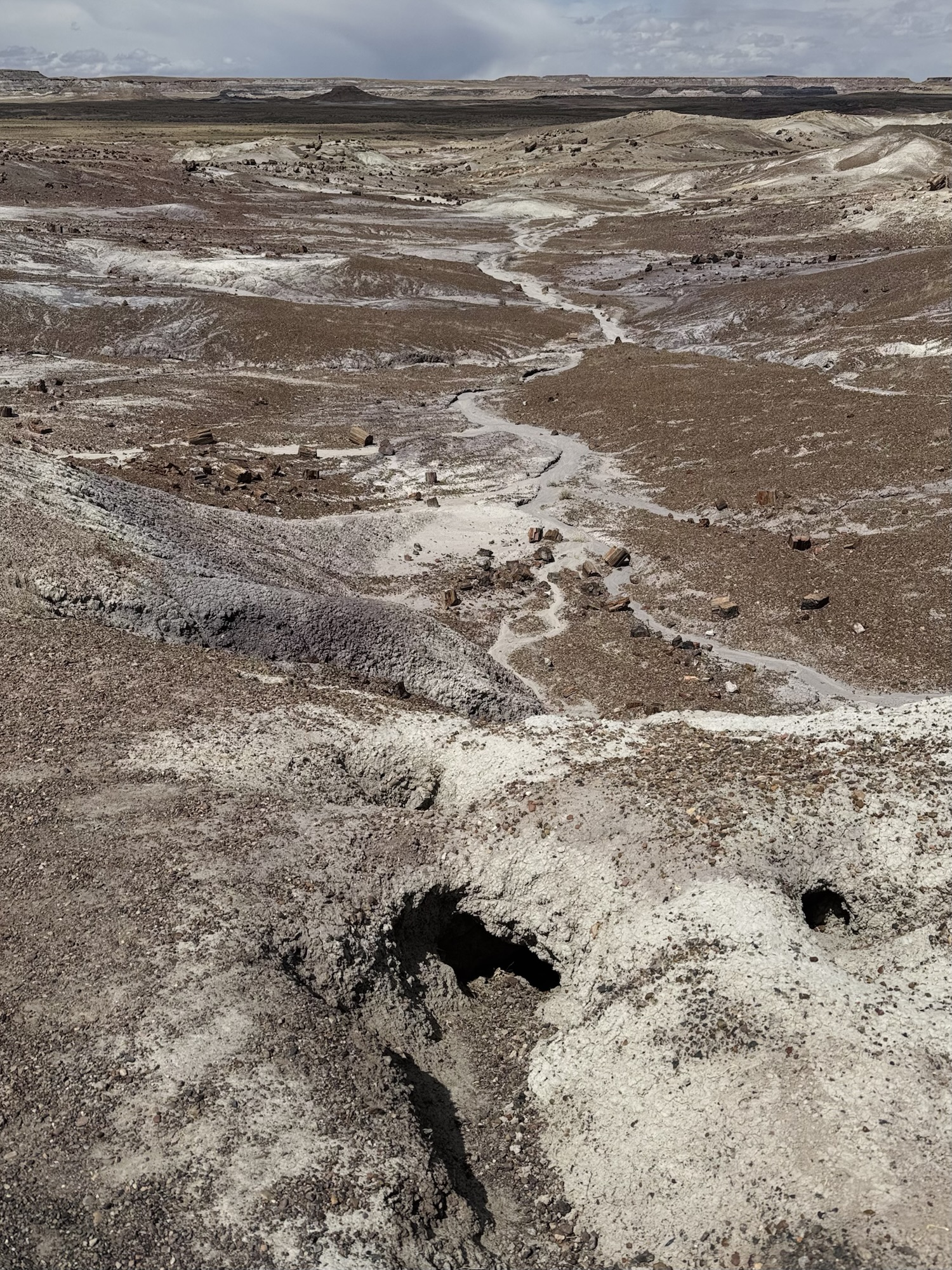
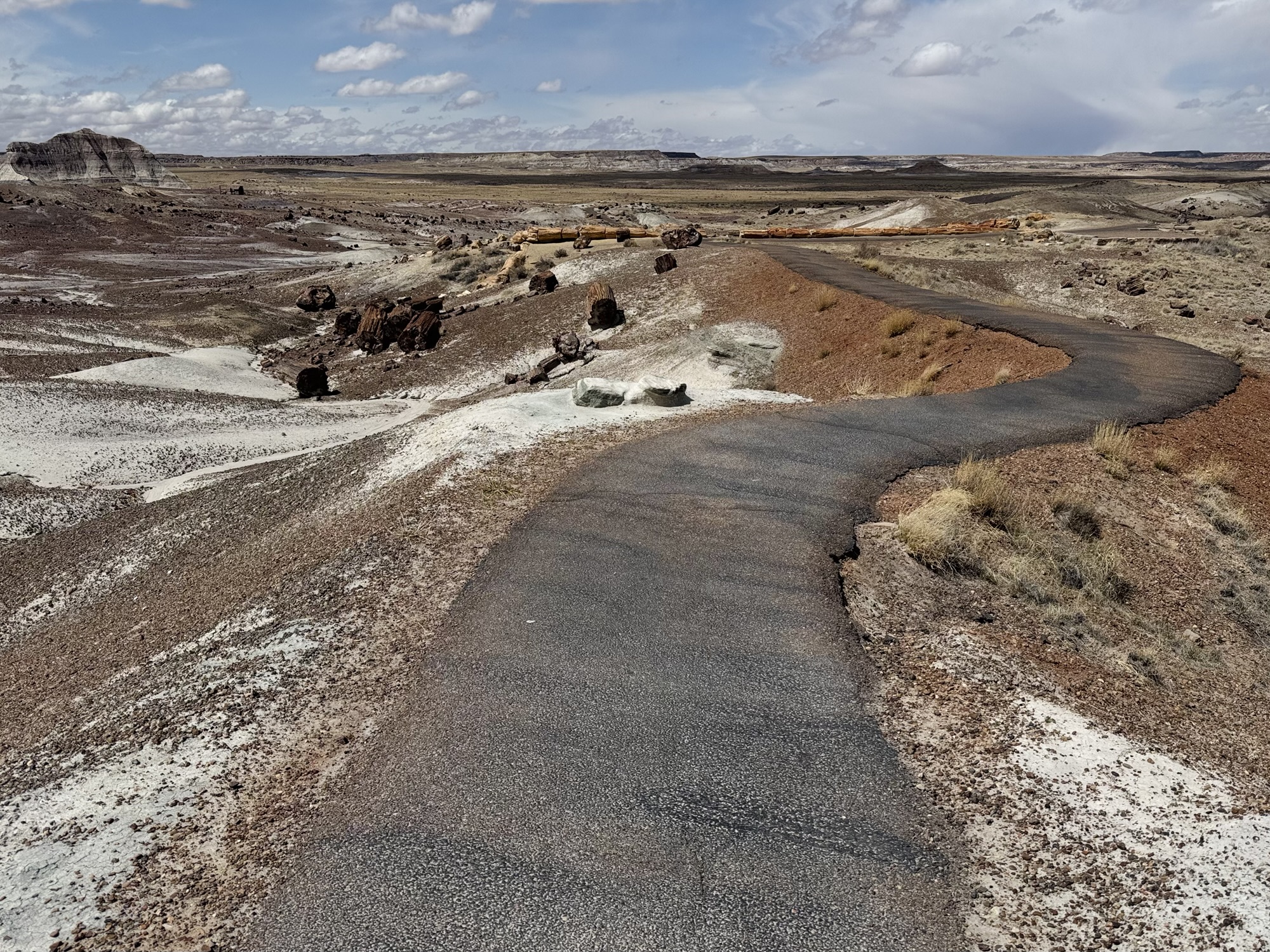
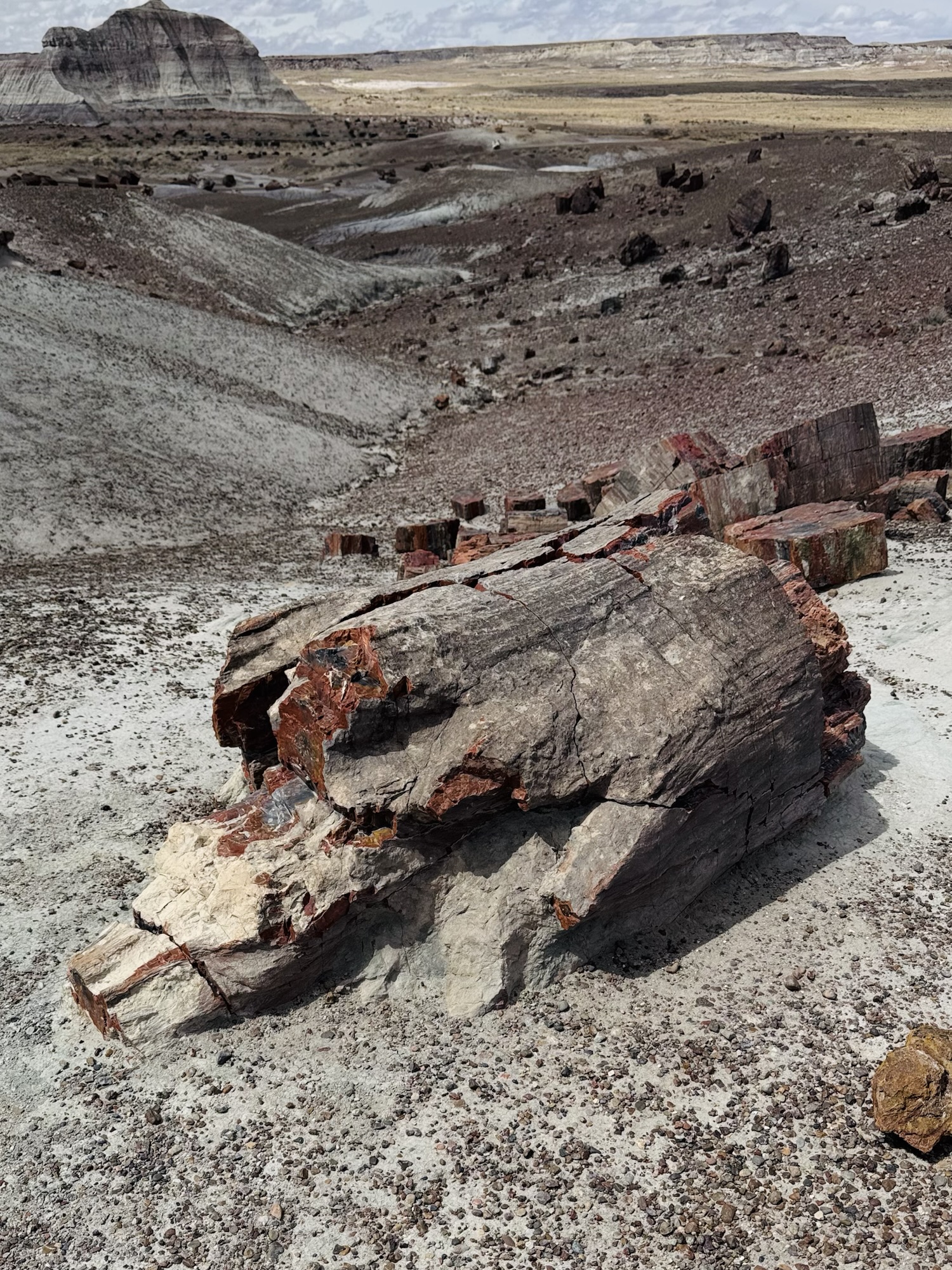
See that super super long orangey one in the background? I was still having issues mentally understanding that these logs are not wood at all, so when I saw this one I was like – see? Wood!

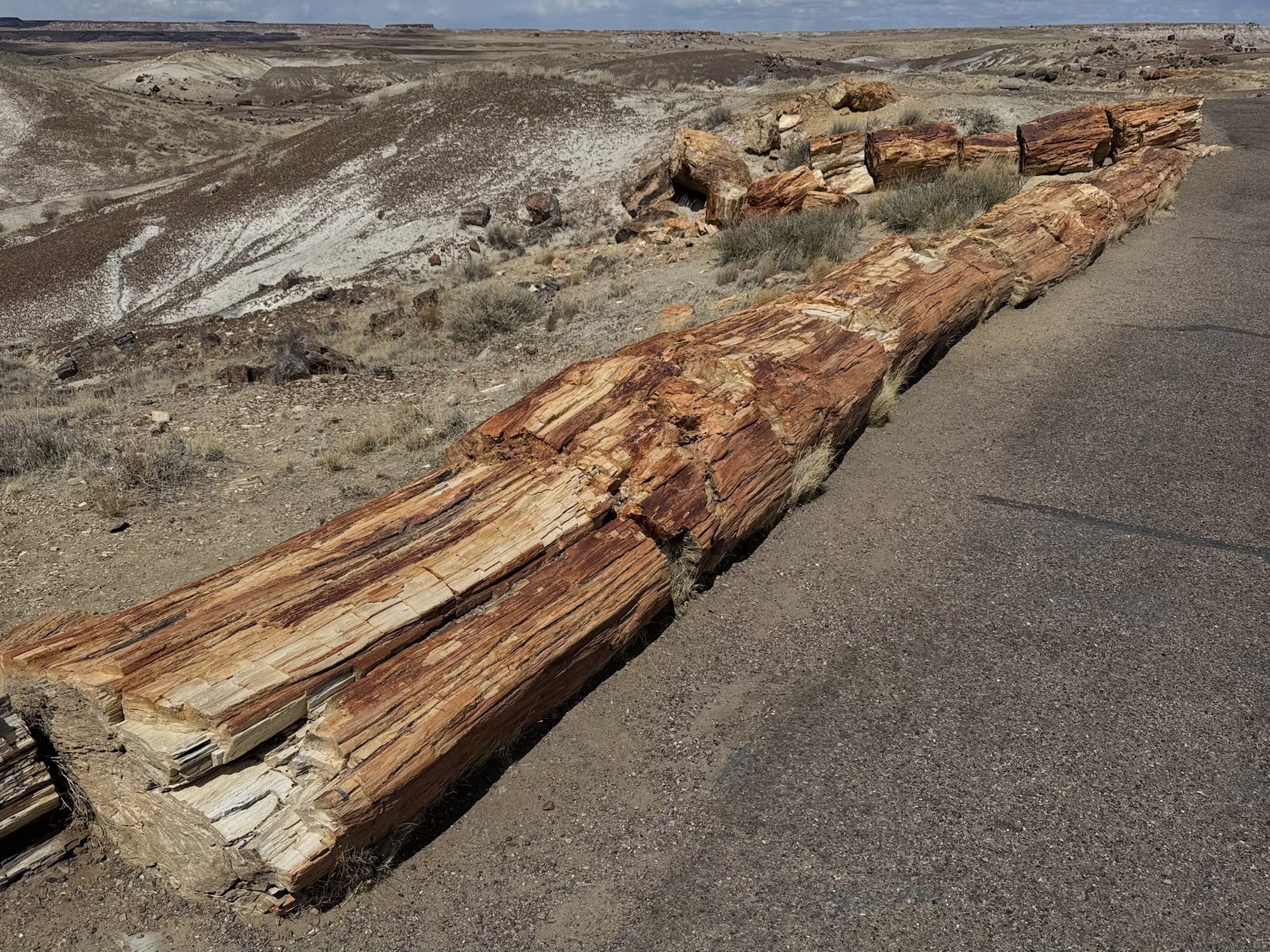
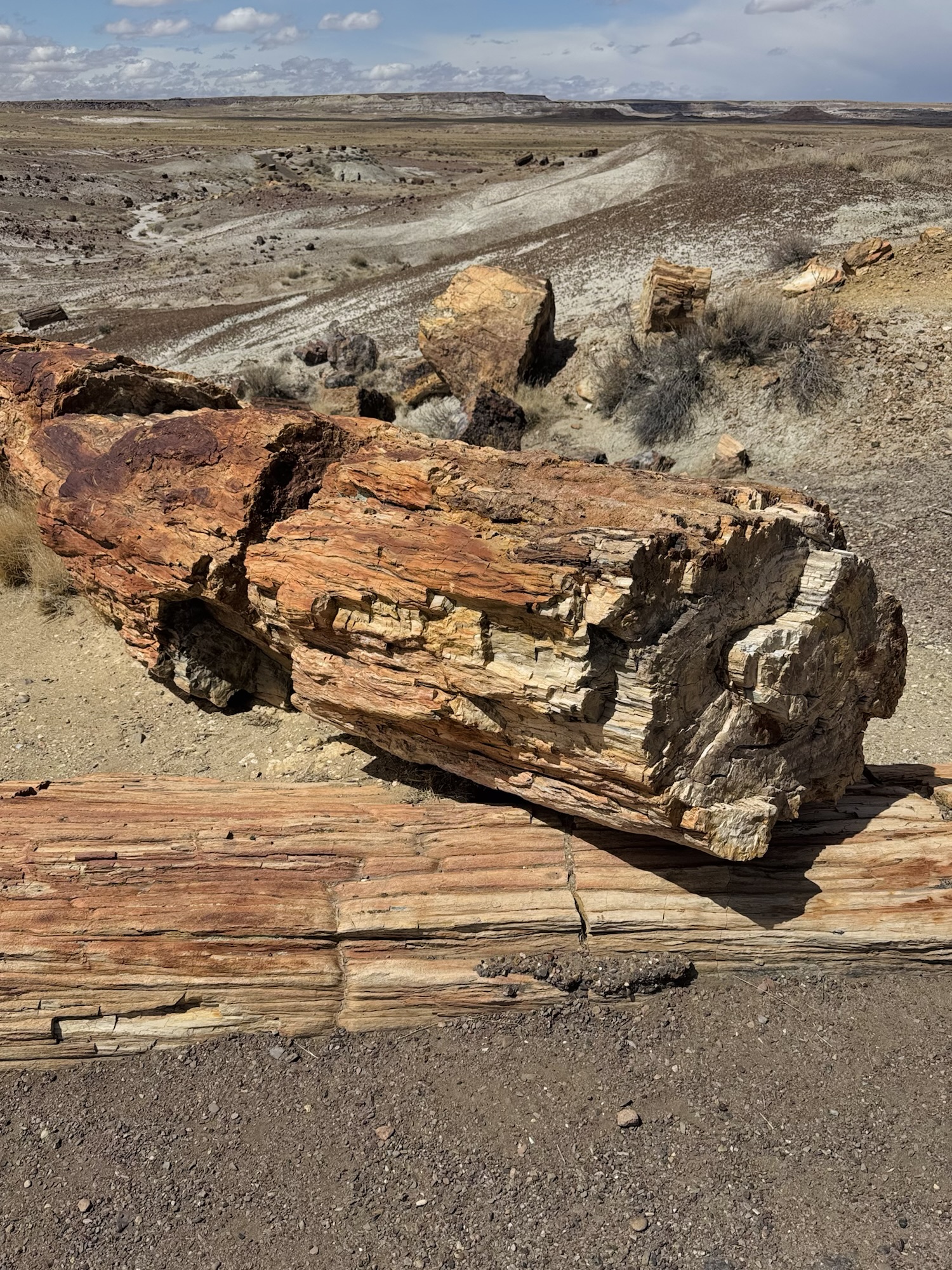
Sike, still totally quartz gemstone.
It’s amazing to see the agatized tree rings.

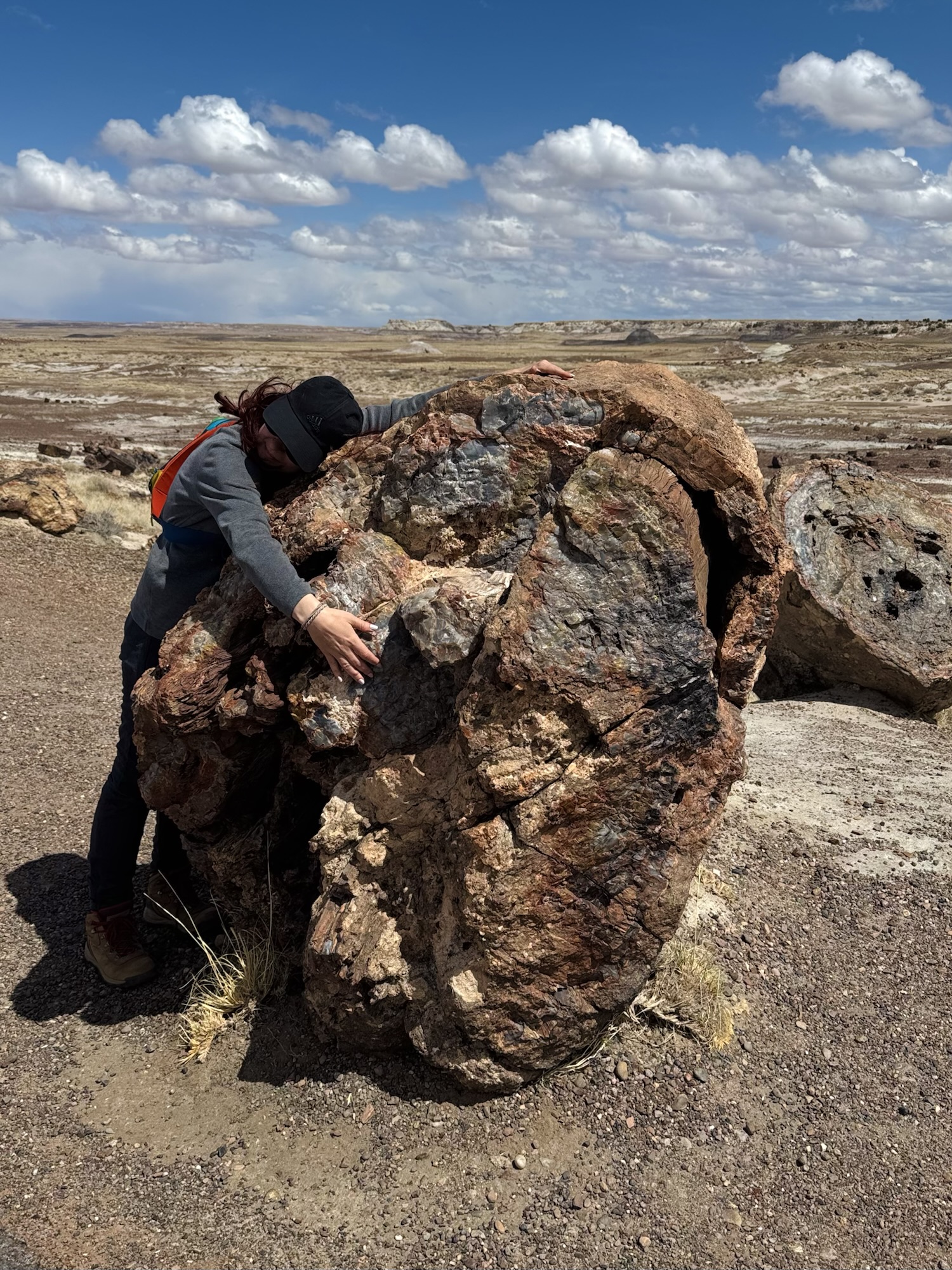
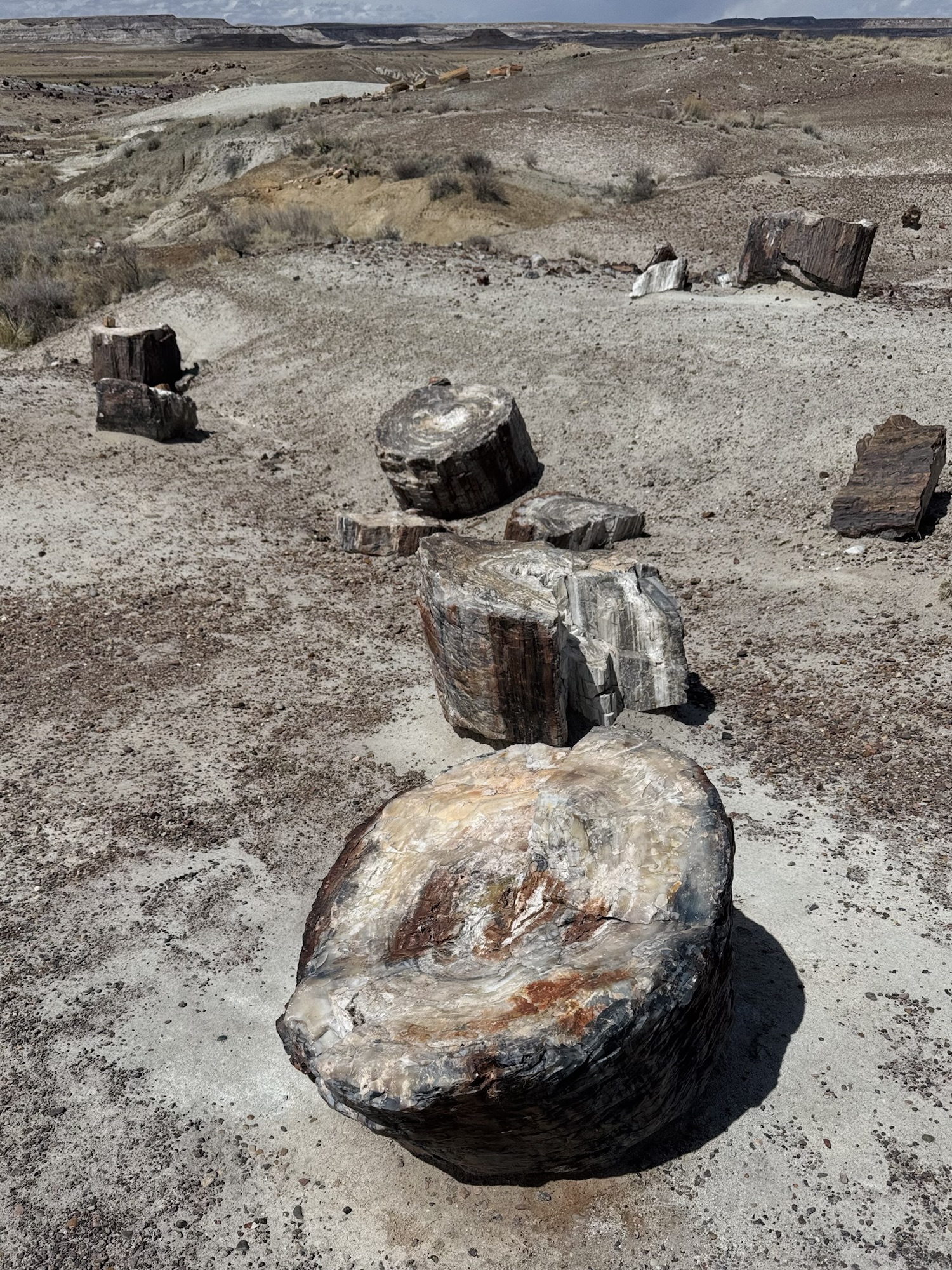


The only shade for this area is at the beginning/end of the loop, under this pavilion where you can overlook the entire Crystal Forest area (the tiny stumps in the background are so cool!) and learn more about how everything here formed.
So if it’s super hot, or if you’re low on time, but still want to experience this area, I suggest just walking up to this shaded area, talking it all in, going back to the parking lot, and heading outta there. The 0.8 loop took us probably 20-30 minutes I’d say?
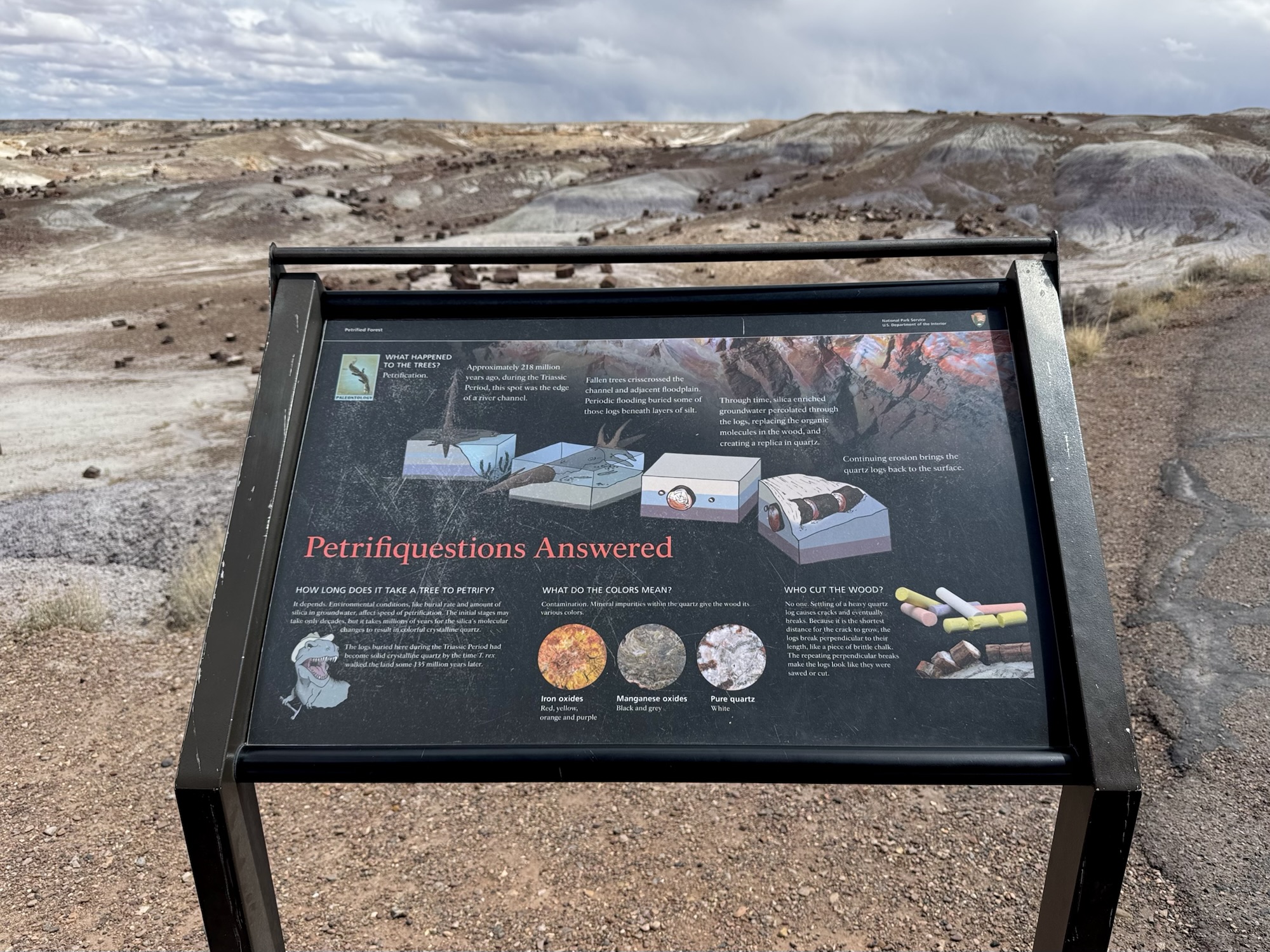
Here’s what this guy says:
“Petrifiquestions Answered –
What happened to the trees?
Petrification. Approximately 218 million years ago, during the Triassic Period, this spot was the edge of a river channel. Fallen trees crisscrossed the channel and adjacent floodplain. Periodic flooding buried some of those logs beneath layers of silt. Through time, silica enriched groundwater percolated through the logs, replacing the organic molecules in the wood, and creating a replica in quartz. Continuing erosion brings the quartz logs to the surface.
How long does it take a tree to petrify?
It depends. Environmental conditions, like burial rate and amount of silica in groundwater, affect speed of petrification. The initial stages may take only decades, but it takes millions of years for the silica’s molecular changes to result in colorful crystalline quartz. The log buried here during the Triassic Period had become solid crystalline quartz by the time T.rex walked the land some 135 million years later.
What do the colors mean?
Contamination. Mineral impurities within the wuartz give the wood its various colors.
Iron oxides: Red, yellow, orange, and purple.
Manganese oxides: Black and grey.
Pure quartz: White.
Who cut the wood?
No one. Settling of a heavy quartz log causes cracks and eventually breaks. Because it is the shortest distance for the crack to grow, the logs break perpendicular to their length, like a piece of brittle chalk. The repeating perpendicular breaks make the logs look like they were sawed or cut.
Too cool. See how much you miss if you don’t read these pesky little things?
The next tiny stop after Crystal Forest was the Agate Bridge.
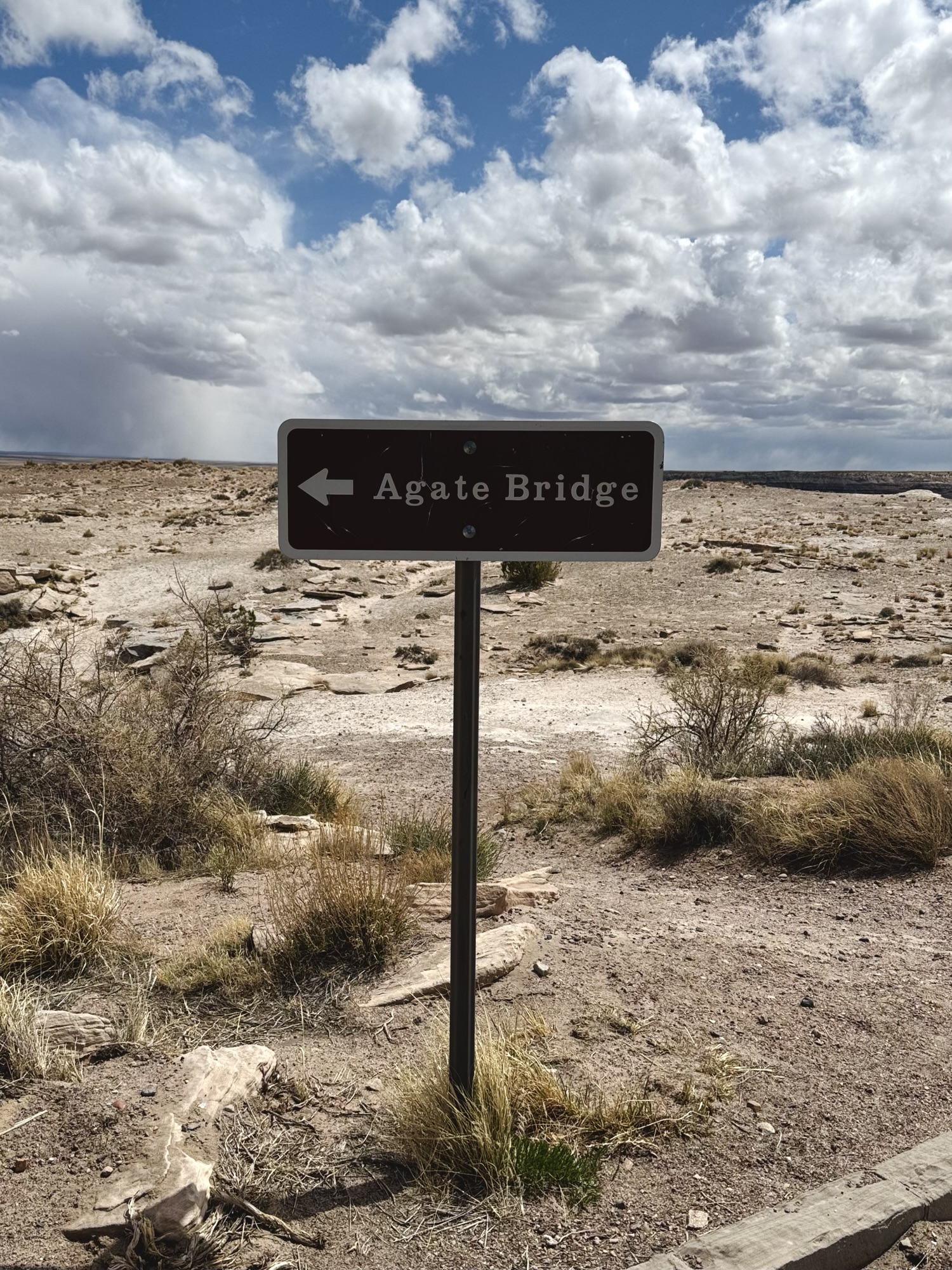
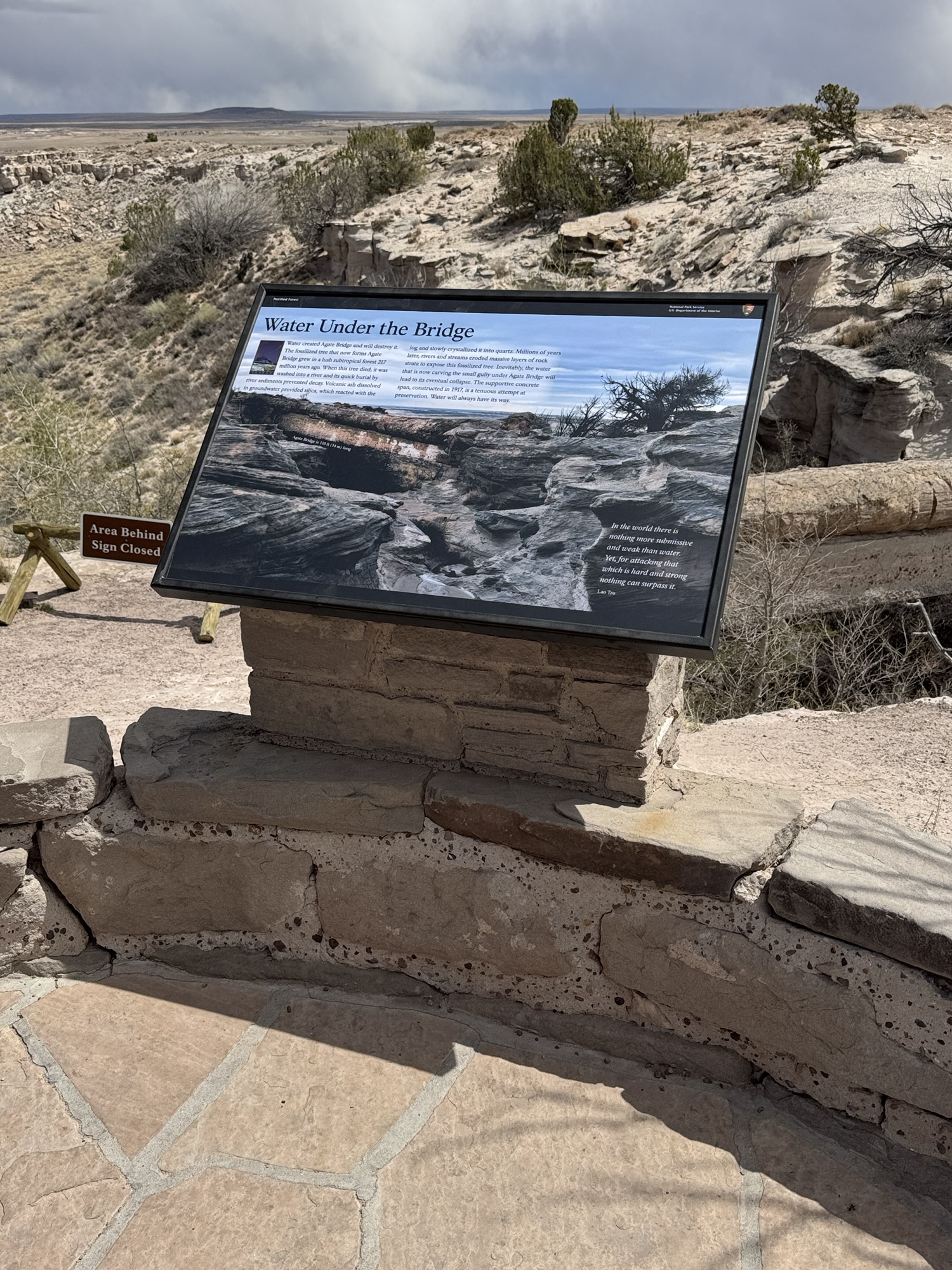
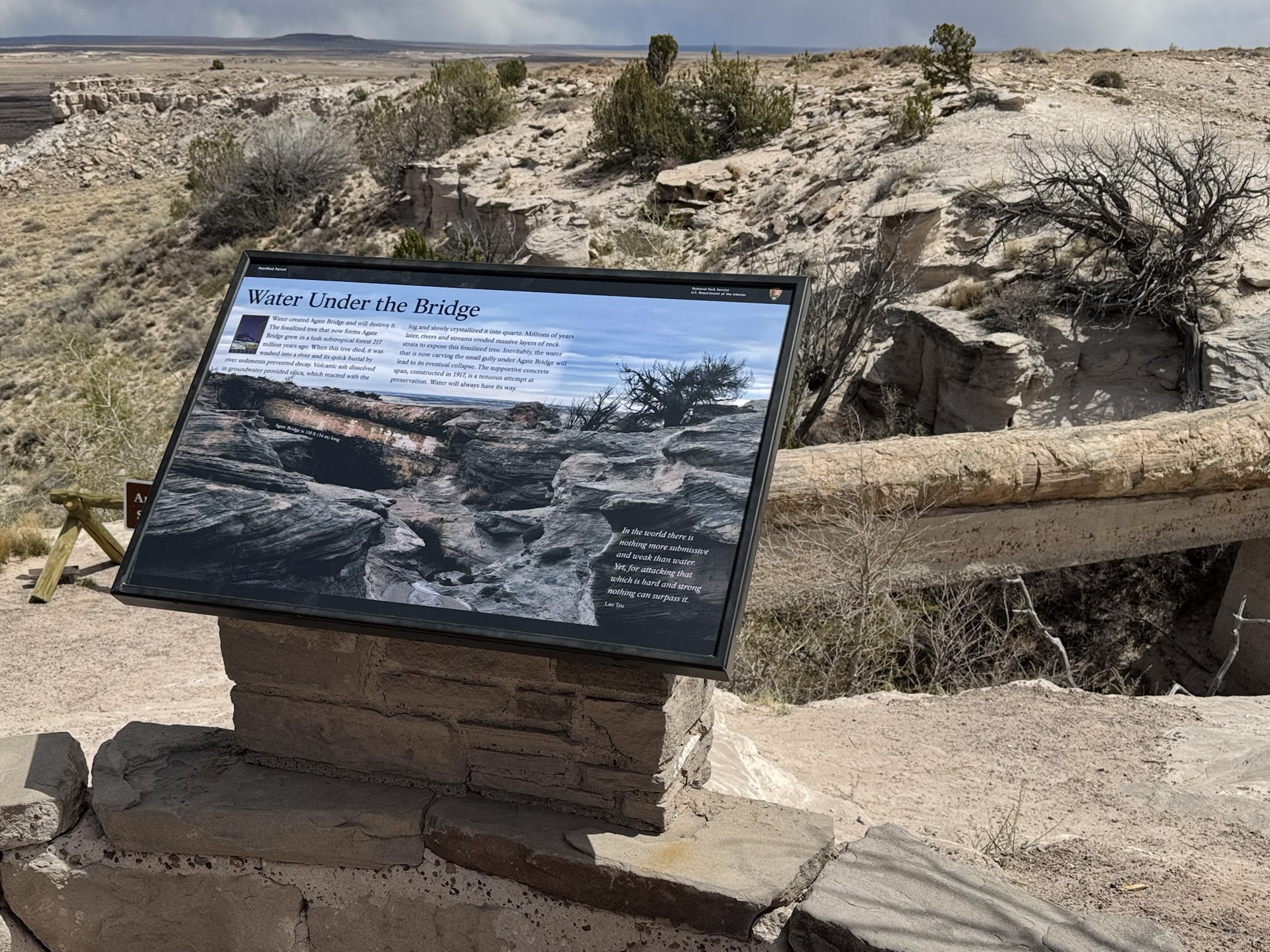
There’s a relatively small parking lot for this one, it takes like five seconds to visit. You walk down a short side walk and under a shaded brick structure with information, then out to this overlook.
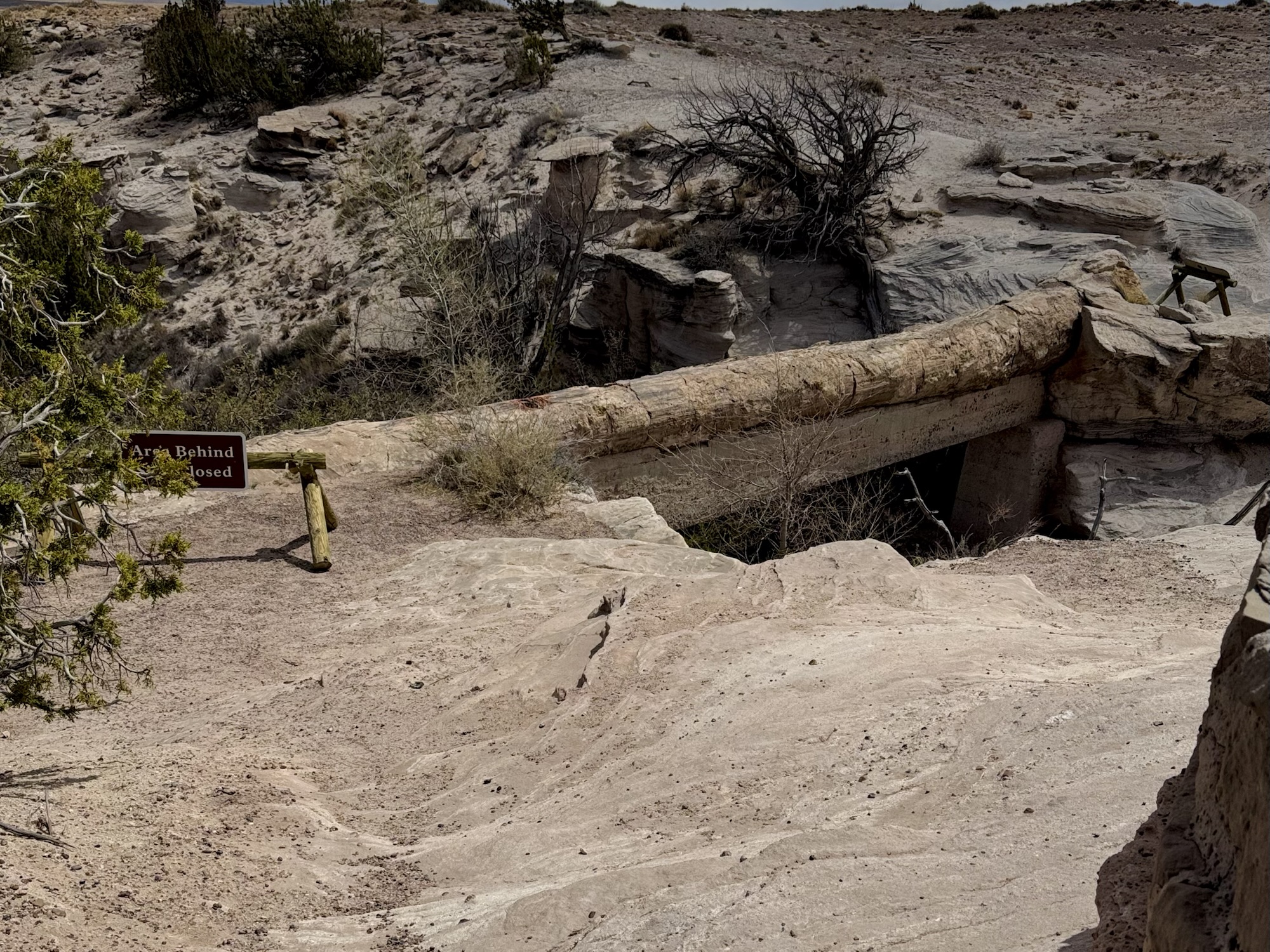
This one’s exactly how it sounds: a petrified log that became a natural bridge. The park service supports the petrified log underneath so it won’t collapse further.
The log itself is closed, but it seems like it the past people were able to walk across it. How cool would that have been?
Here’s what it’s sign says:
“Water created Agate Bridge and will destroy it. The fossilized tree that now forms Agate Bridge grew in a lush subtropical forest 217 million years ago. When this tree died, it was washed into a river and its quick burial by river sediments prevented decay. Volcanic ash dissolved in groundwater provided silica, which reacted with the log and slowly crystallized it into quartz.
Millions of years later, rivers and streams eroded massive layers of rock stara to expose this fossilized tree. Inevitabily, the water that is now carving the small gully under Agate Bridge will lead to its eventual collapse. The supportive concrete span, constructed in 1917, is a tenuous attempt at preservation. Water will always have it’s way.”
Next up: Blue Mesaaaa! One of my favorite-favorites.

Crystal Forest loop trail via AllTrails:
https://www.alltrails.com/trail/us/arizona/crystal-forest-trail
More about Petrified Forest via the National Park Service:
https://www.nps.gov/pefo/index.htm


 Caitlyn is outside.
Leave a comment