
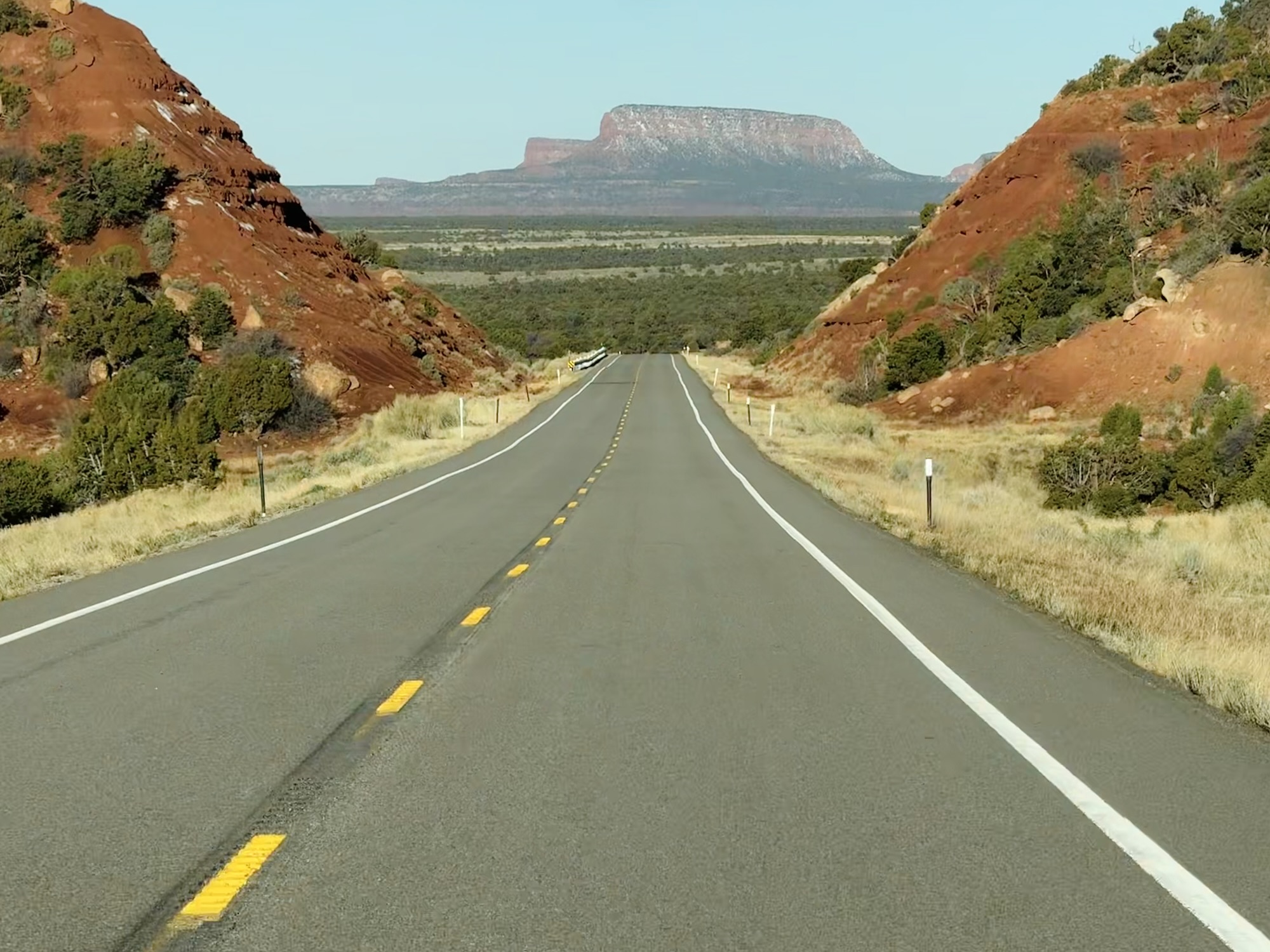
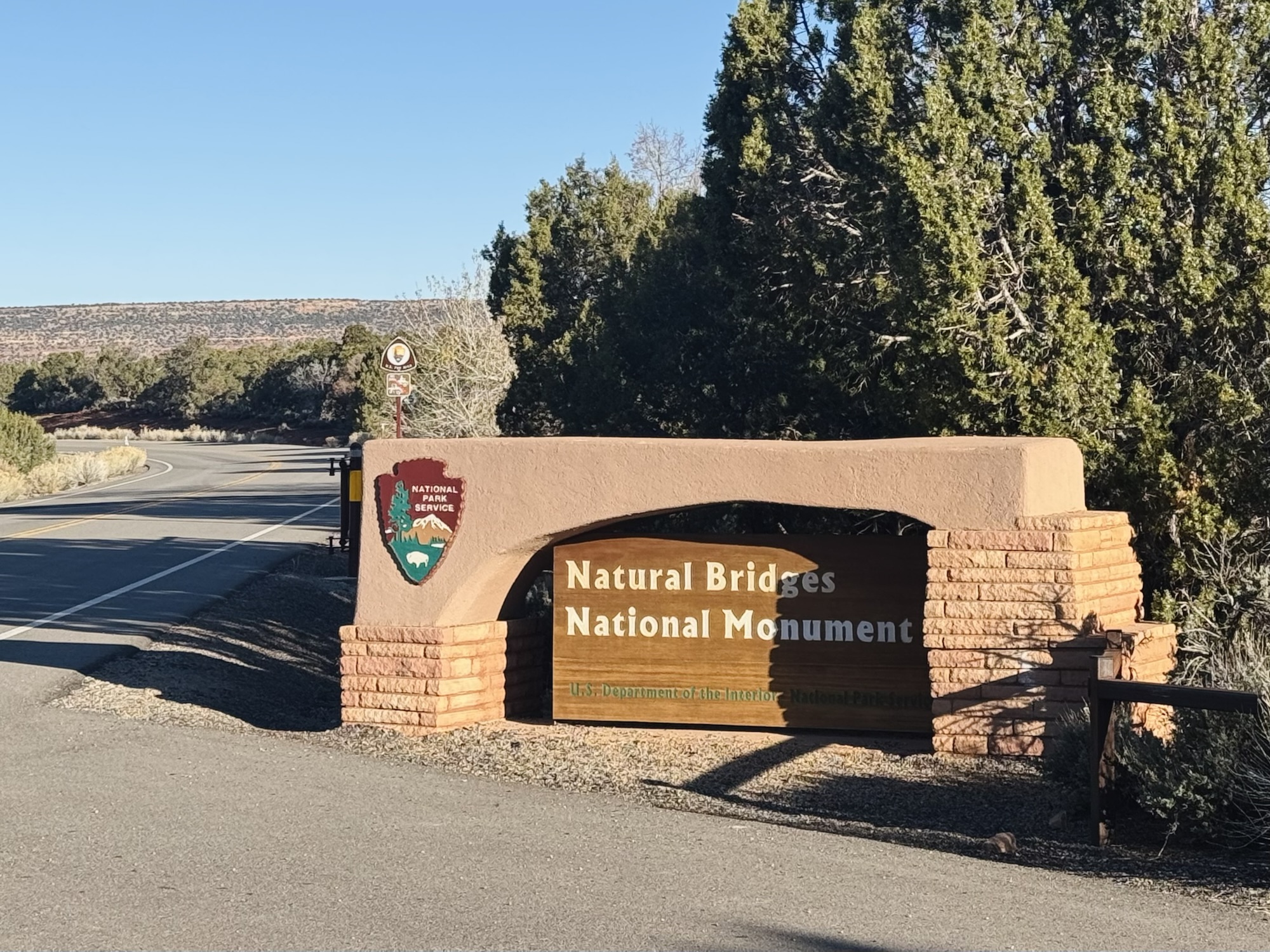
Natural Bridges National Monument is Utah’s first National Monument. It was designated in 1908. How cool is that?
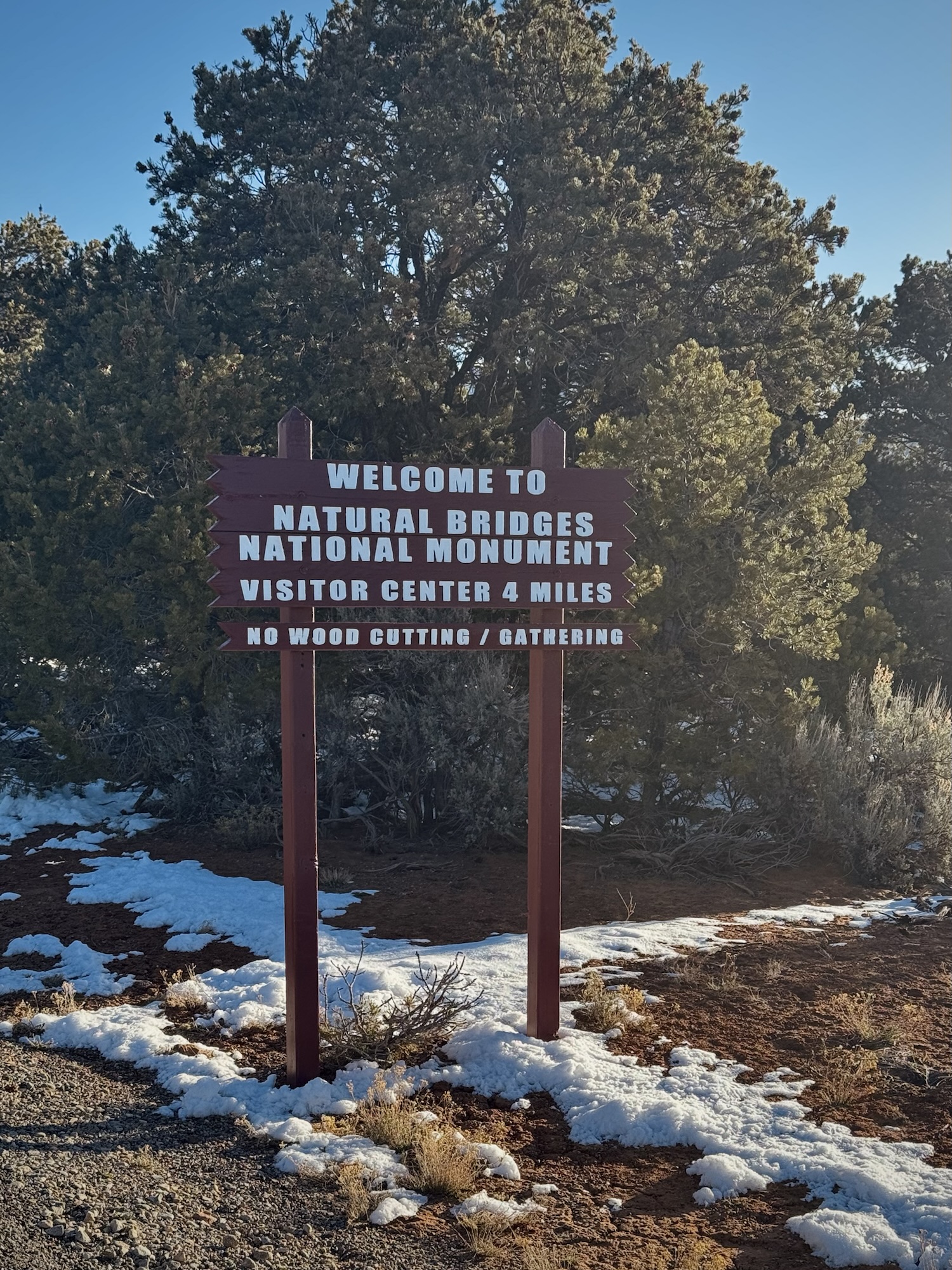
(There was snow!)
The monument is situated around a 9 mile scenic drive with the visitor center at the beginning. This is how you access the Bridges and the other trailheads here.
We arrived here around 8am on an April weekday morning and had each of three overlooks totally to ourselves.
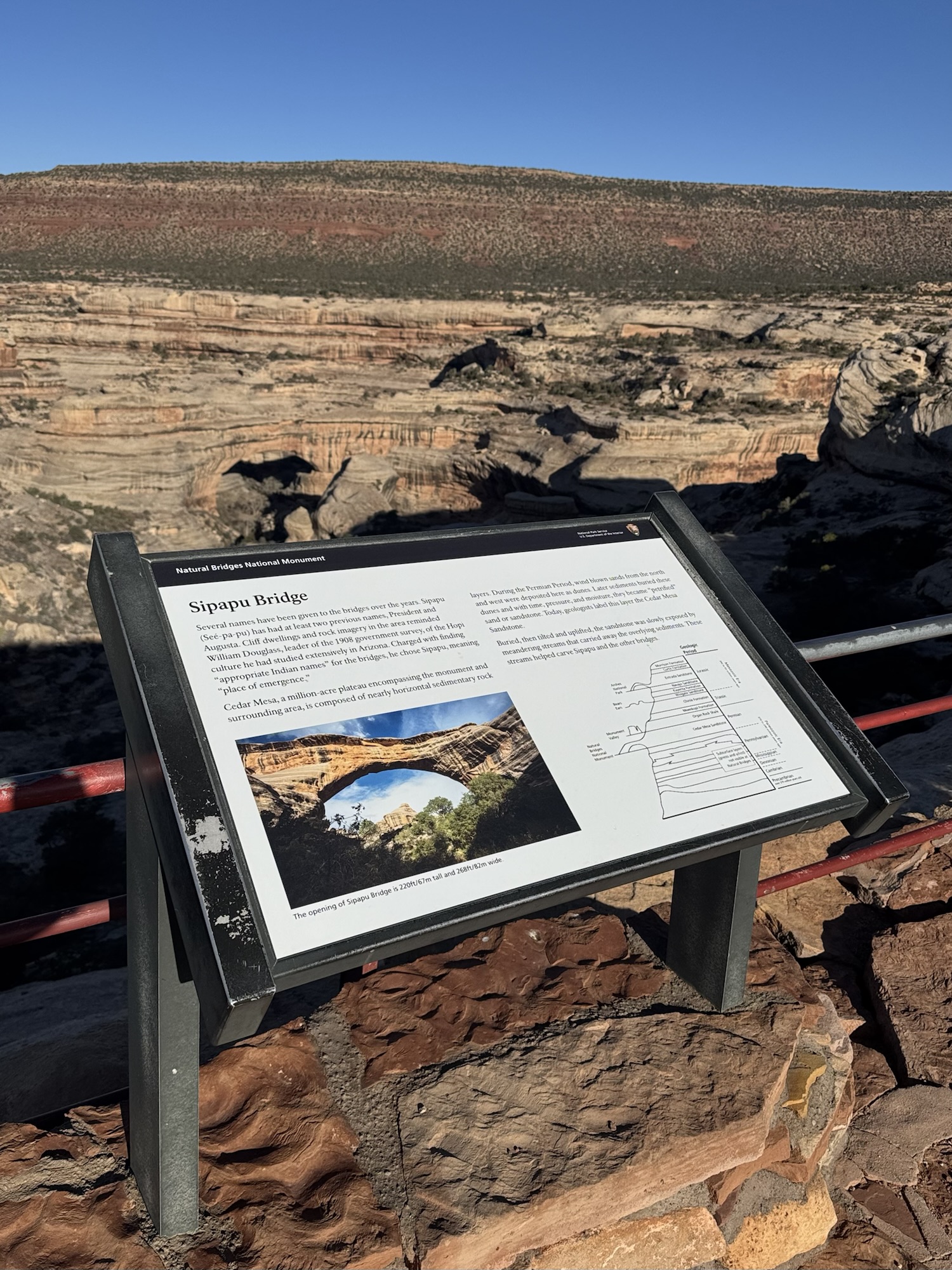
Sipapu Bridge
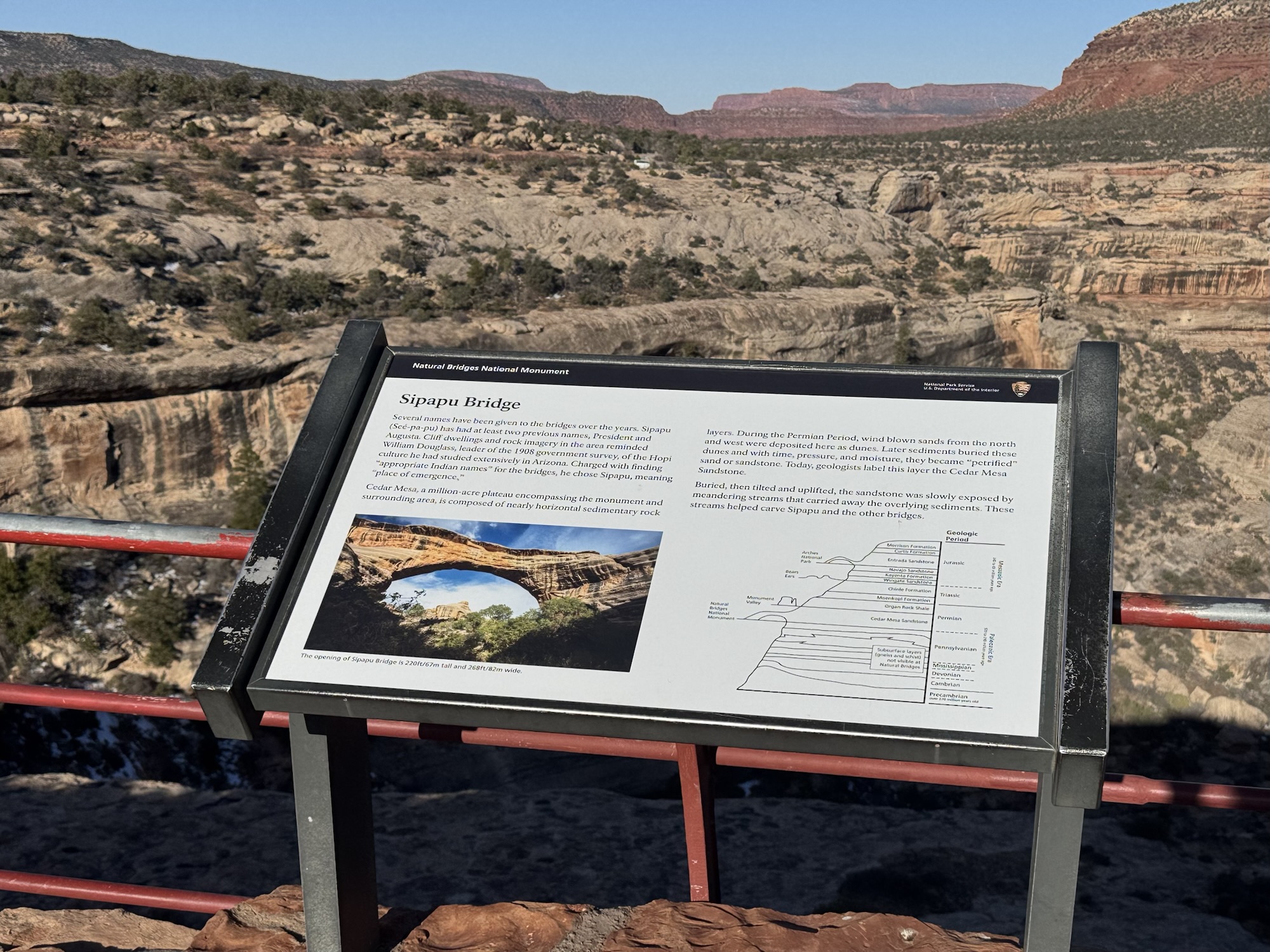
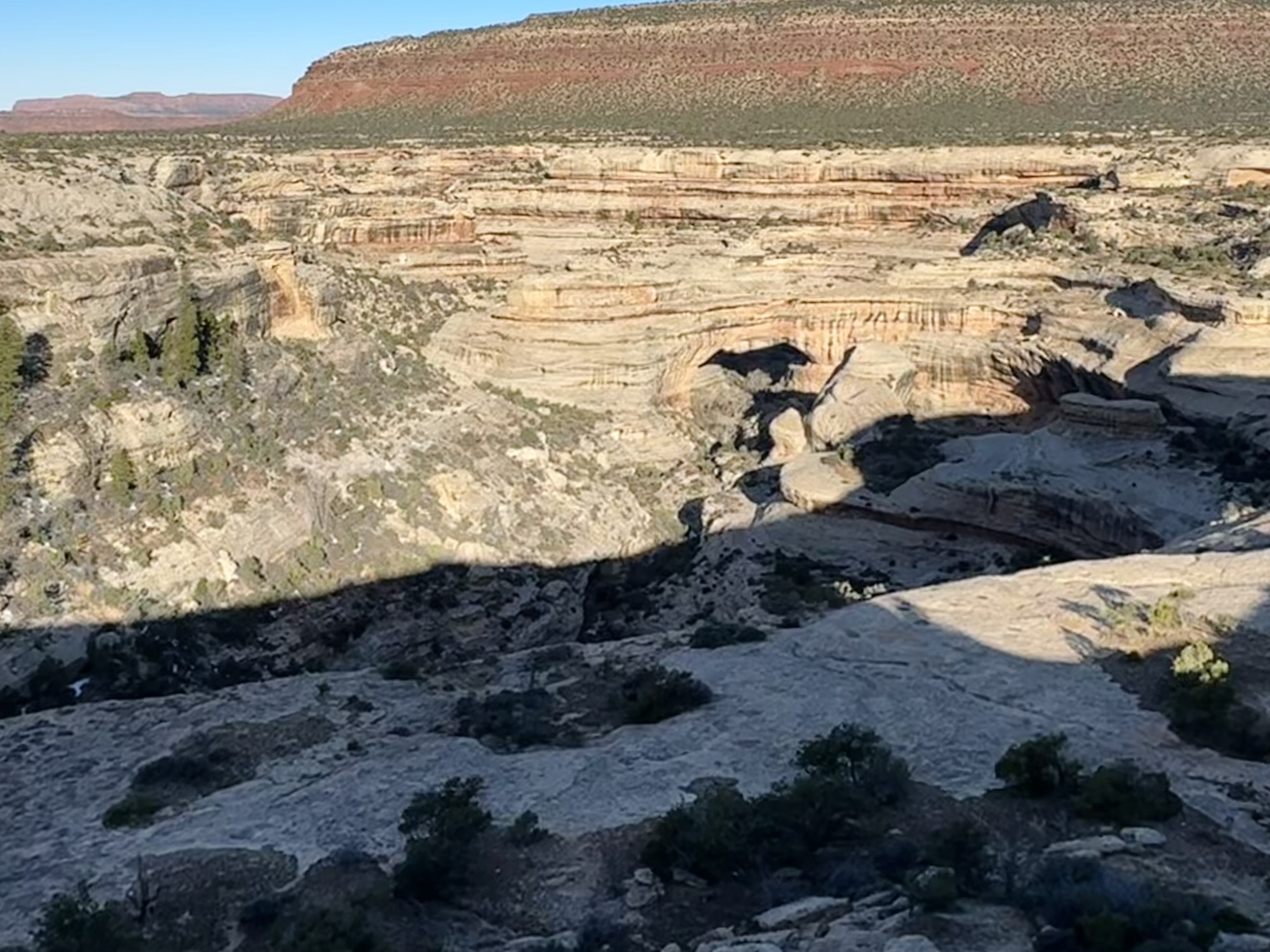
The interpretive sign talks about how Sipapu was named by William Douglass in 1908 and means “place of emergence,” and the bridge was once called Augusta and President in the past.
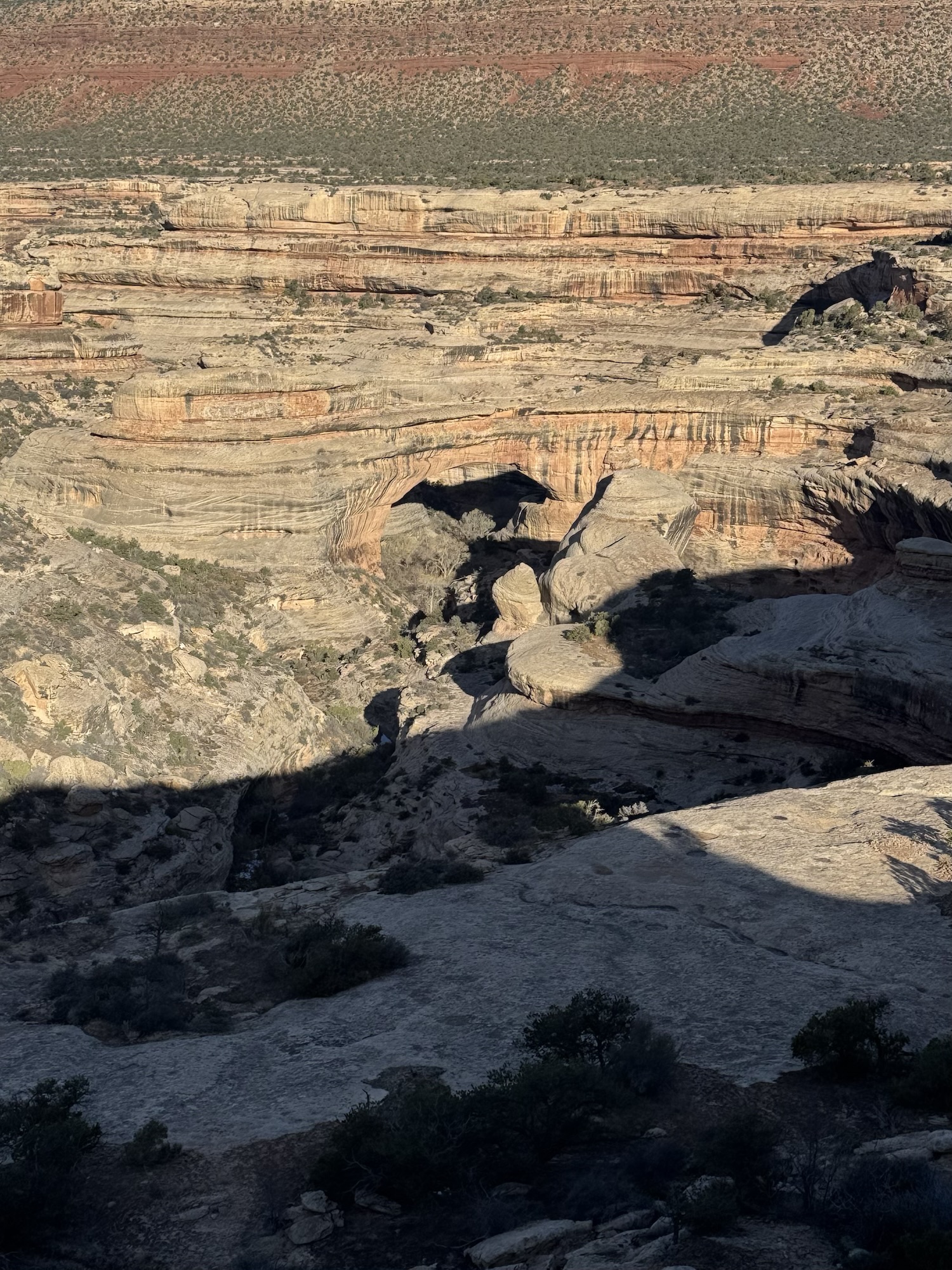
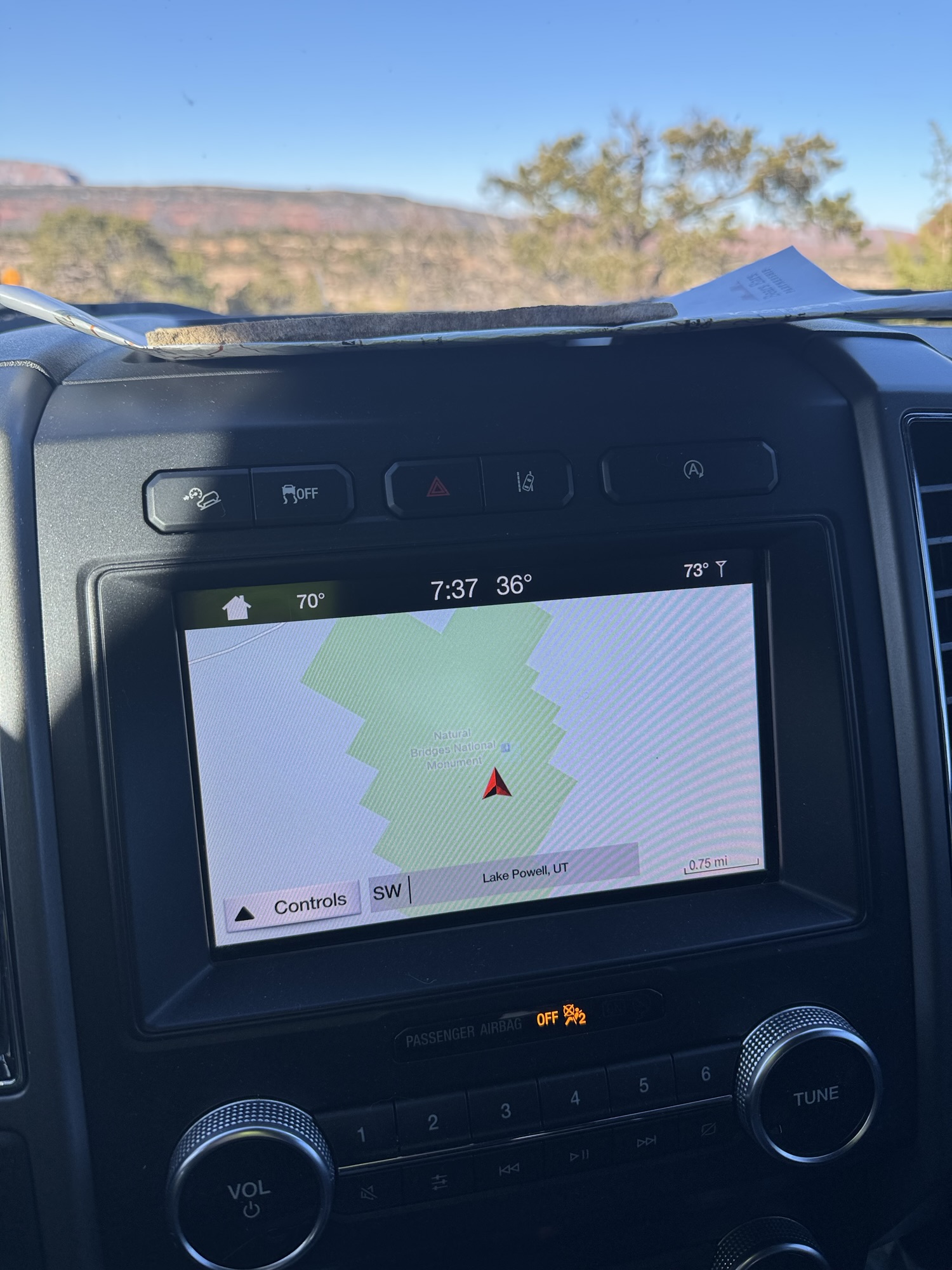
Natural Bridges National Monument is situated inside of Bears Ears National Monument, specifically the Cedar Mesa plateau (which is 1,00,000 acres?! crazy).
It was preeetty chilly. Ignore the time on the car, we never changed it as we crossed the border from Arizona into Utah.
Kachina Bridge
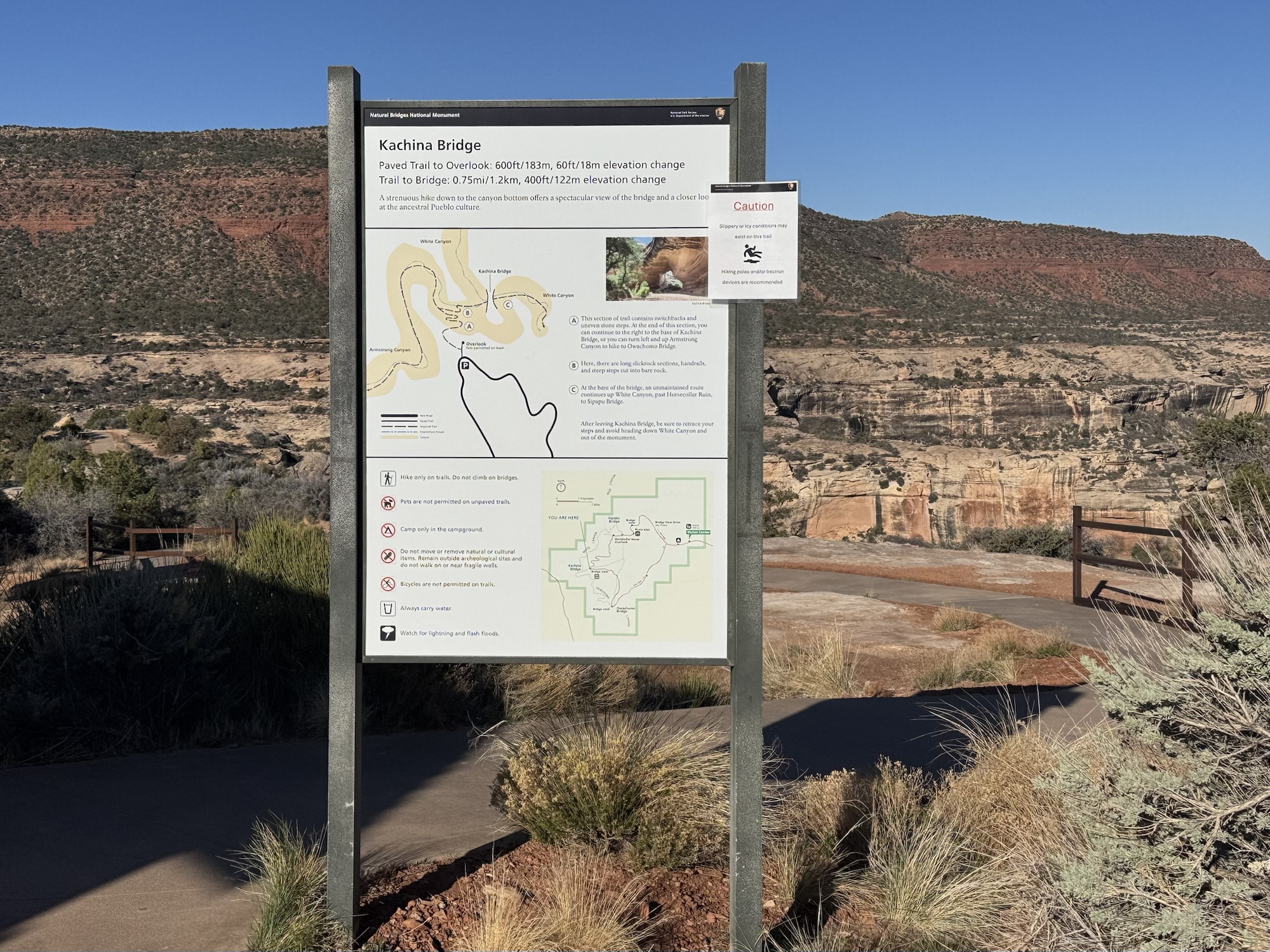
“Kachina Bridge was named for the Hopi kachina spirits who frequently display lightning snake symbols on their bodies. Similar snake patterns were carved by ancient people on the base of Kachina Bridge...
“Kachina Bridge is the best place in the monument to observe the making of a natural bridge. Here meandering streams cut downward into the Cedar Mesa sandstone, leaving a thing wall of rock…”
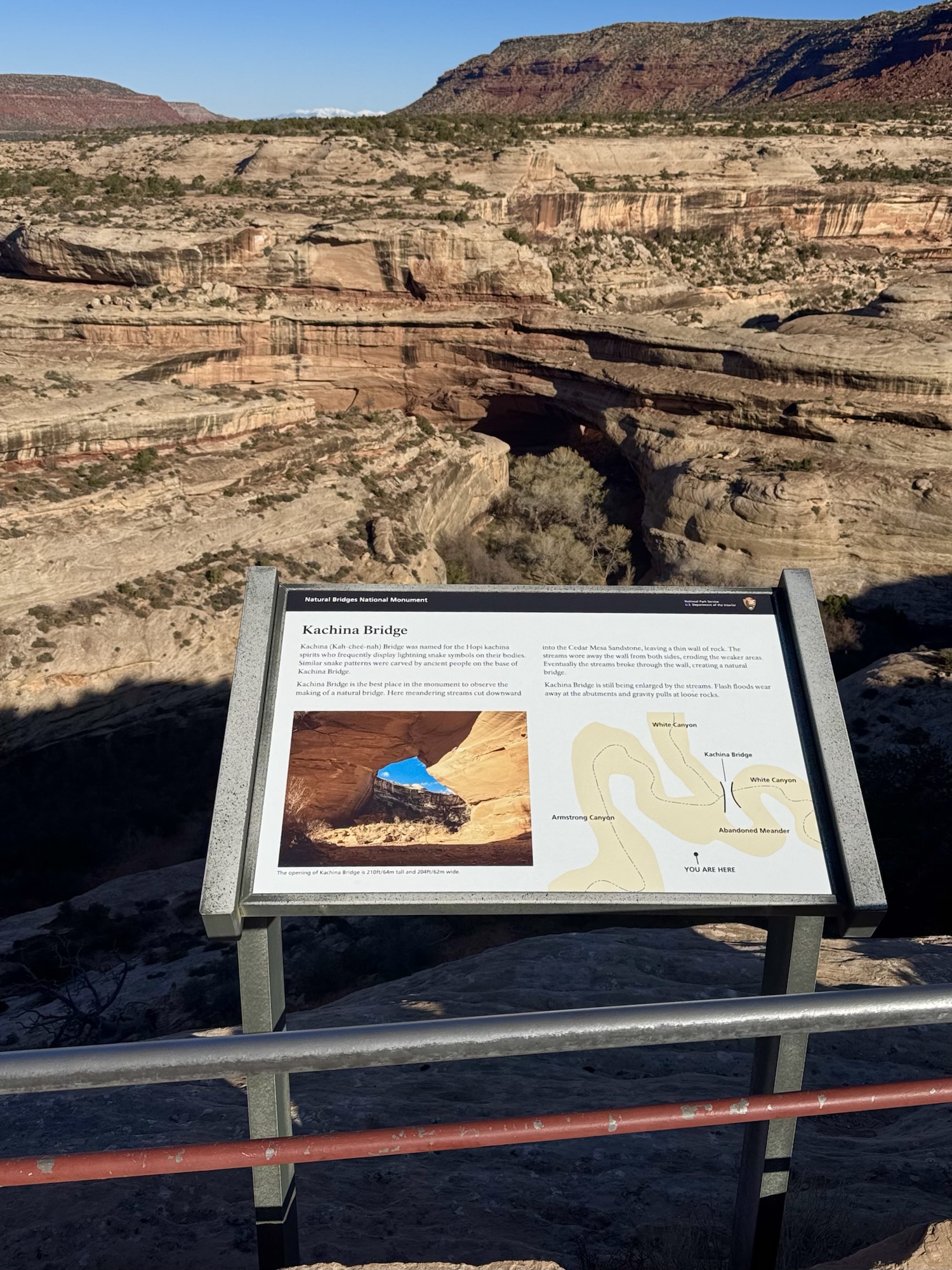
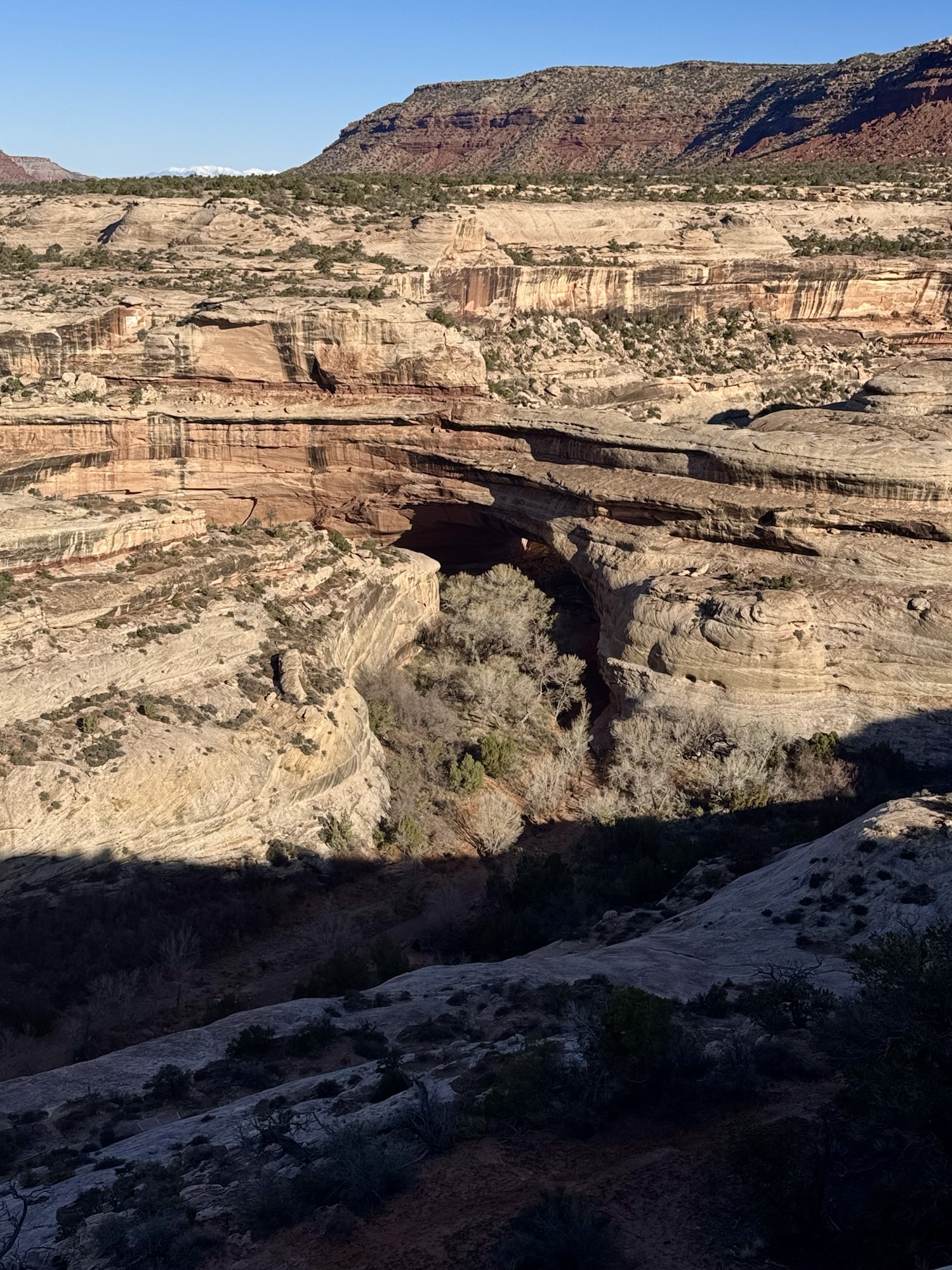
The trail from the parking area to the overlook is super short, but you can take the actual trail down into the canyon to view Kachina Bridge from underneath if you’d like.
We skipped it this time but I can’t wait ’til the next time we’re in this area and can do the 12 mile hike to view all of the bridges in one go from the riverbed.
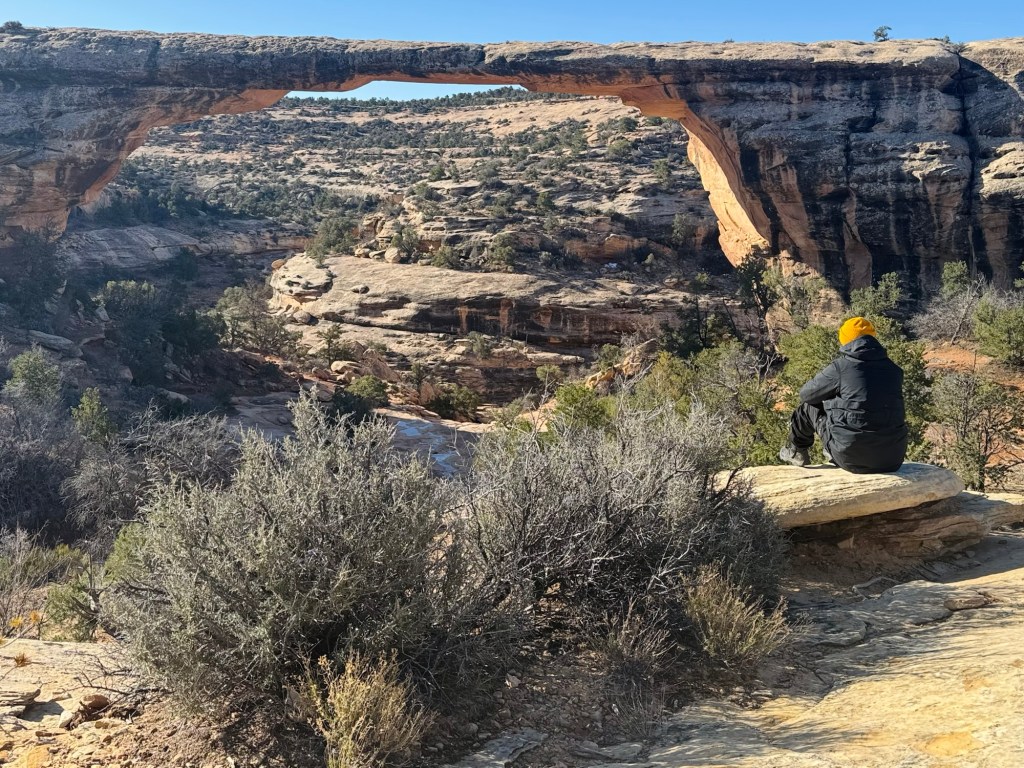
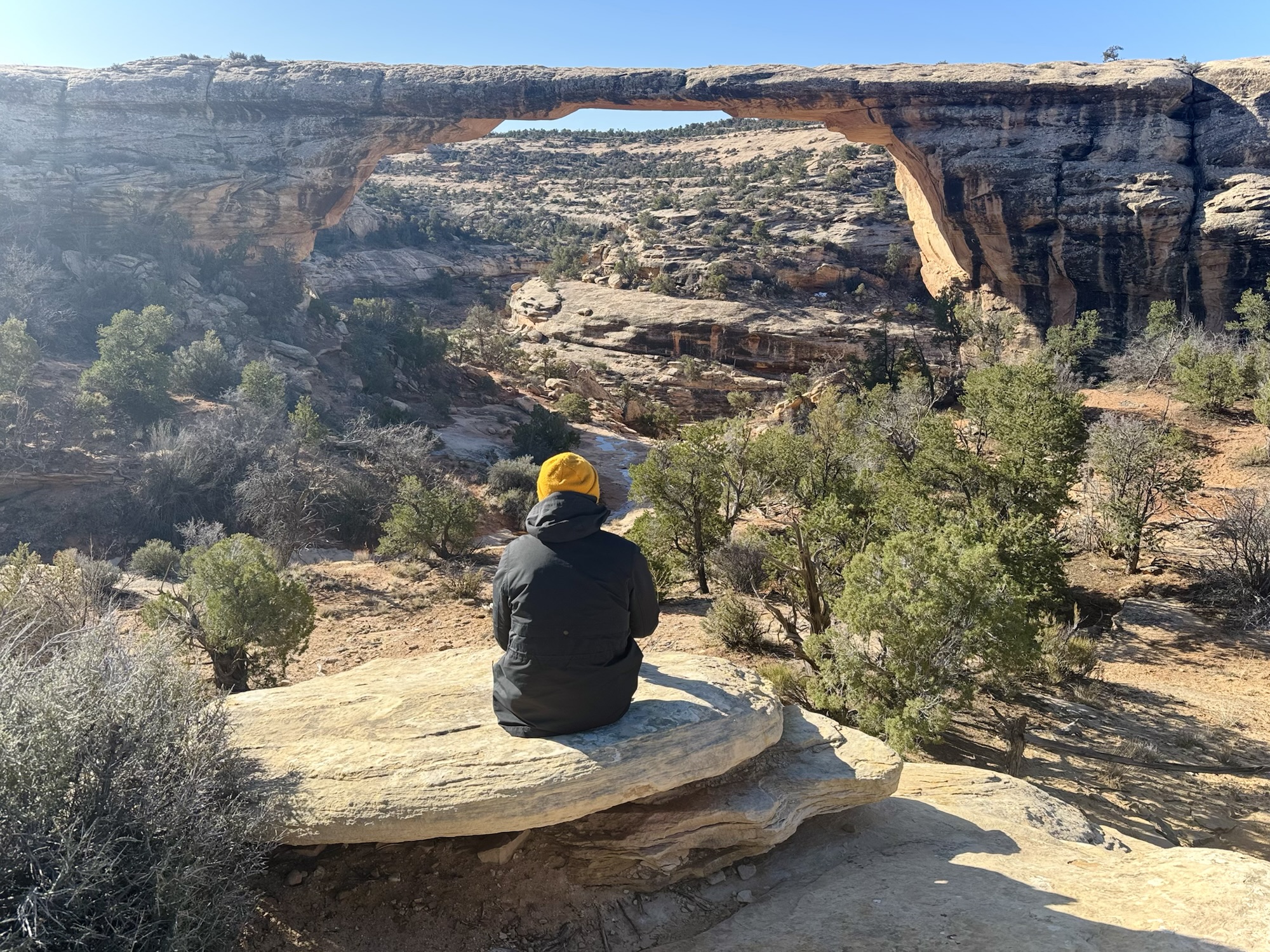
Owachomo Bridge
This one was my favorite.
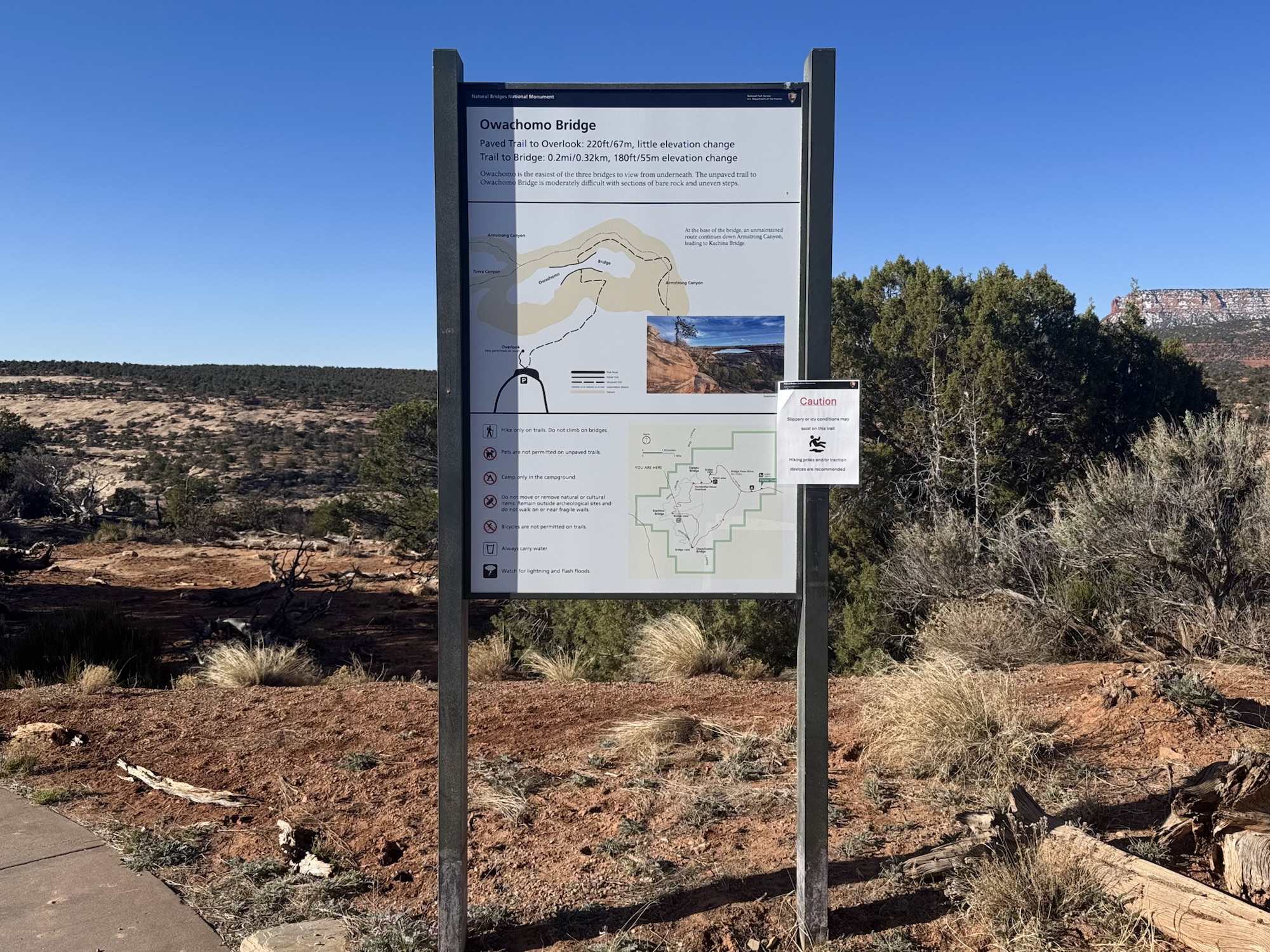
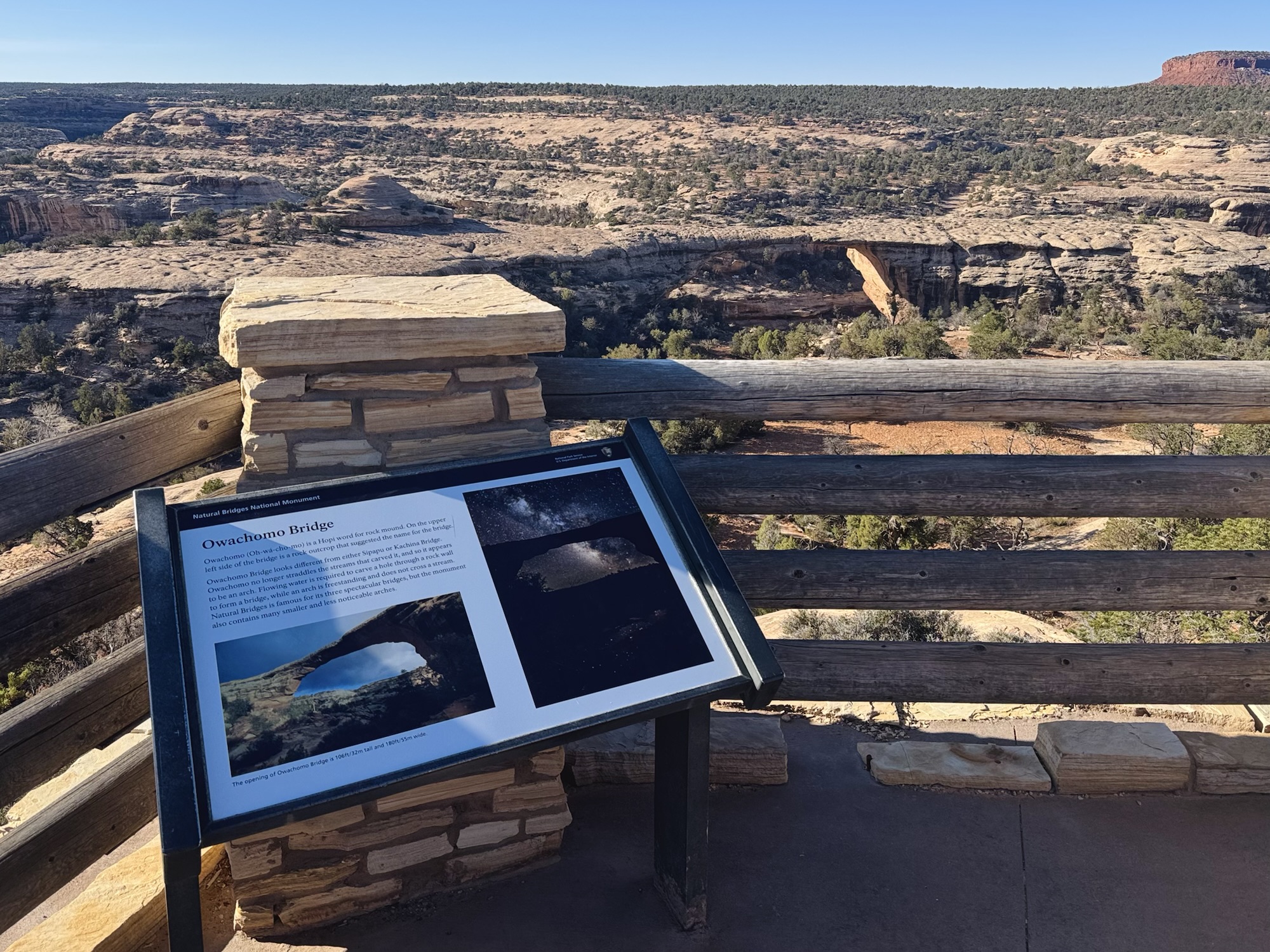
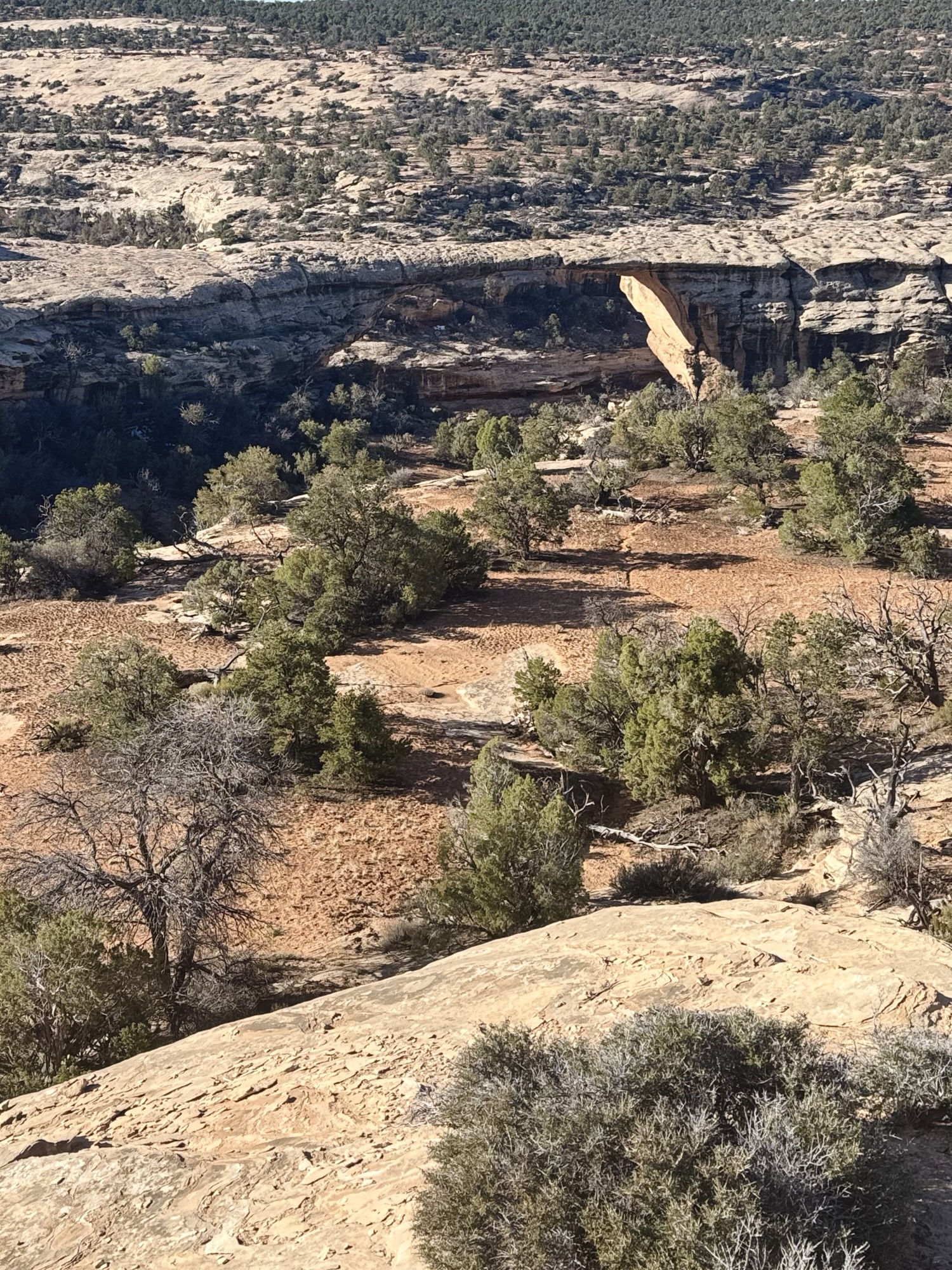
The interpretive sign talks about how Owachomo is the Hopi word for “rock mound” and about how this bridge is unique because the rivers that once formed it aren’t there anymore, so it can be easily mistaken for an arch.

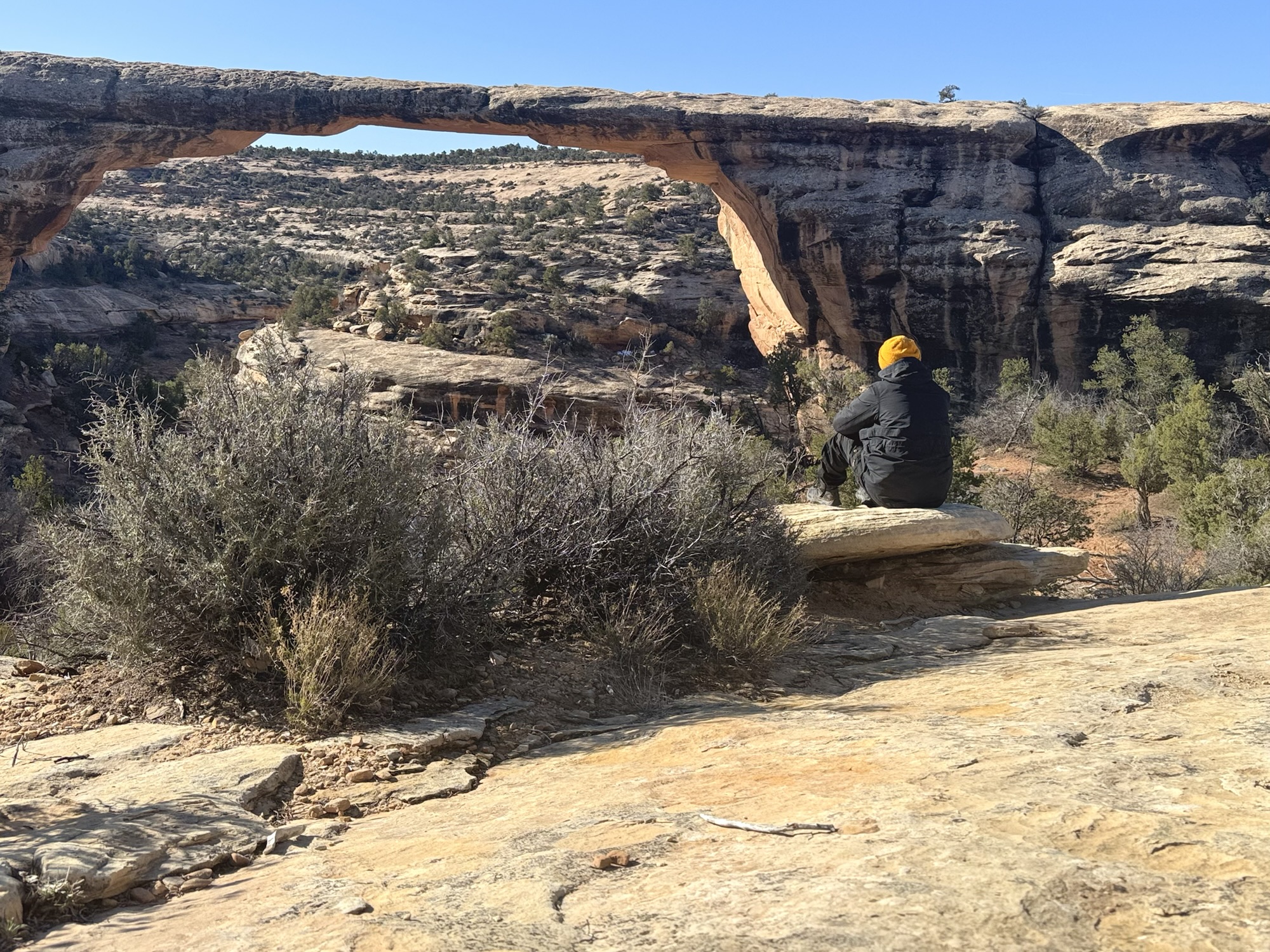
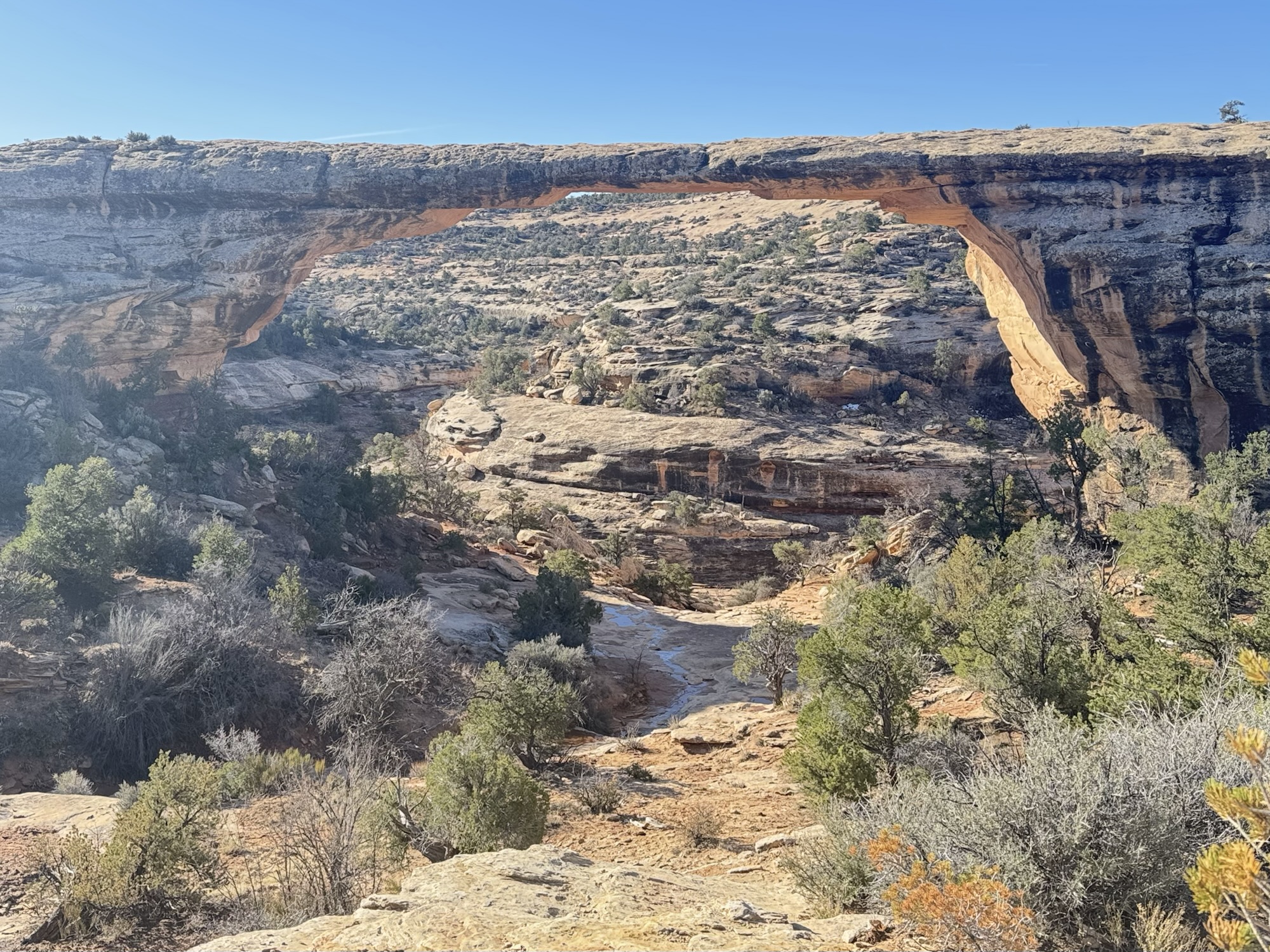

This is the most fragile bridge of the three (and the prettiest).
Bears Ears
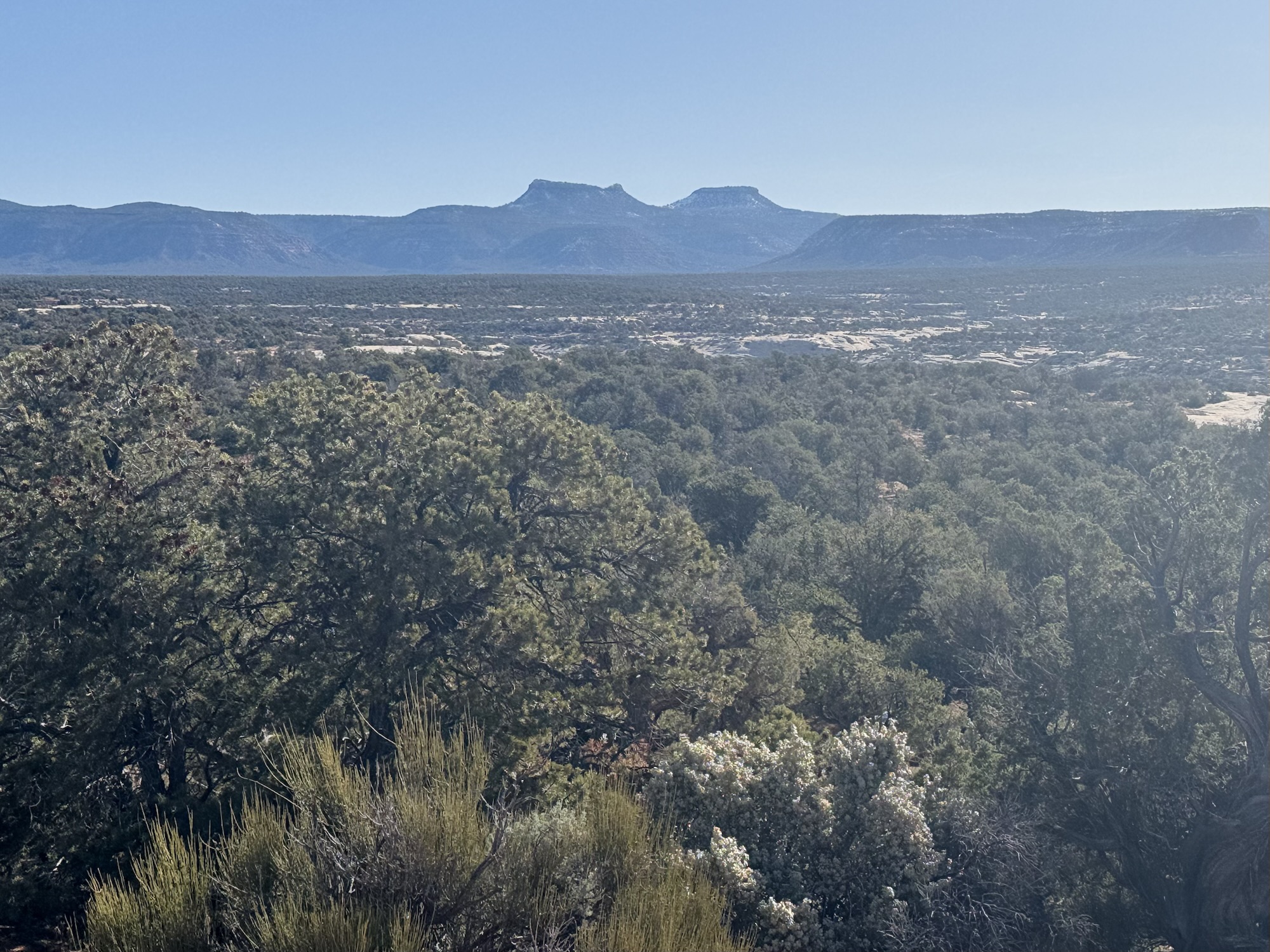
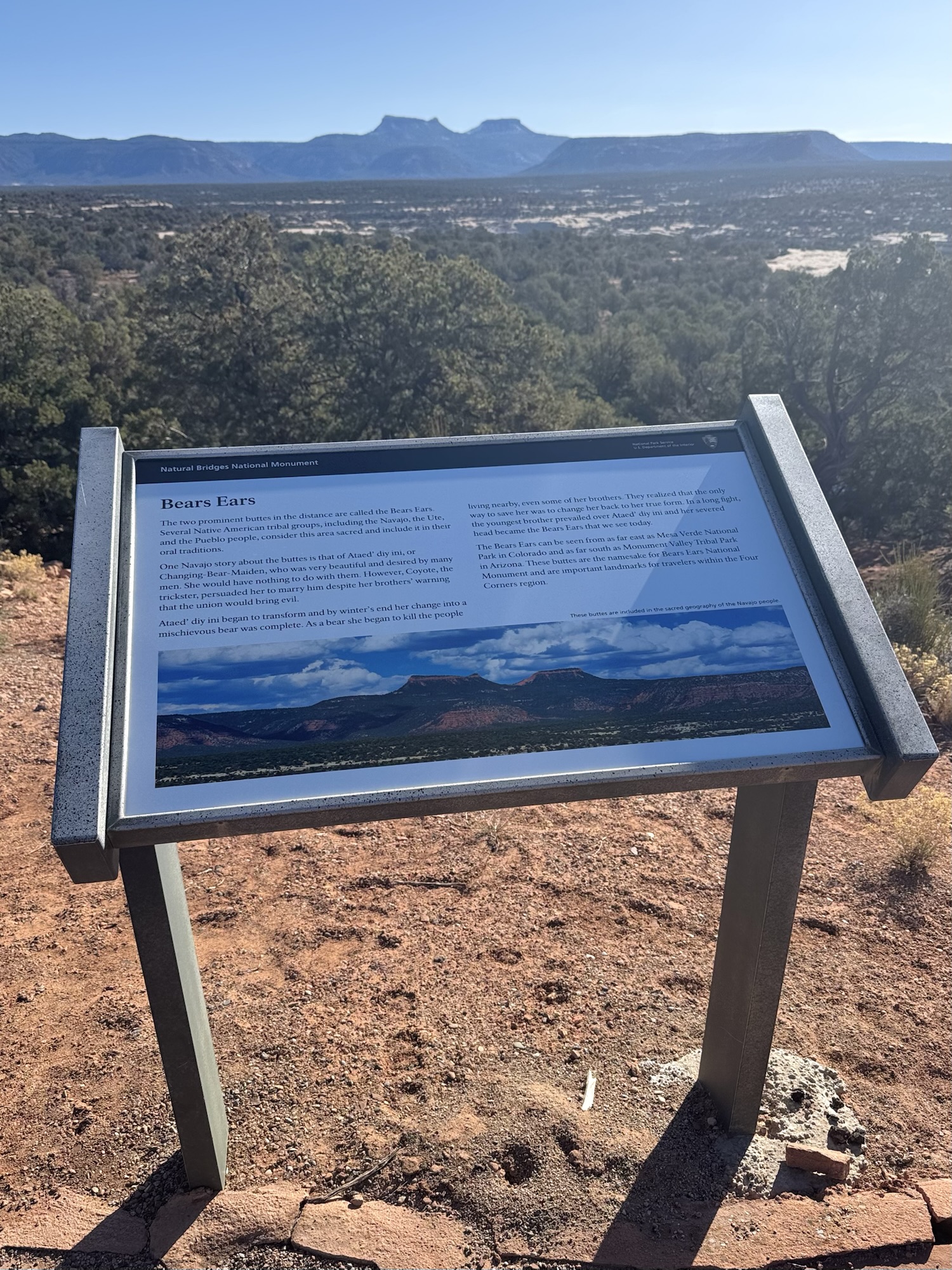
On the way back from Owachomo and to the visitor center, there’s a chance to pull off the road and view *the* Bears Ears formation that the monument is known for.
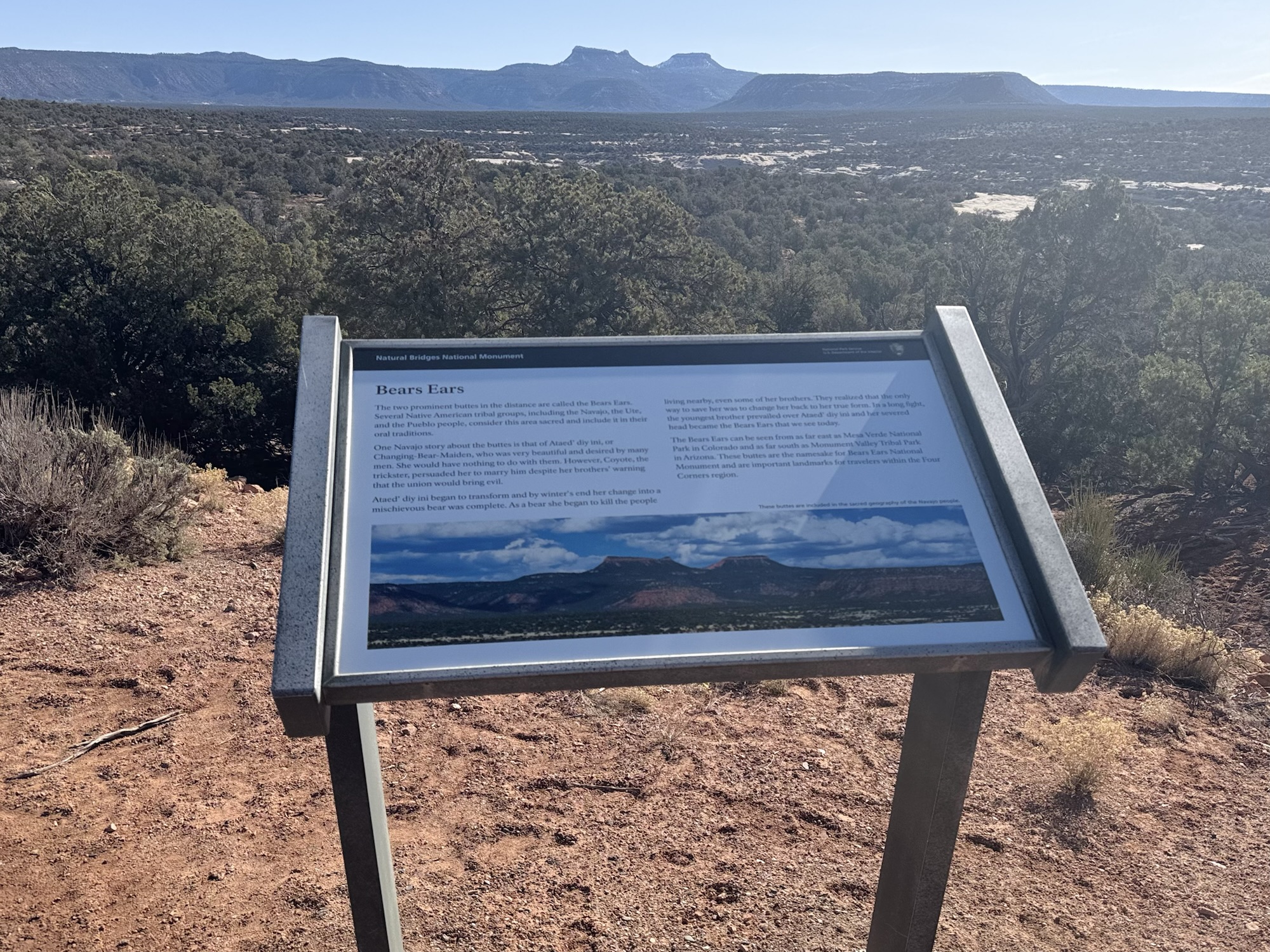
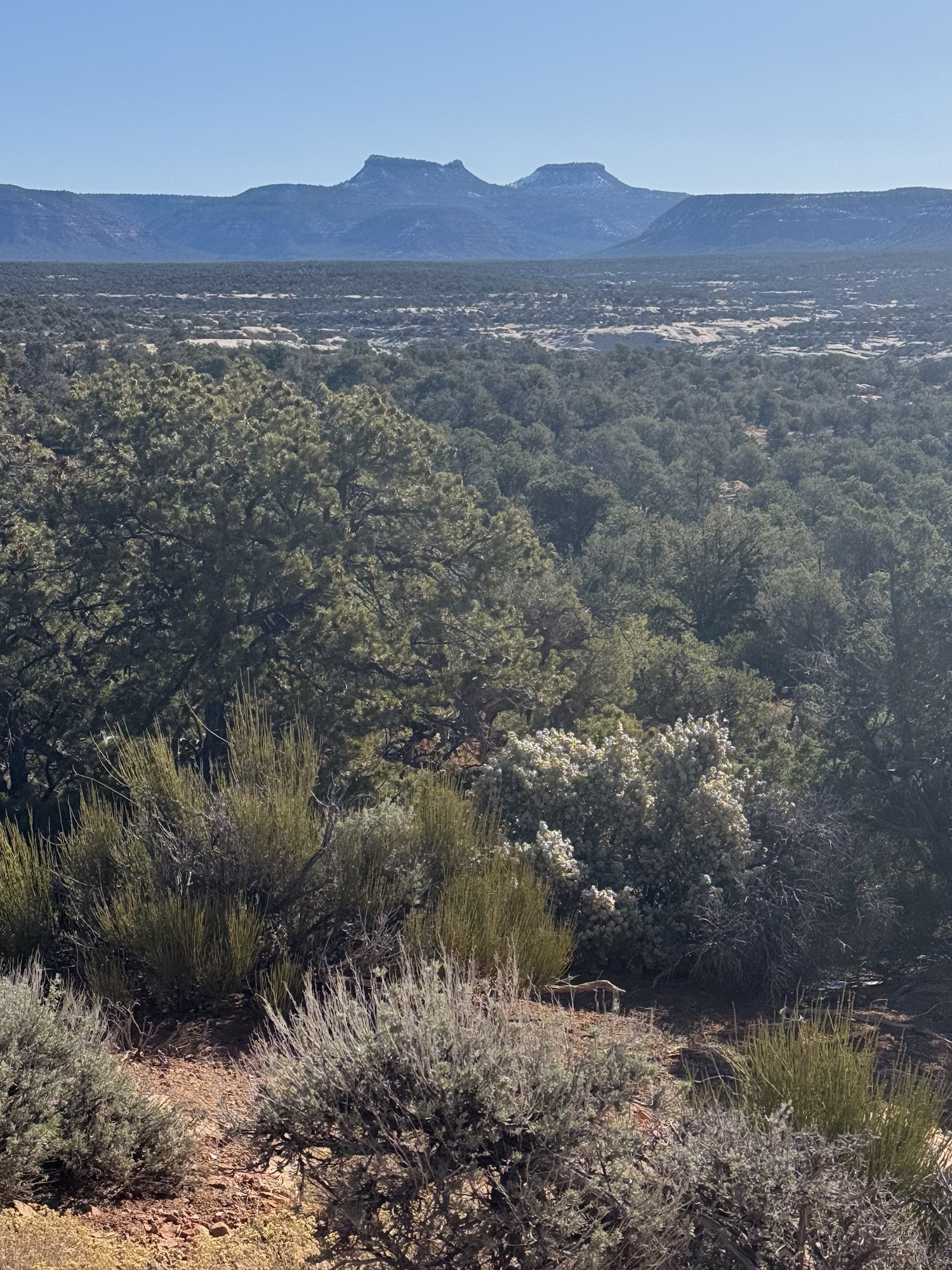
It’s pretty cool, they found that multiple indigenous cultures could see the monument from large distances away in all directions. Those civilizations likely never came into contact with each other, but they all referred to this formation as Bears Ears in their language.

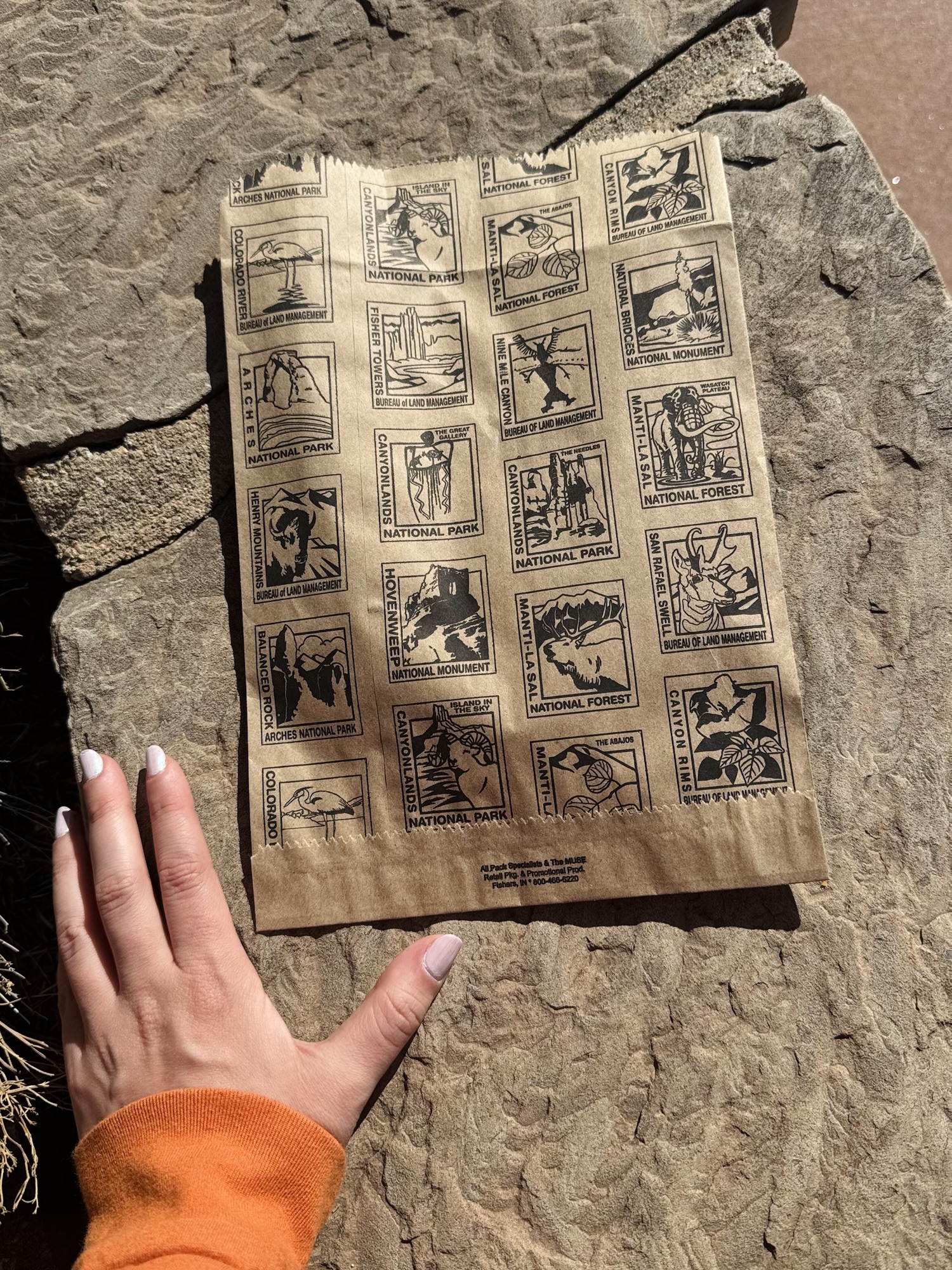
I was obsessed with the design of these bags from the Canyonlands Natural History Association. And RIP Zeke.
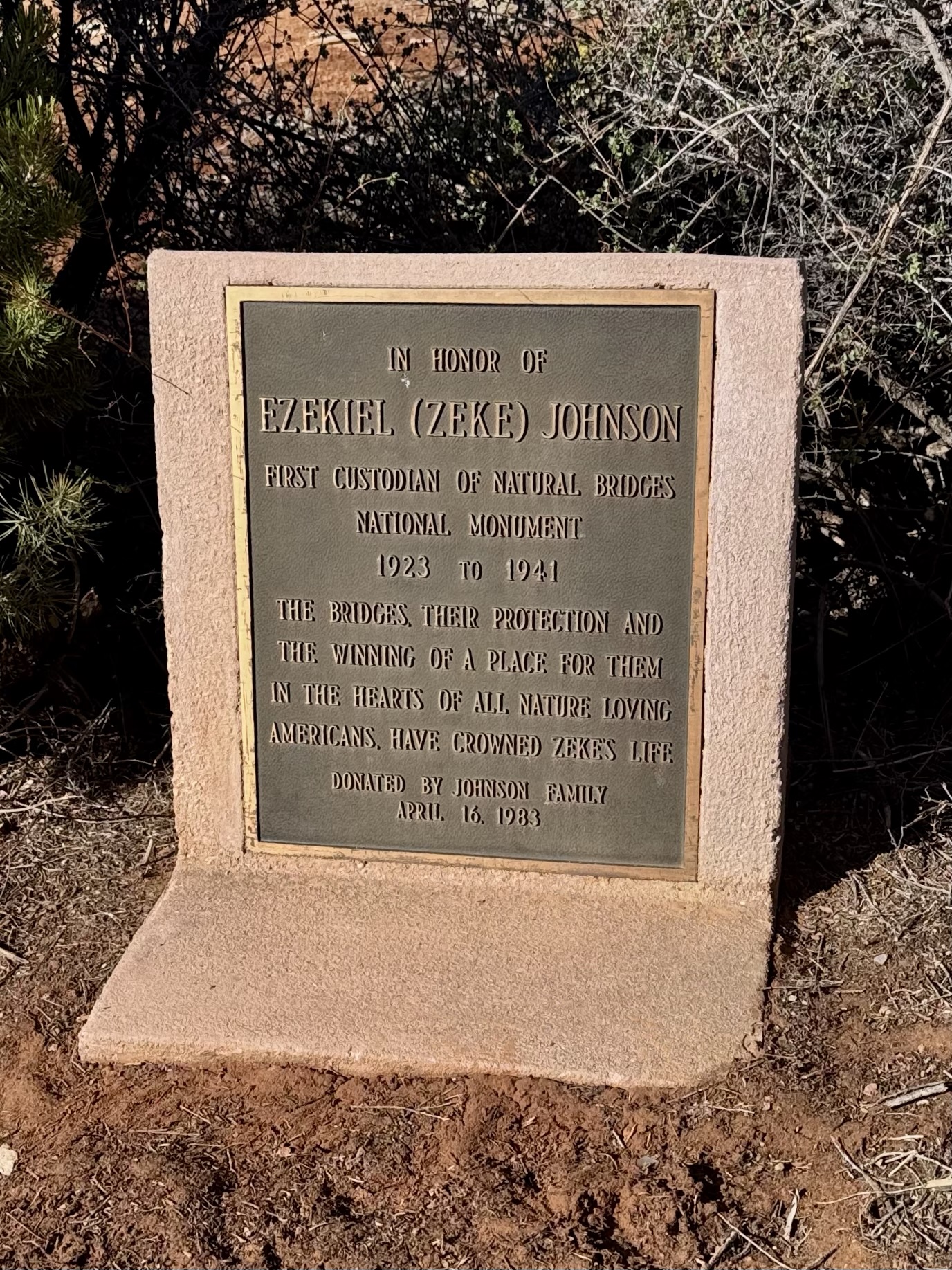
“In honor of Ezekiel (Zeke) Johnson
First Custodian of Natural Bridges National Monument – 1923 to 1941
The bridges, their protection, and the winning of a place for them in the hearts of all nature loving Americans, have crowned Zeke’s life.
Donated by Johnson family – April 16, 1983″

Visit the Canyonlands Natural History Association:
https://cnha.org/
Natural Bridges National Monument via the National Park Service:
https://www.nps.gov/nabr/index.htm
Bears Ears National Monument via the Bureau of Land Management:
https://www.blm.gov/visit/bears-ears-national-monument


 Caitlyn is outside.
Leave a comment