

Not necessarily in that order. 😉
After hiking the short Hickman Bridge trail, we headed to the Capitol Reef visitor center to do the usual: stamp our National Parks Passport, buy a bunch of stickers, and find another patch or pin to add to the ever-overwhelming collection on my backpack.
On the way there, we saw a tiny parking lot to pull off in and check out some petroglyphs. There were two boardwalks here: the main one leading directly up to the rock wall and another leading off to the side. The main boardwalk had two stations of binoculars and another of the interpretive trail speakerboxes.
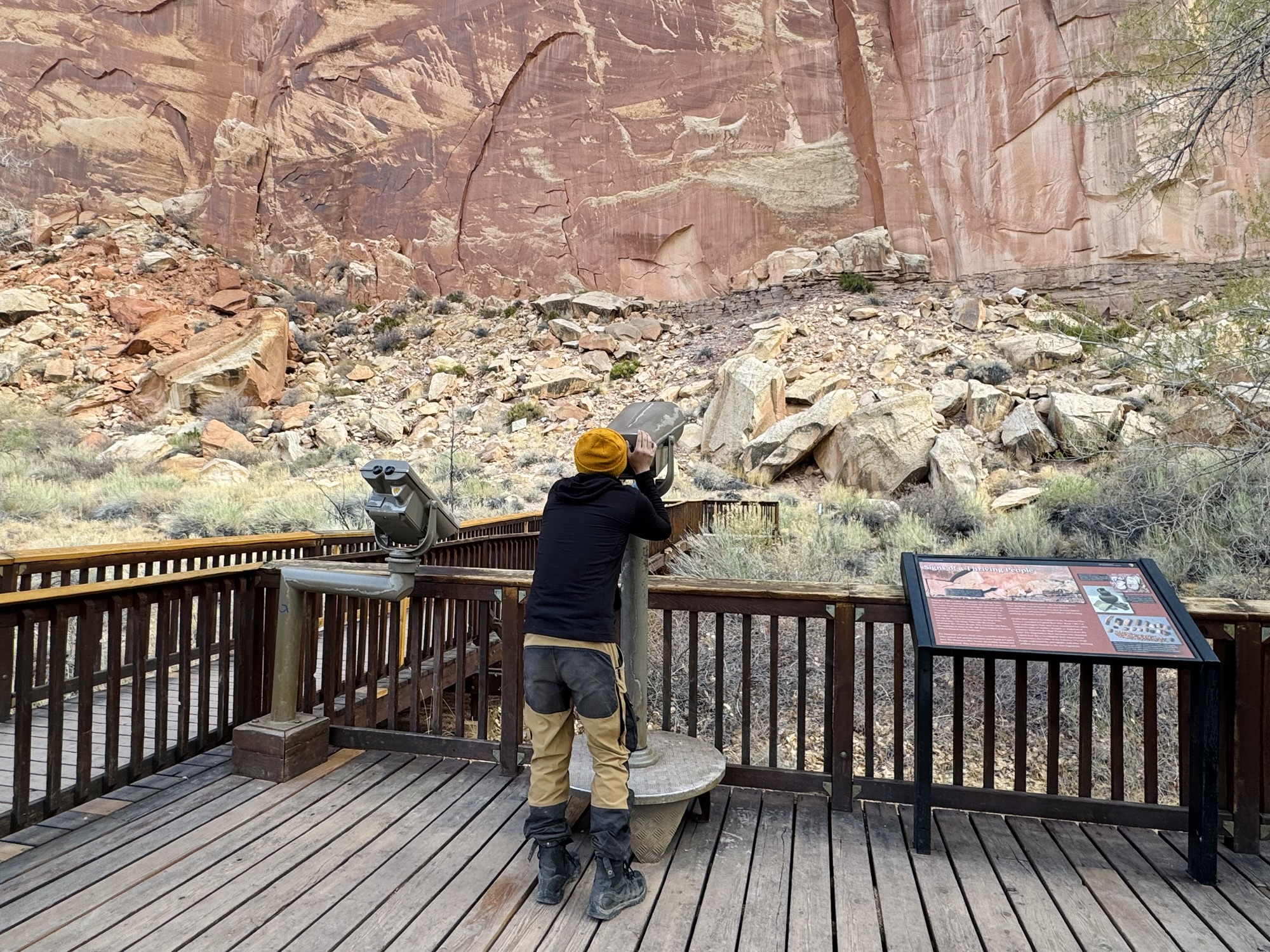


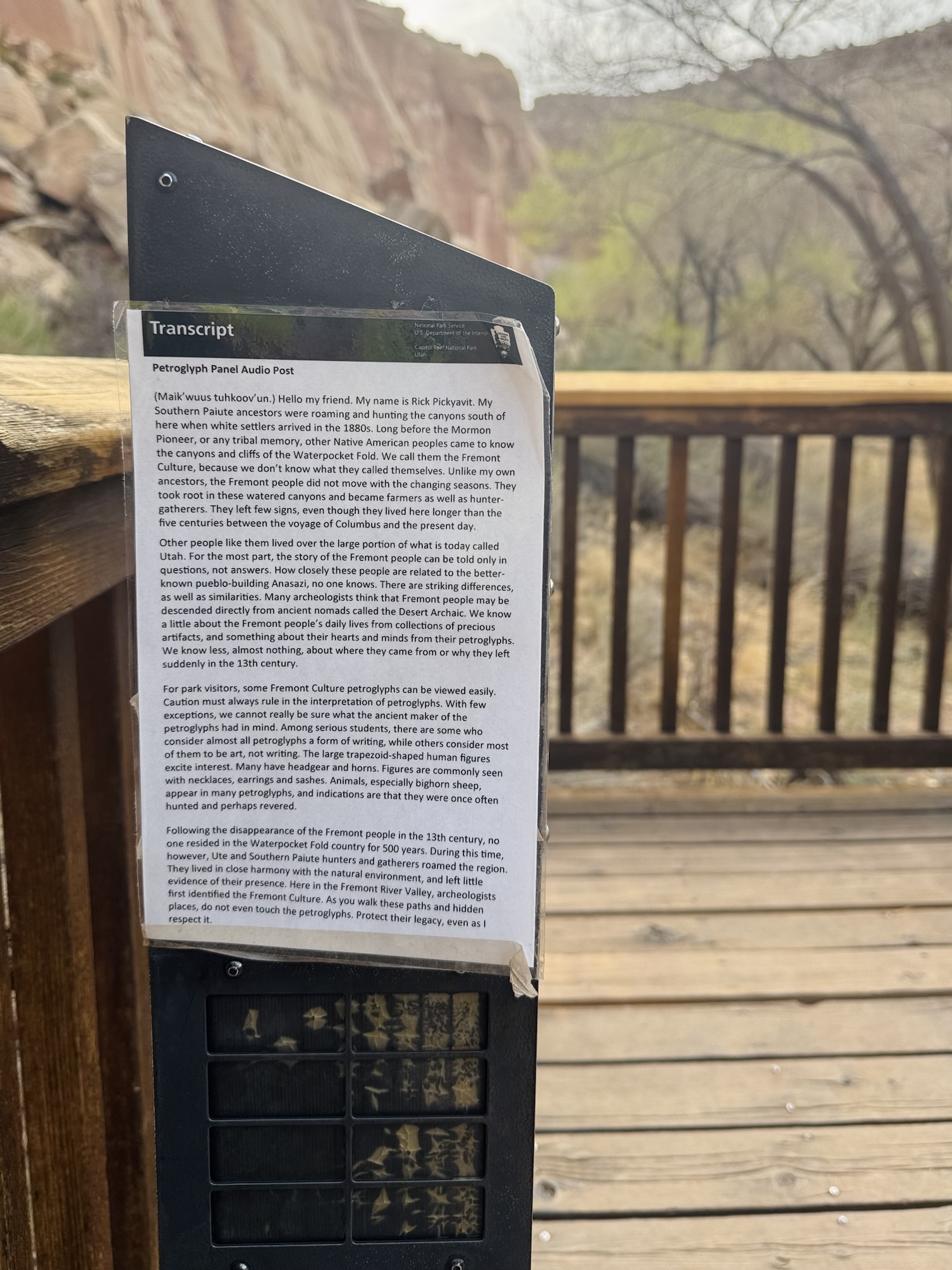
“Petroglyph panel audio post: (Maik’wuus tuhkoov’un.) Hello, my friend. My name is Rick Pickyavit. My Southern Paiute ancestors were roaming and hunting the canyons south of here when white settlers arrived in the 1880’s. Long before the Mormon Pioneer, or any tribal memory, other Native American peoples came to know the canyons and cliffs of the Waterpocket Fold. We call them the Fremont Culture, because we don’t know what they called themselves. Unlike my own ancestors, the Fremont people did not move with the changing seasons. They took root in these watered canyons and became farmers as well as hunter-gatherers. They left few signs, even though they lived here longer than the five centuries between the voyage of Columbus and the present day.
“Other people like them lived over the large portion of what is today called ‘Utah.’ For the most part, the story of the Fremont people can be told only in questions, not answers. How closely these people are related to the better-known pueblo-building Anasazi, no one knows. There are striking differences as well as similarities. Many archeologists think that Fremont people may be descended directly from ancient nomads called the Desert Archaic. We know little about the Fremont people’s daily lives from collections of precious artifacts, and something about their hearts and minds from their petroglyphs. We know less, almost nothing, about where they came from or why they left suddenly in the 13th century.
“For park visitors, some Fremont Culture petroglyphs can be viewed easily. Caution must always rule in the interpretation of petroglyphs. With few exceptions, we cannot really be sure what the ancient maker of the petroglyphs had in mind. Among serious students, there are some who consider almost all petroglyphs a form of writing, while other consider most of them to be art… The large trapezoid-shaped human figures excite interest. Many have headgear and horns. Figures are commonly seen with necklaces, earrings, and sashes. Animals, especially bighorn sheep, appear in many petroglyphs, and indications are that they were once often hunted and perhaps revered.
“Following the disappearance of the Fremont people in the 13th century, no one resided in the Waterpocket Fold country for 500 years. During this time, however, Ute and Southern Paiute hunters and gatherers roamed the region. They lived in close harmony with the natural environment, and left little evidence of their presence. Here in the Fremont River Valley, archeologists first identified the Fremont Culture…”
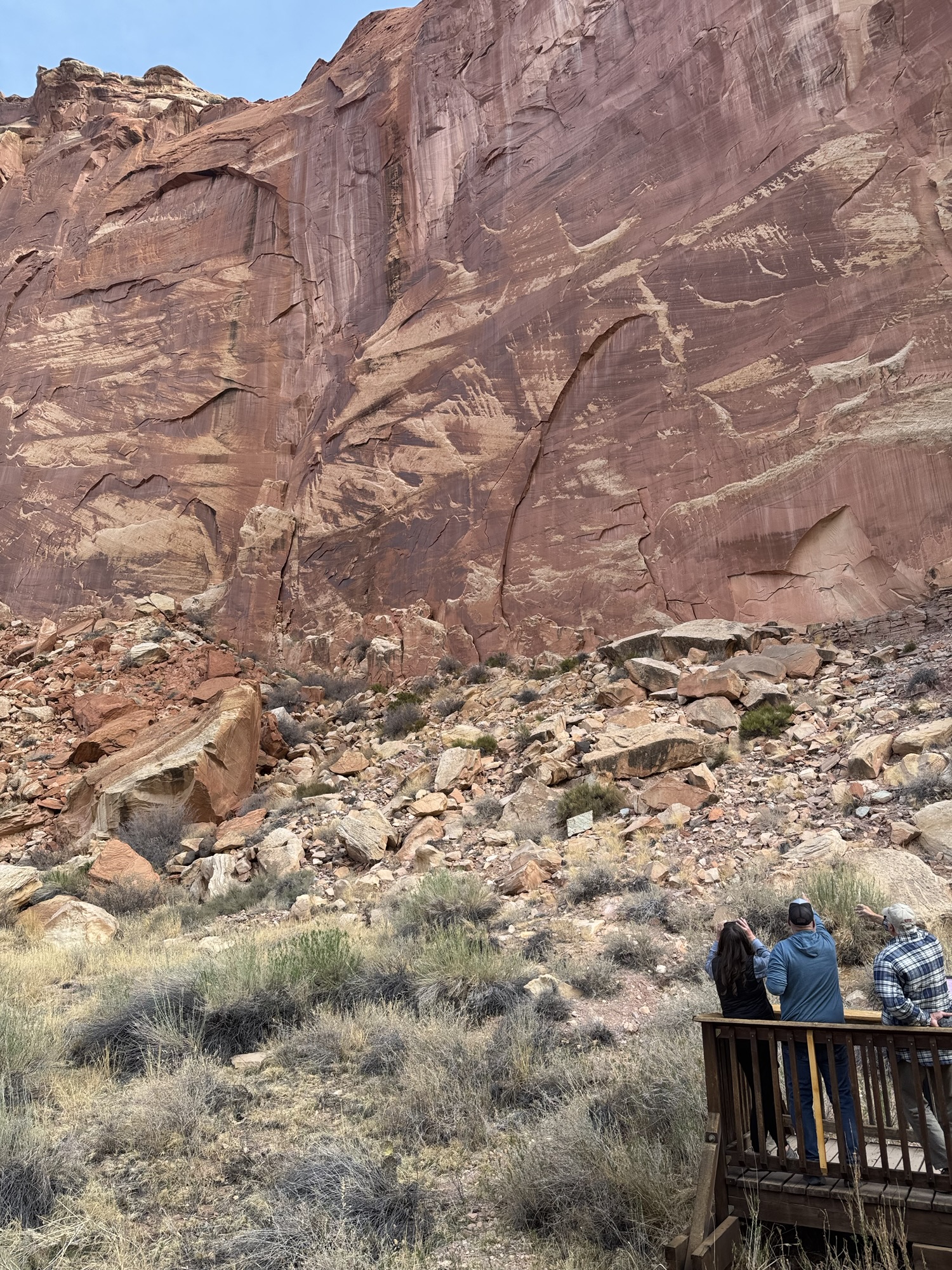

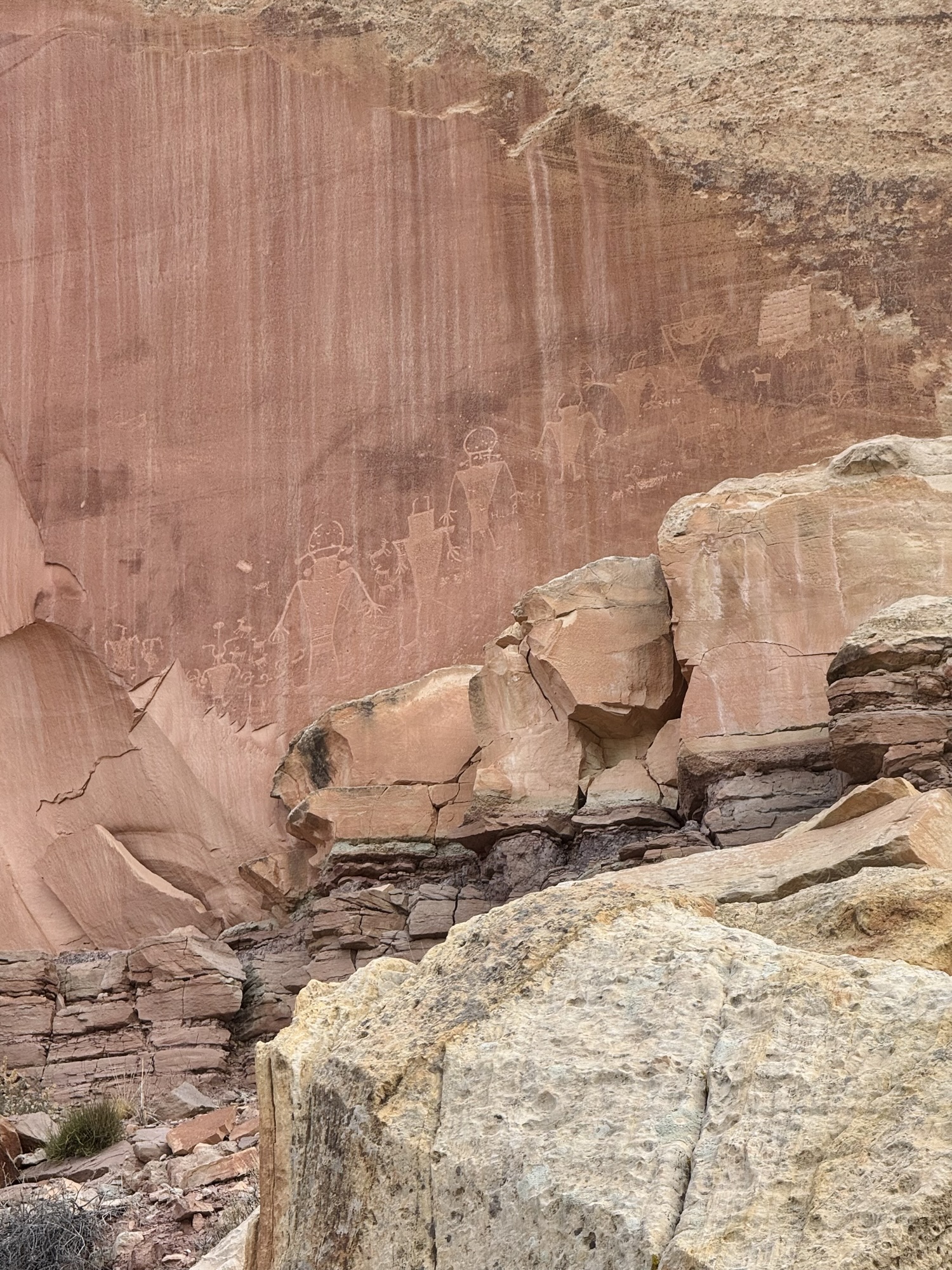

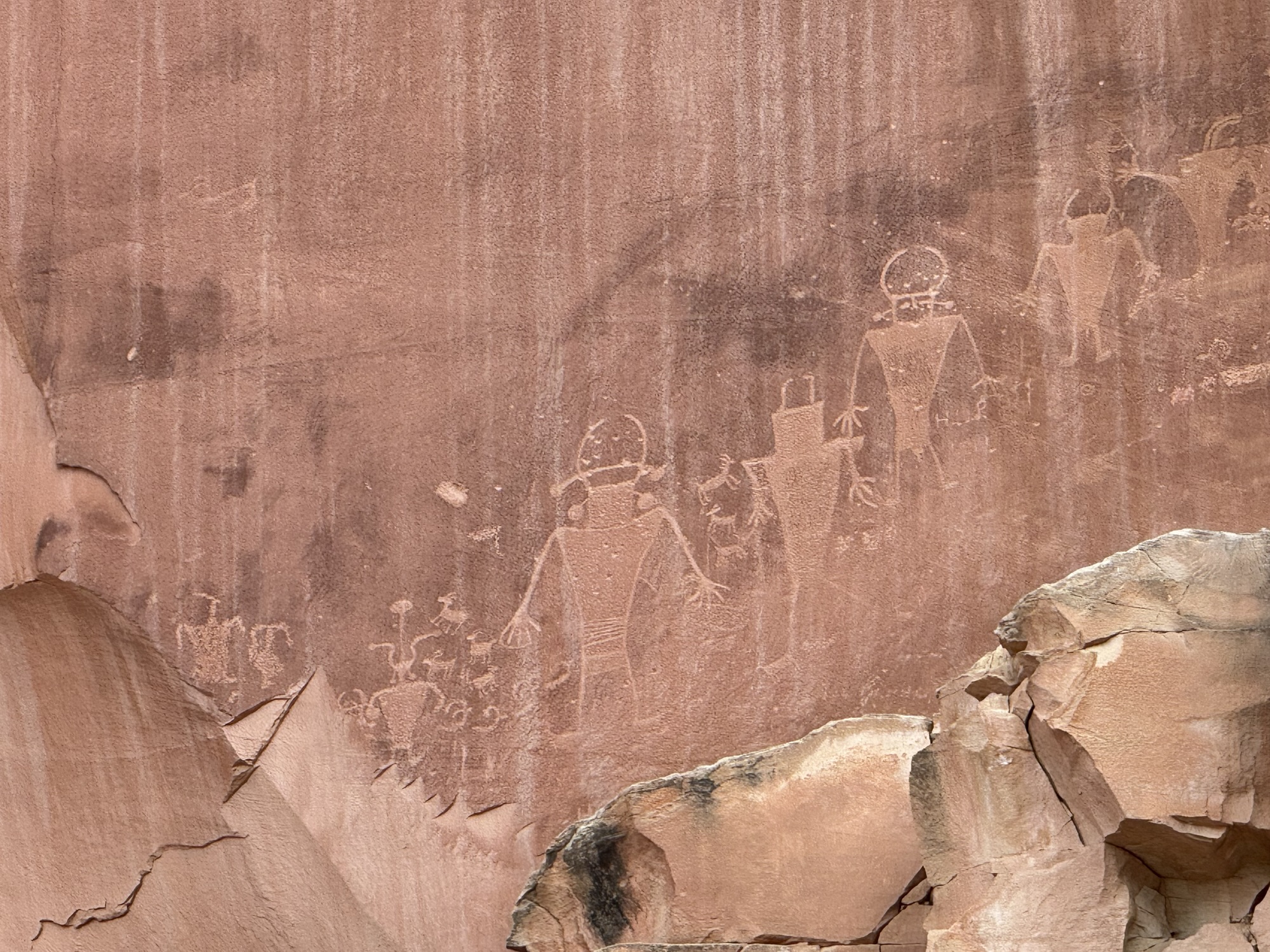
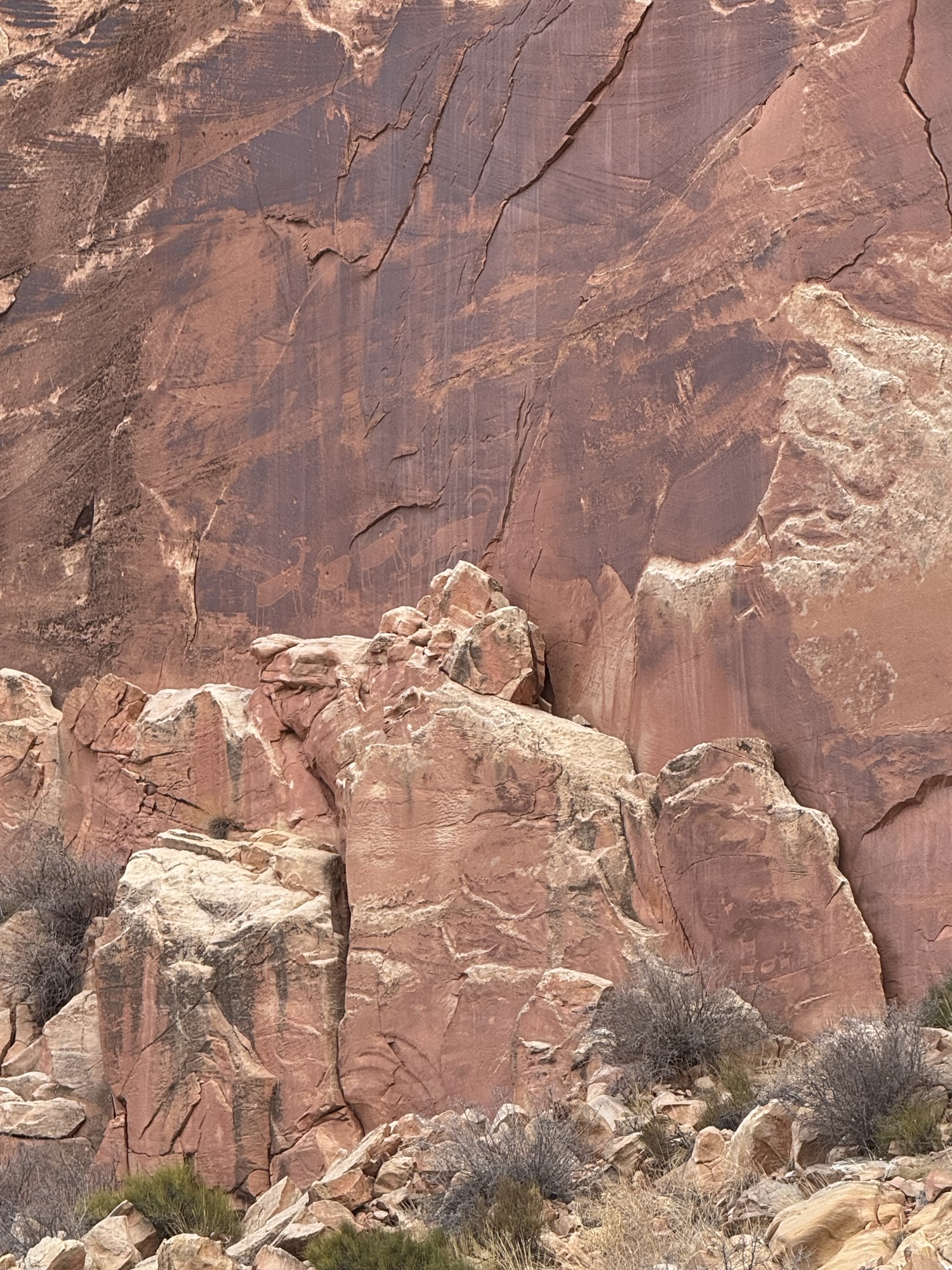
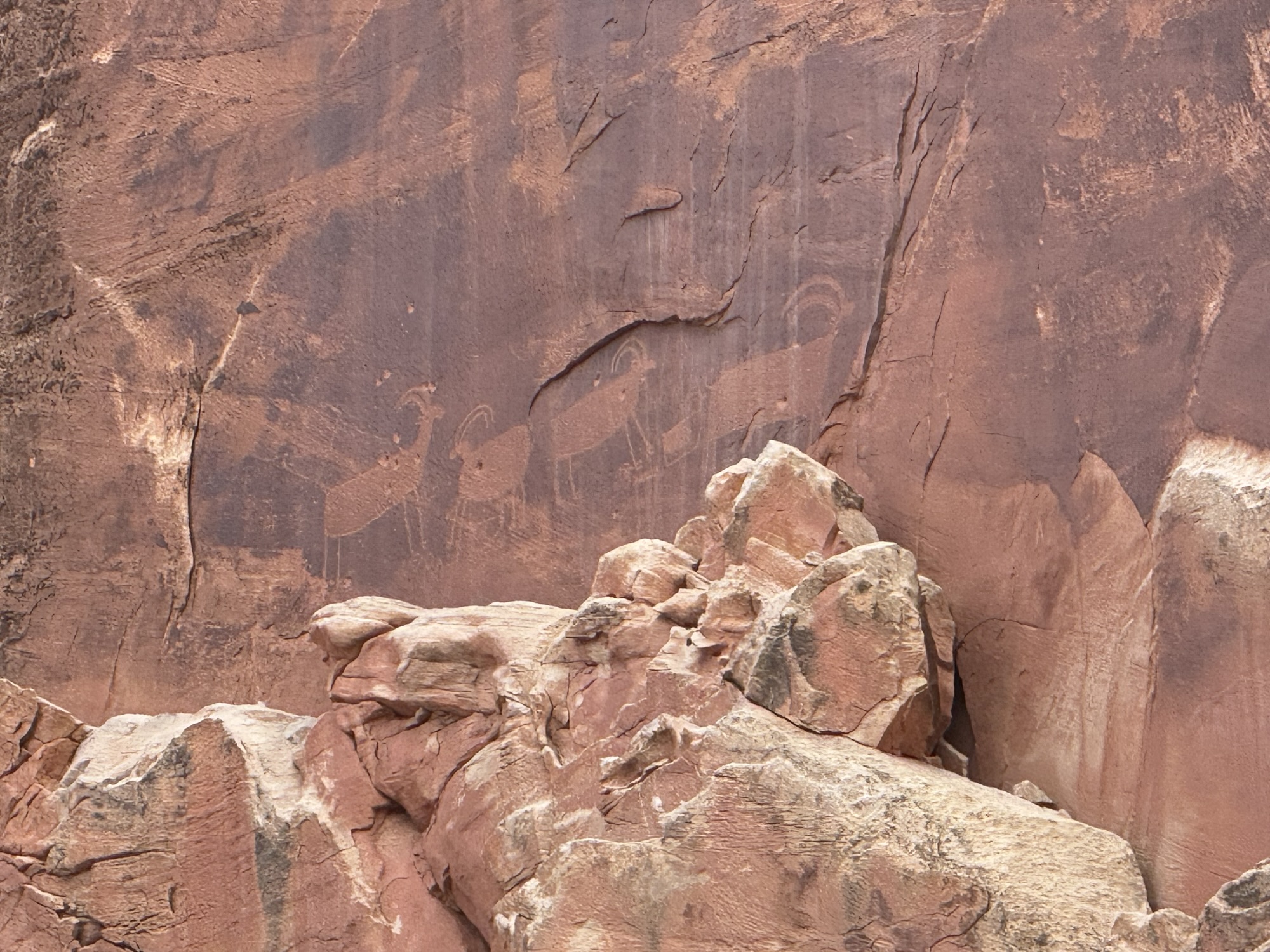
The sheep were to the left and the aliens were to the right. Ike had a lot of fun helping the groups of tourists find them on the wall.


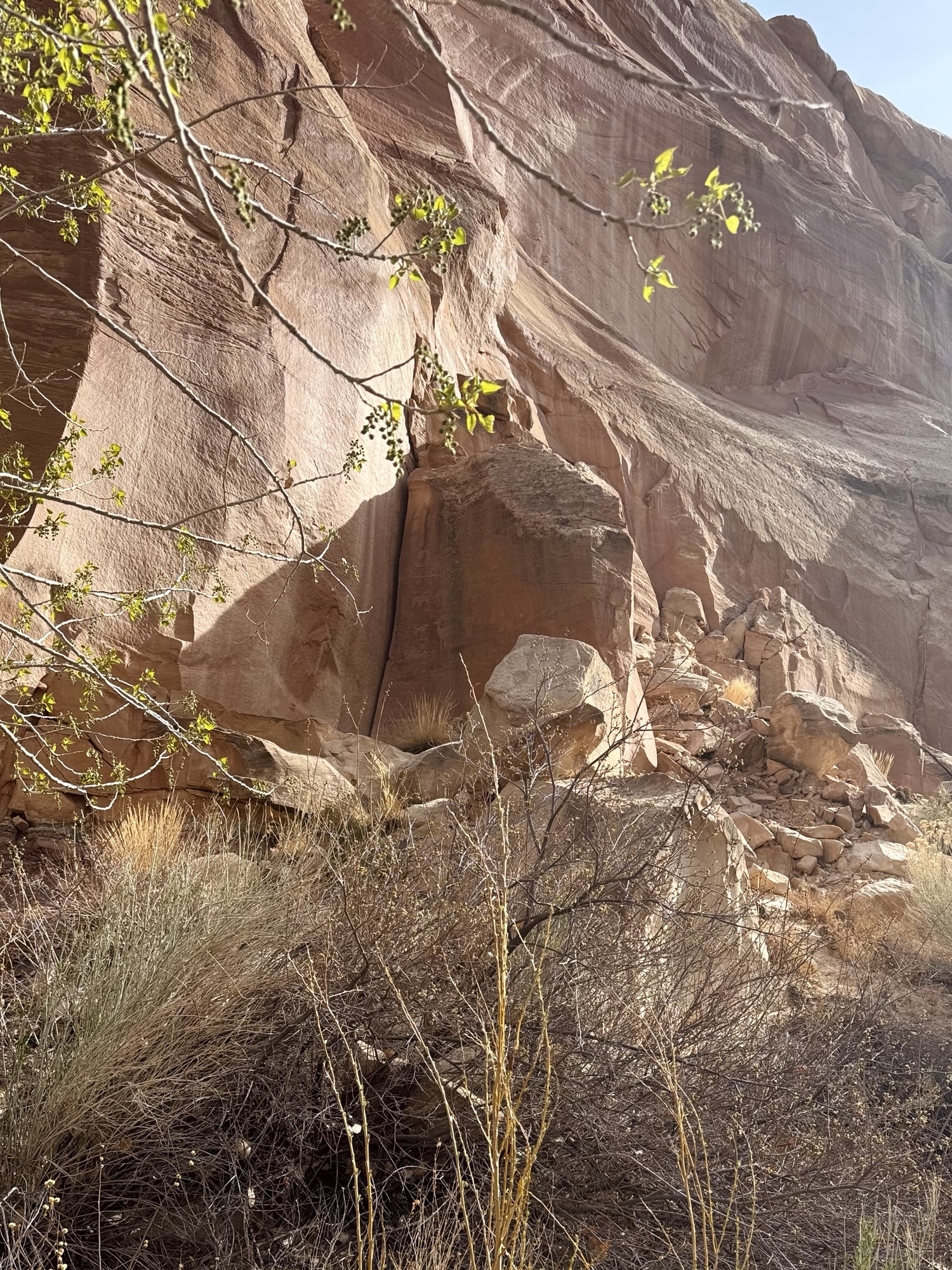
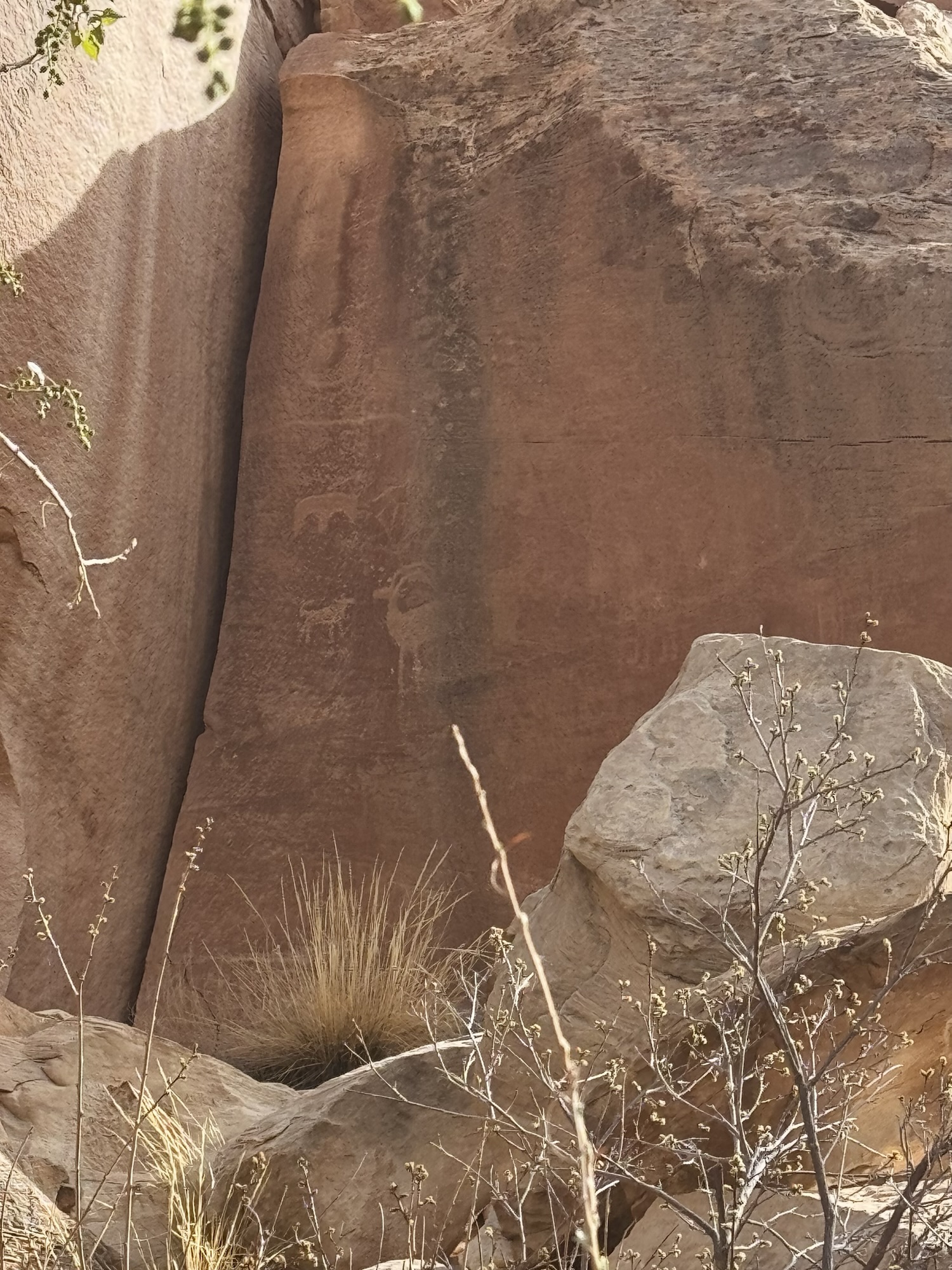

On the side boardwalk above are some of my favorite little dudes ever. These:
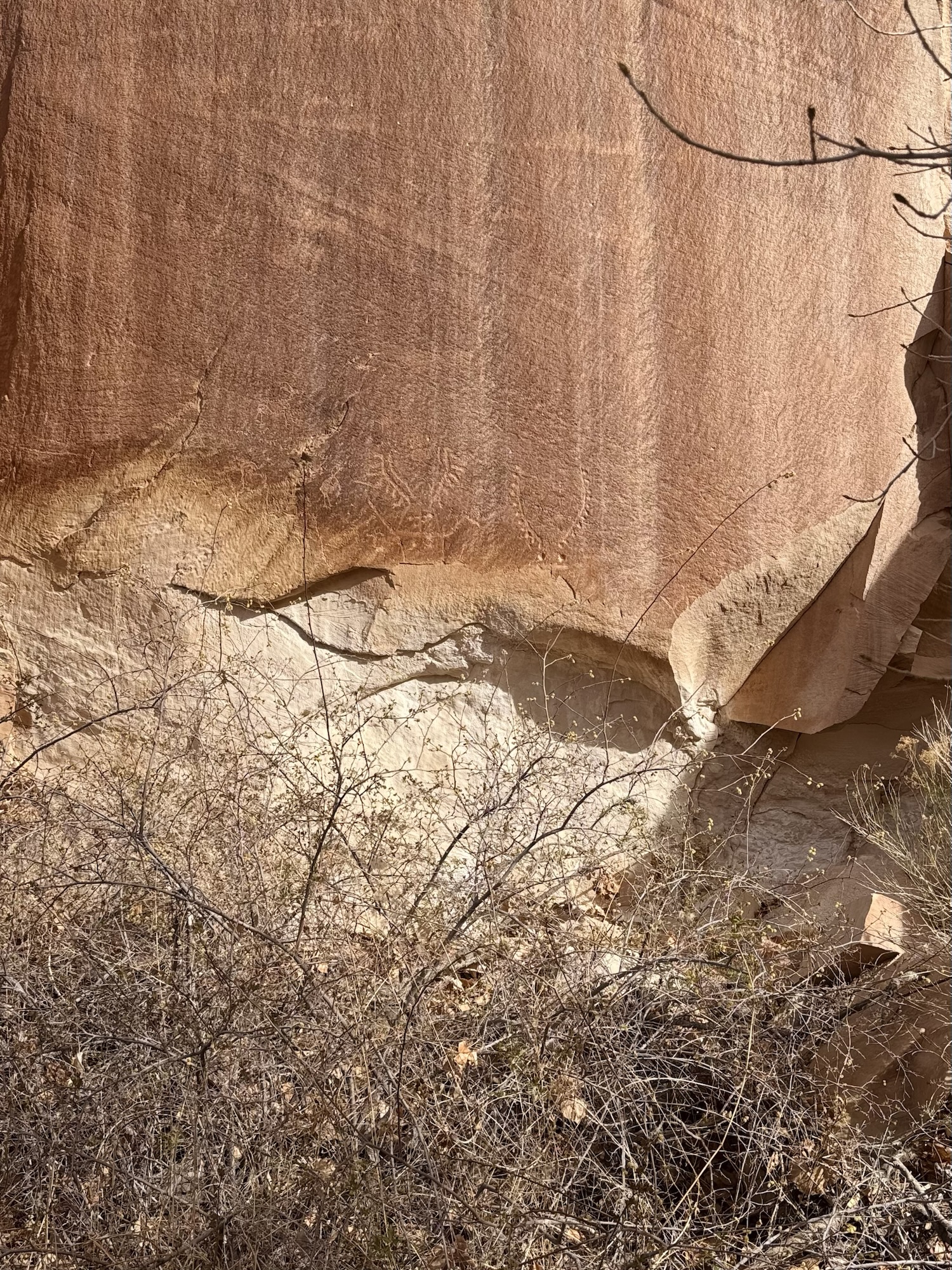

The little man wearing Christmas lights (or lightning?) on his horns next to his matching Christimas-light-horn ghost deer.


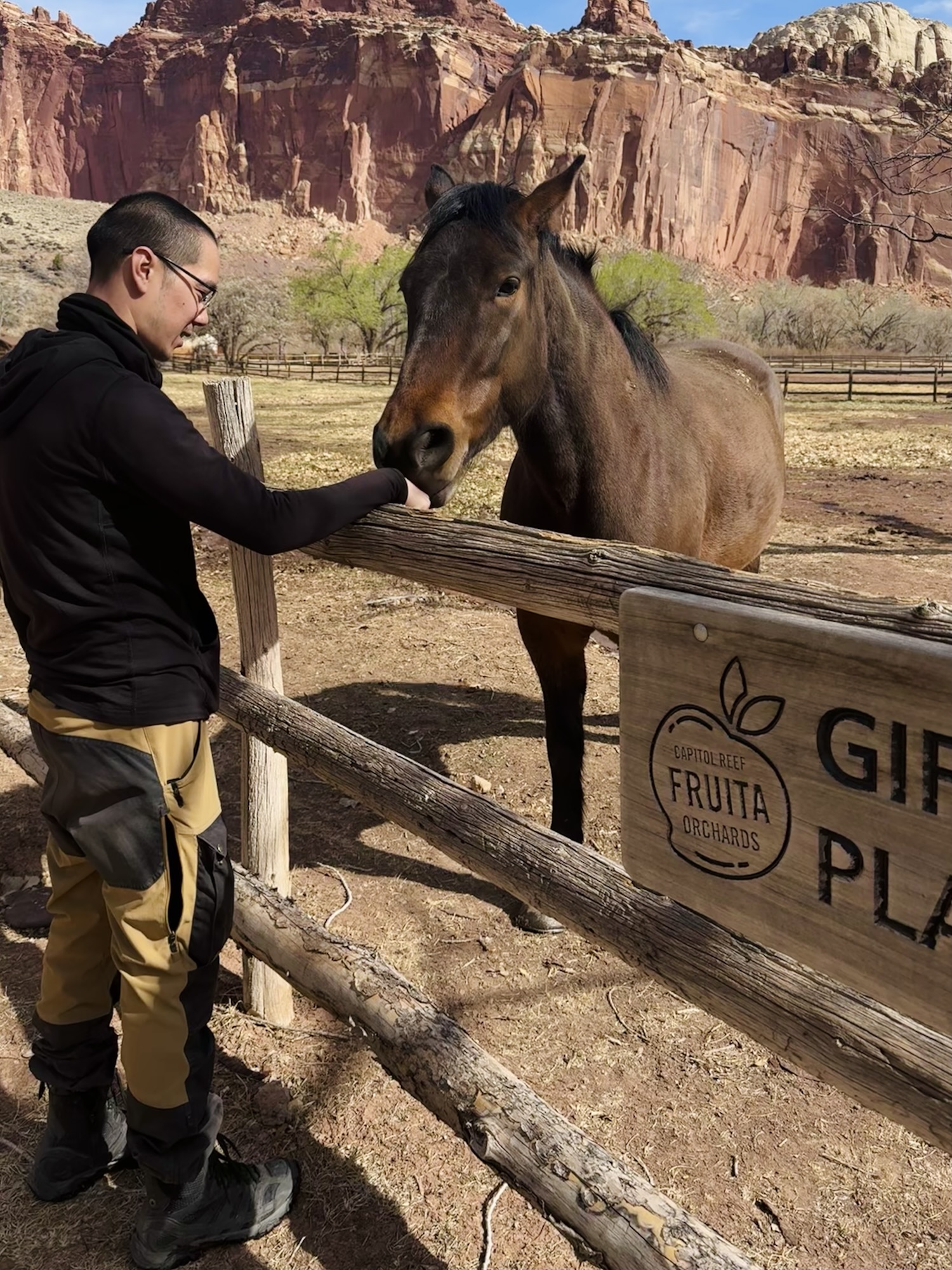
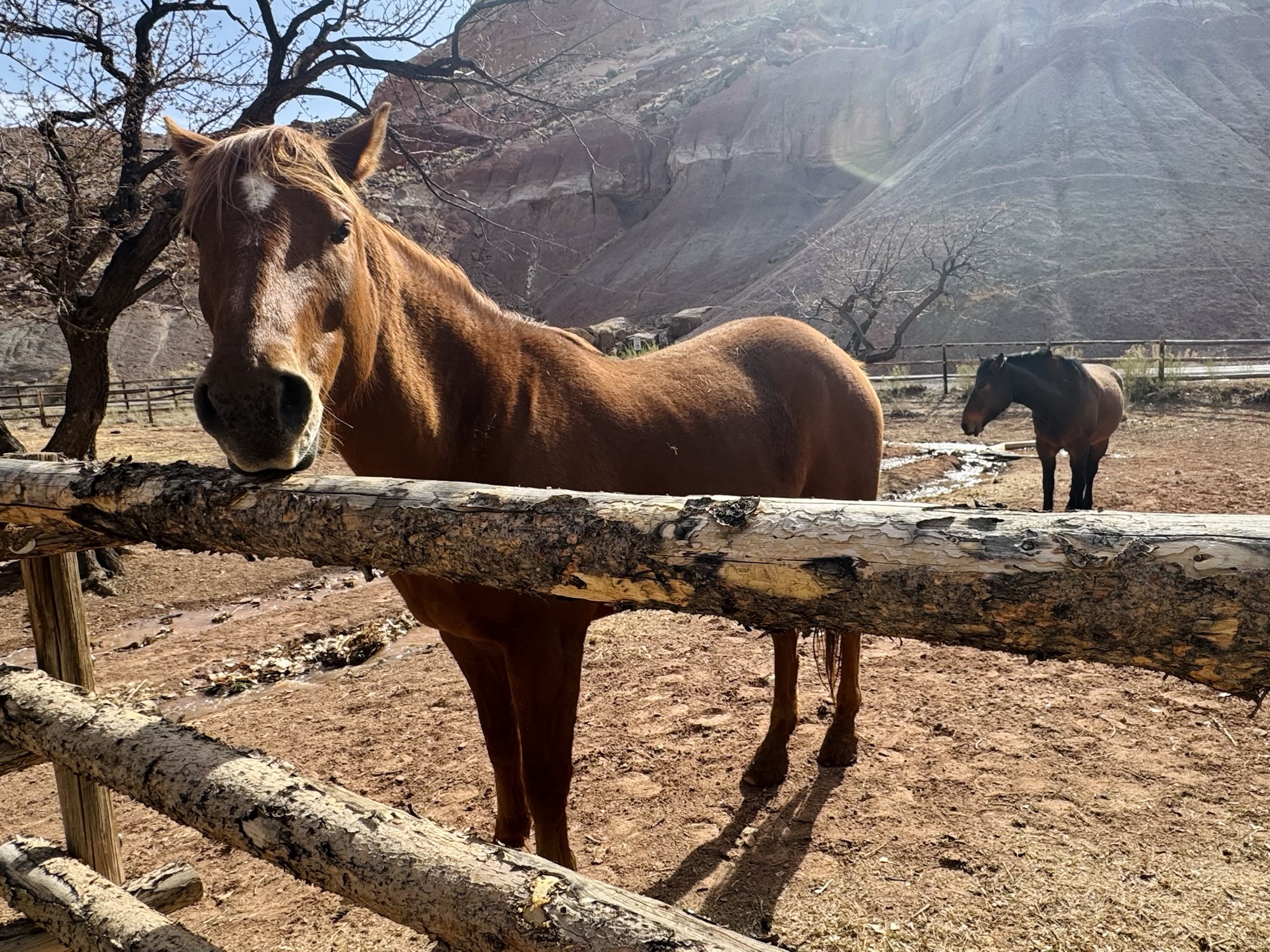
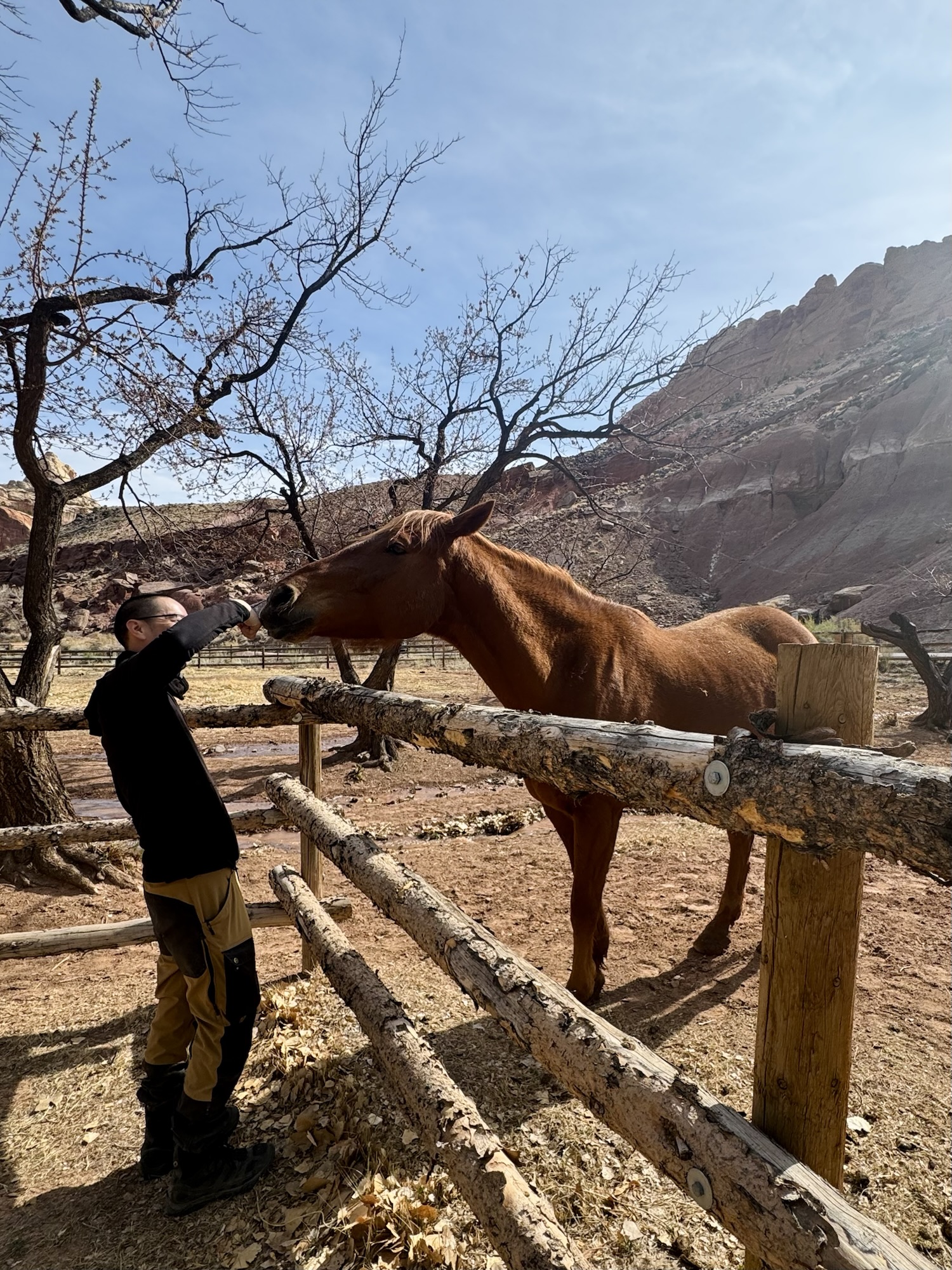
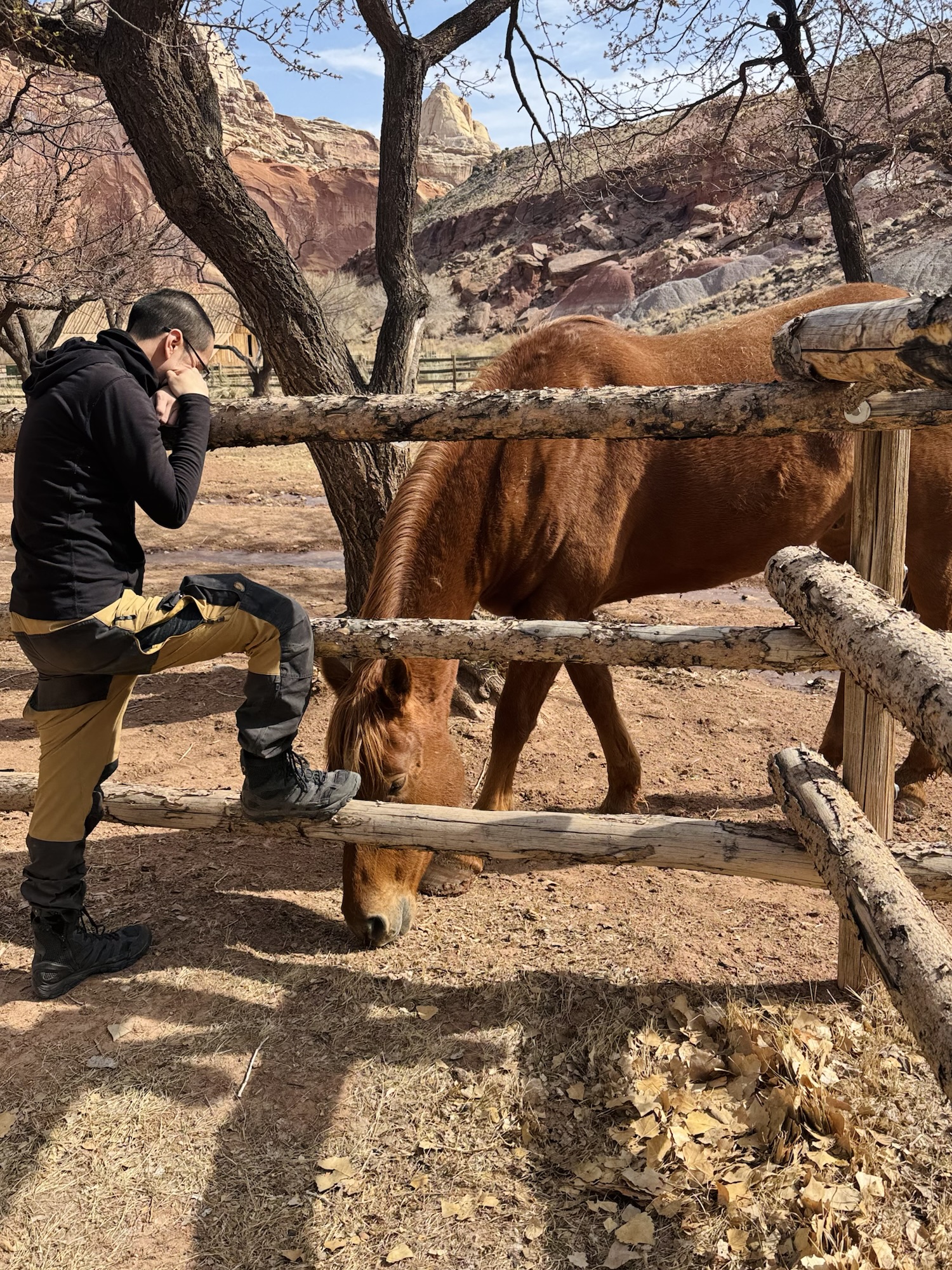
We did all of the visitor-center-related things, then went just a little ways down the road to the Fruita area to have pie for lunch. On our way to the Gifford House, we got totally sidetracked by horses we saw in the distance and were compelled to go say hi to them first. There’s this big ol’ fenced area adjacent to Fruita Campground where these two were hanging out.


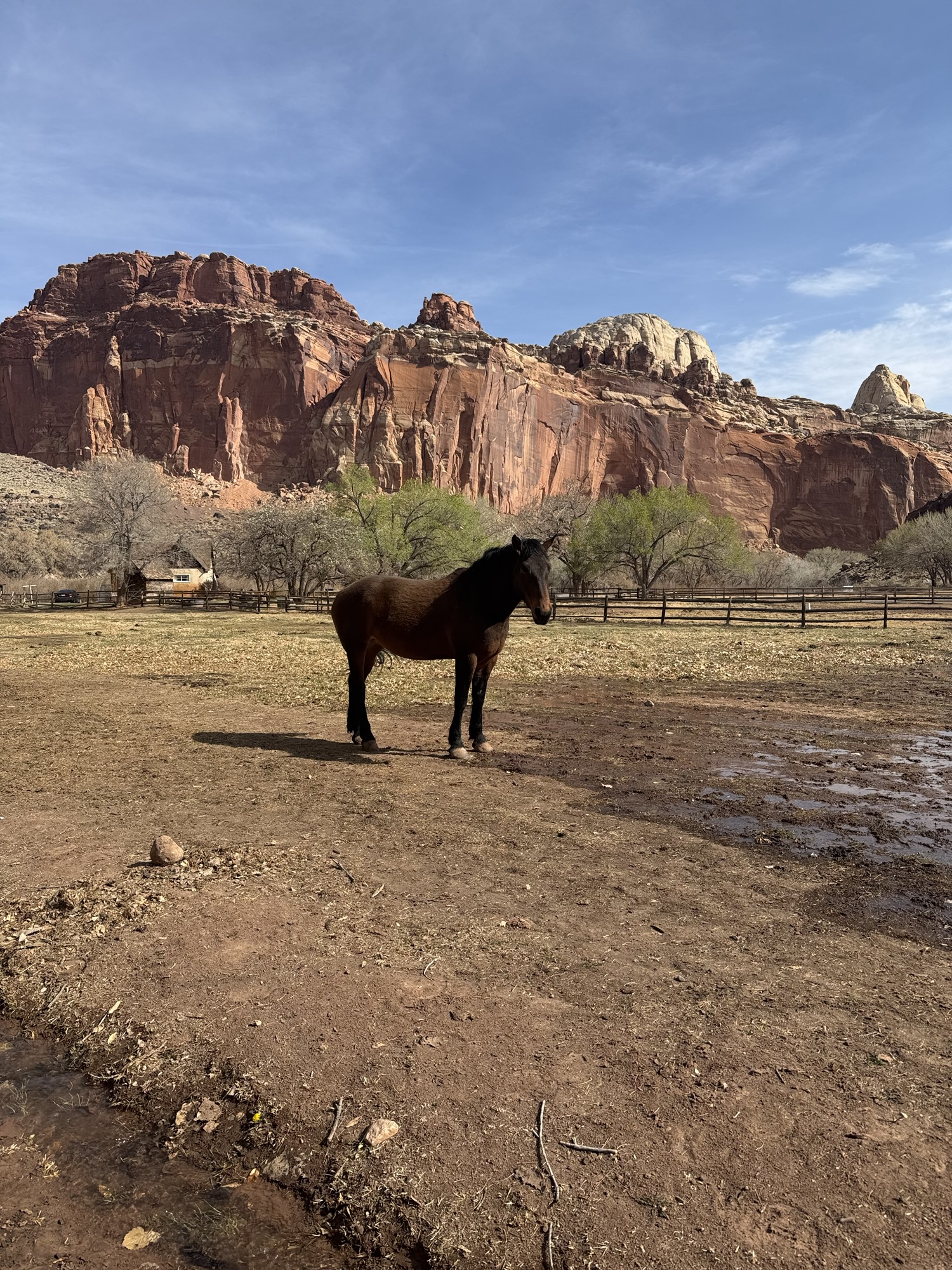
Horses are just giant puppies and you can’t tell me otherwise.



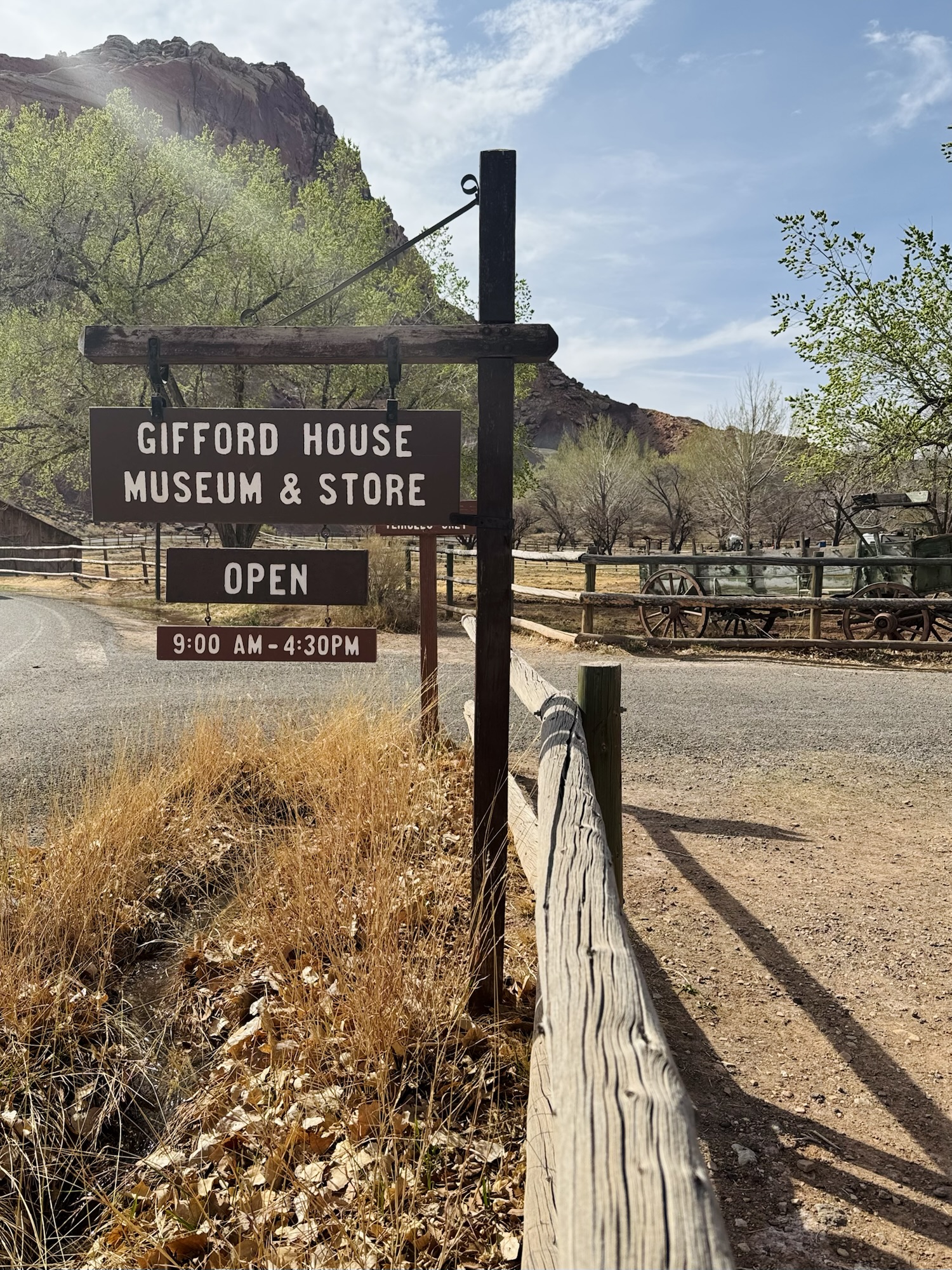
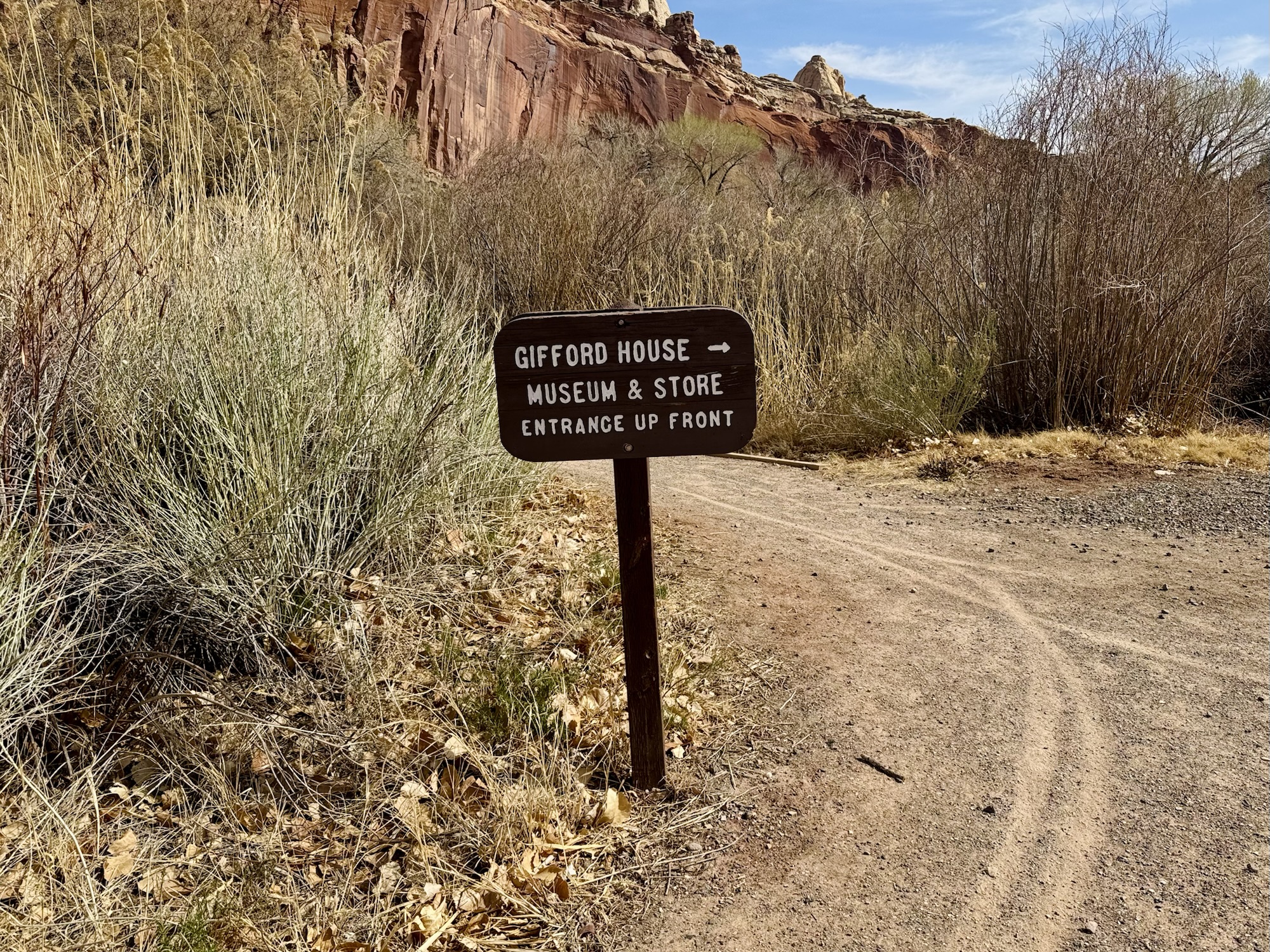
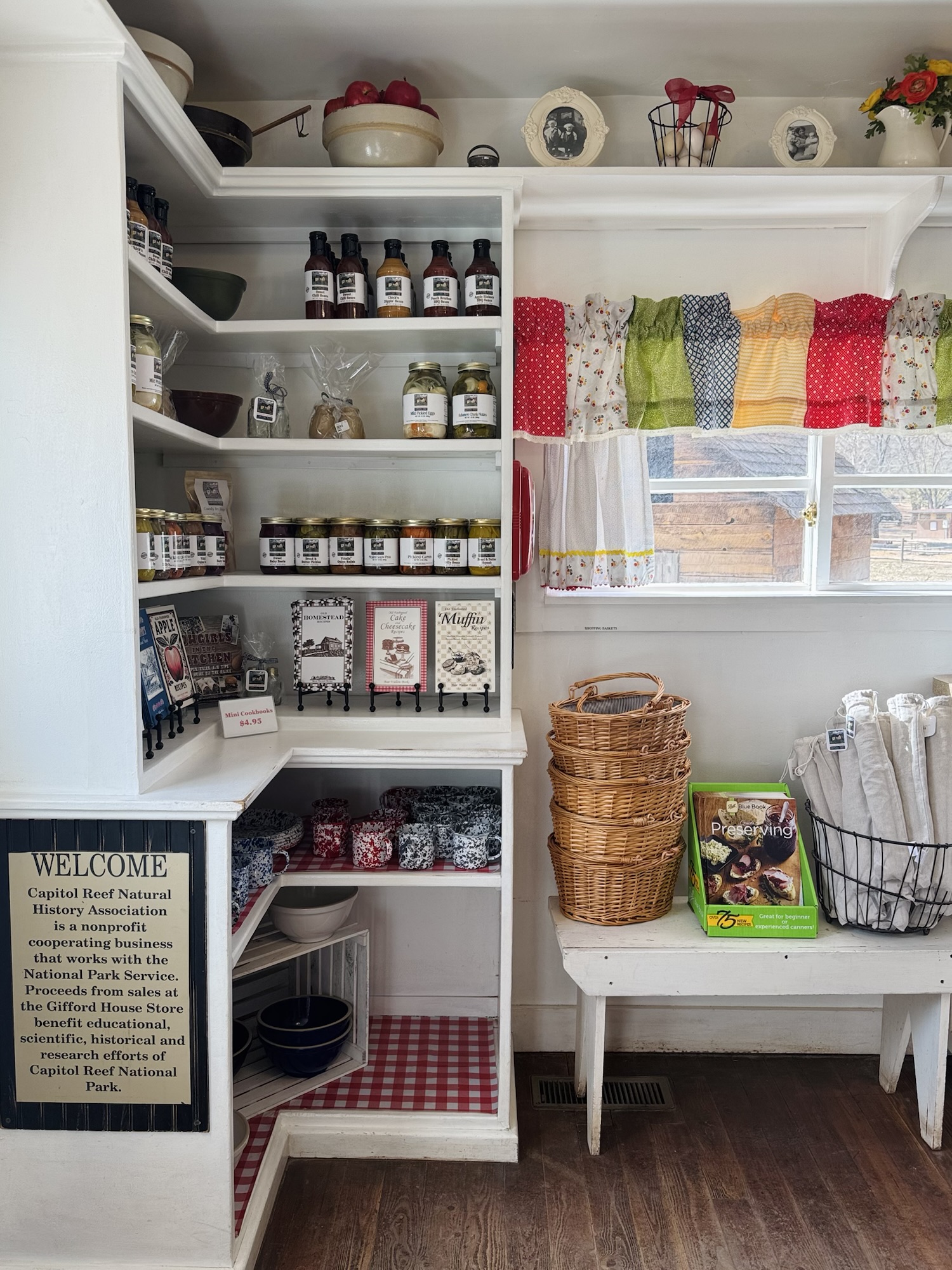
The Gifford House and Museum is closed daily from noon to 12:45, so we kept that in mind and headed back to scope everything out before we ended up being in a rush. The house/museum is super smol and when you walk in, the walls are lined with all types of canned goods, jams, jellies, you name it. There are two other rooms: one to admire and buy textile/knit goods, and the other which is re-made into a sitting room.



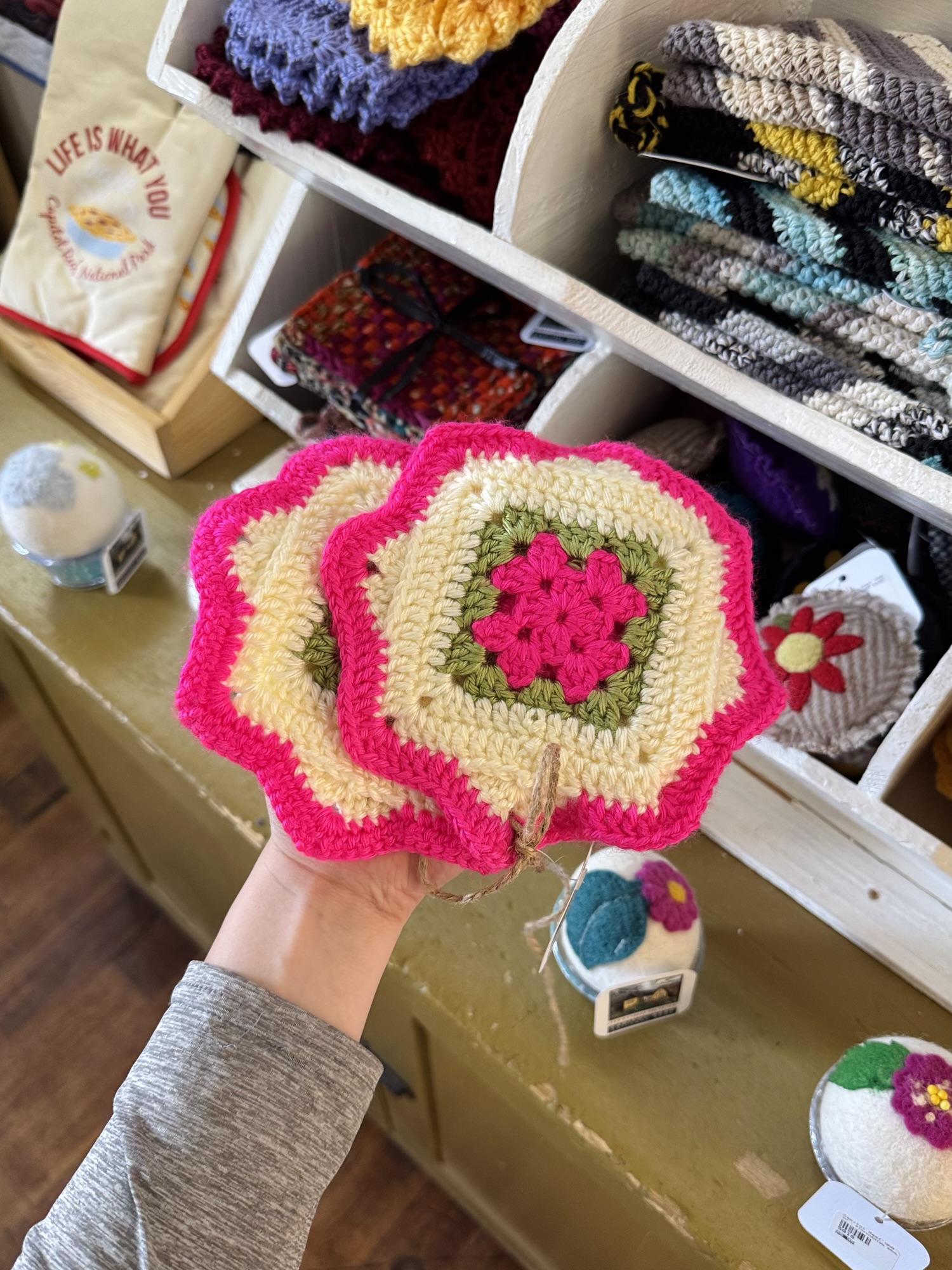

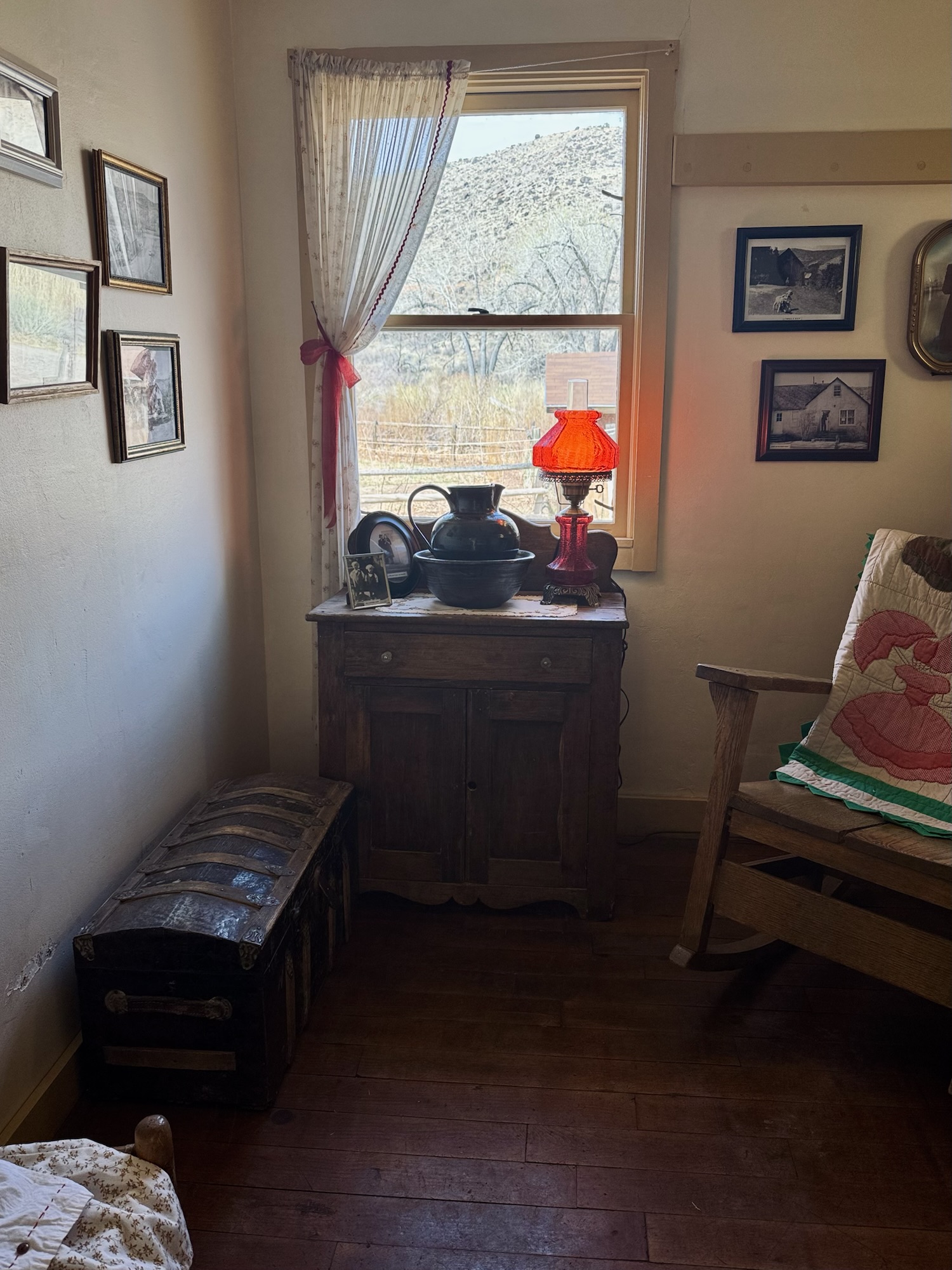

I think about that little sheep plush like every other day.
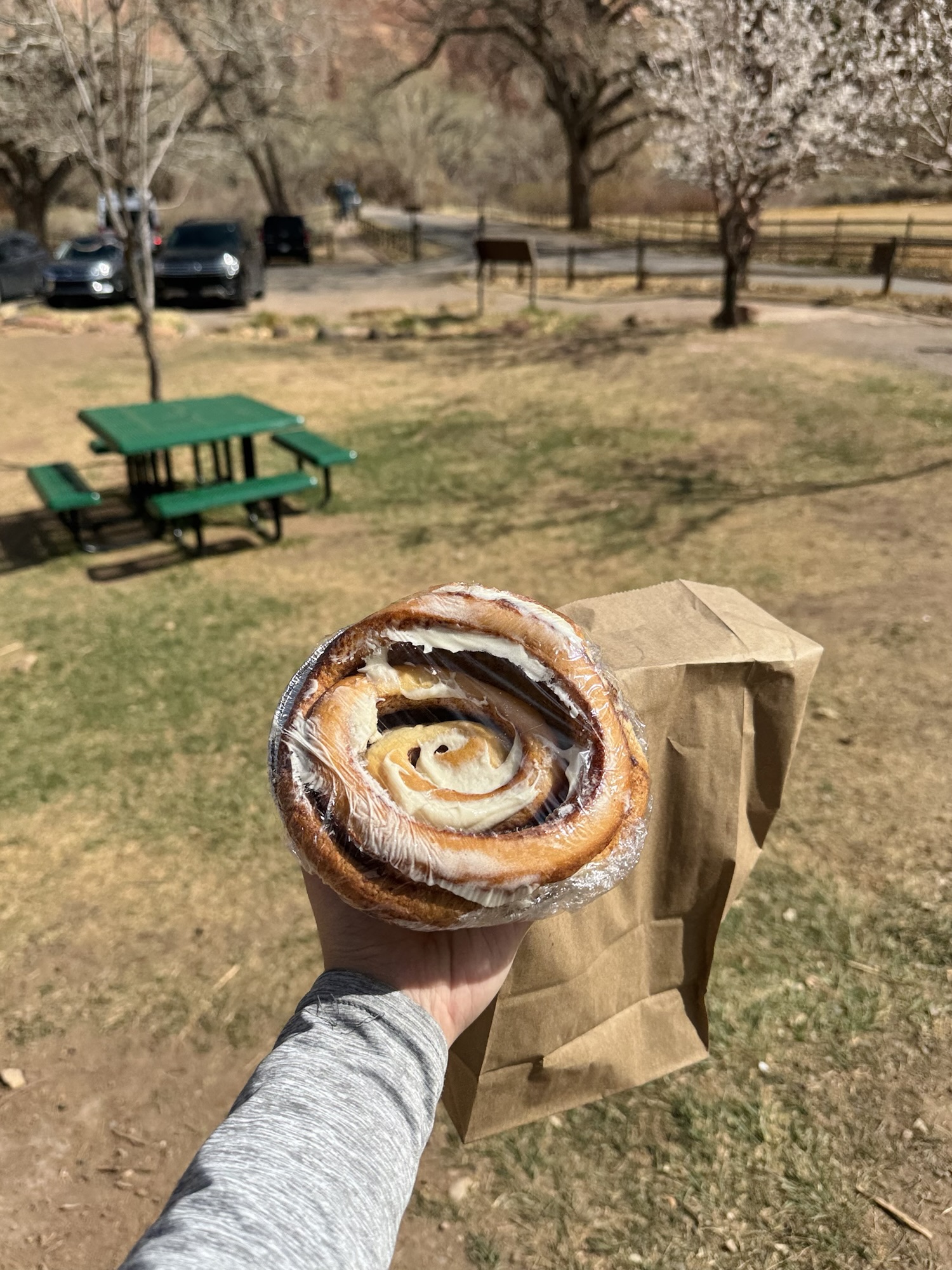
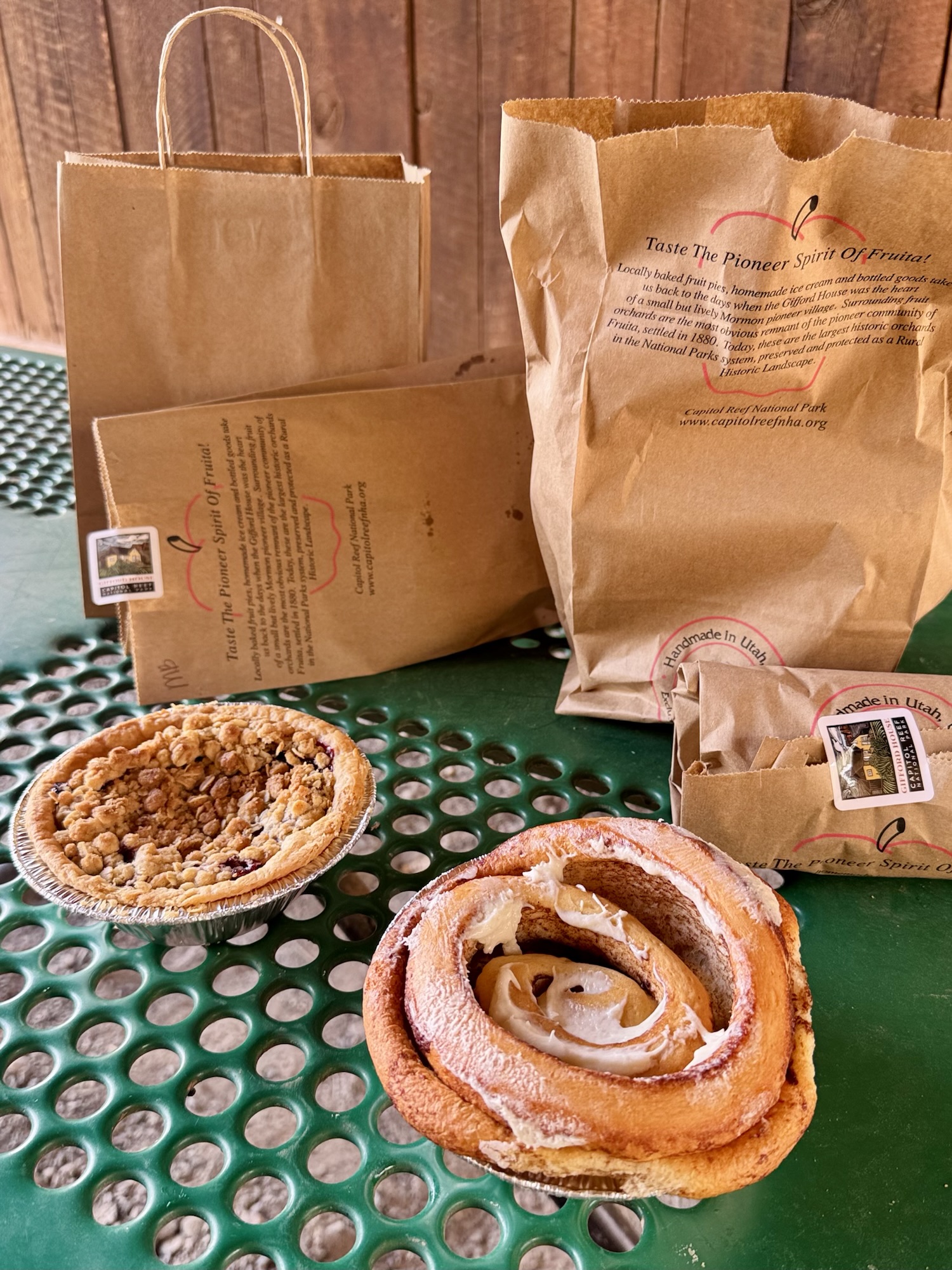

Ike got a super yummy mixed berry pie with crumble topping. I couldn’t resist getting one of these huge fluffy cinnamon rolls. We sat at the only picnic table under the shade of the Gifford House’s garage to hang out and enjoy this lunch… just mentally preparing for the crowds we knew we’d be in at our next stop: Bryce (!!!!!). (We were so excited though.)

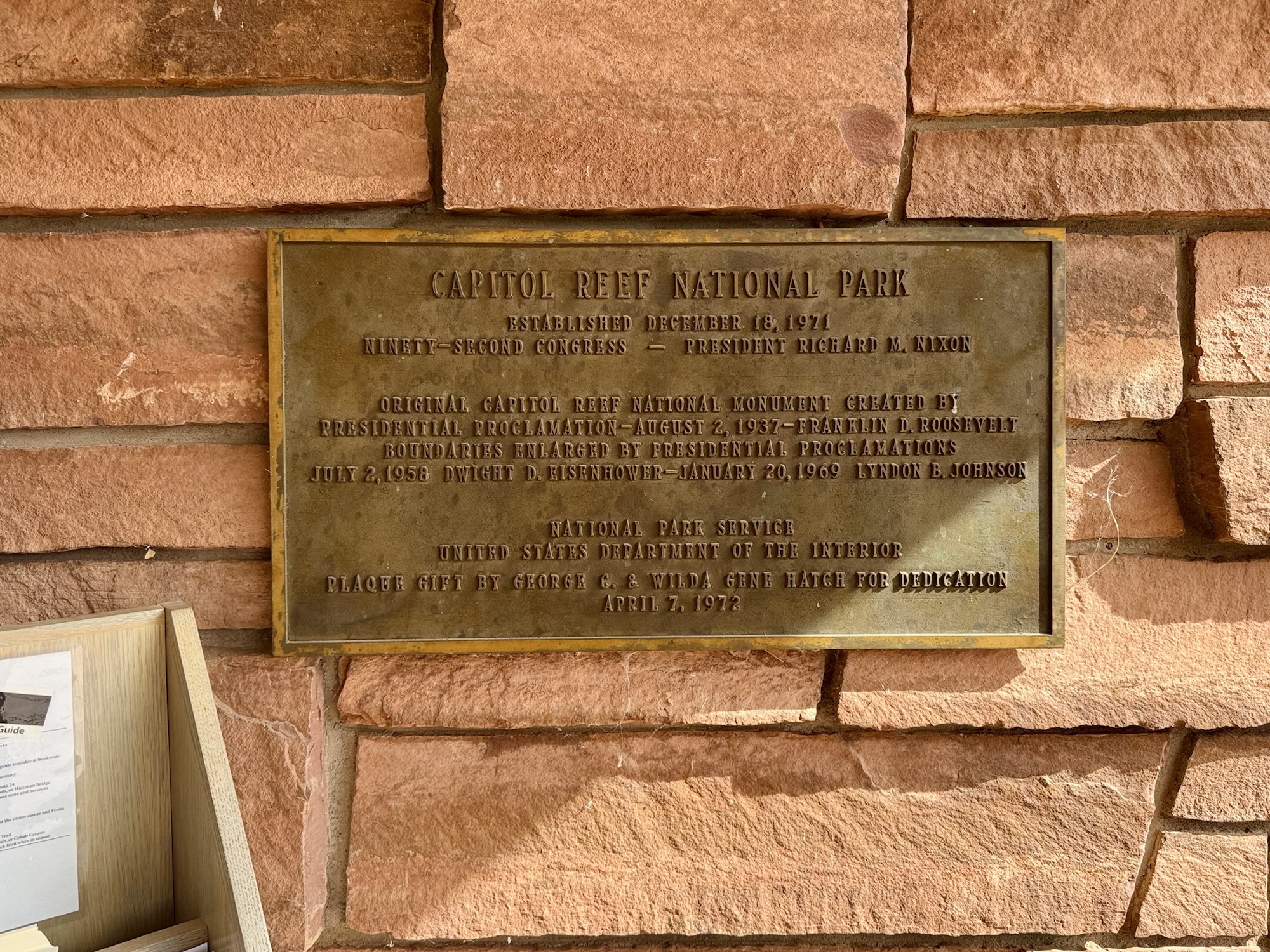
Capitol Reef National Park via National Park Service:
https://www.nps.gov/care/index.htm
Learn more about the Gifford House:
https://www.nps.gov/care/learn/historyculture/giffordhomestead.htm
More about Capitol Reef’s petroglyphs:
https://www.visitutah.com/places-to-go/parks-outdoors/capitol-reef/capitol-reef-petroglyphs
Book a stay in Fruita Campground:
https://www.recreation.gov/camping/campgrounds/272245


 Caitlyn is outside.
Leave a comment