
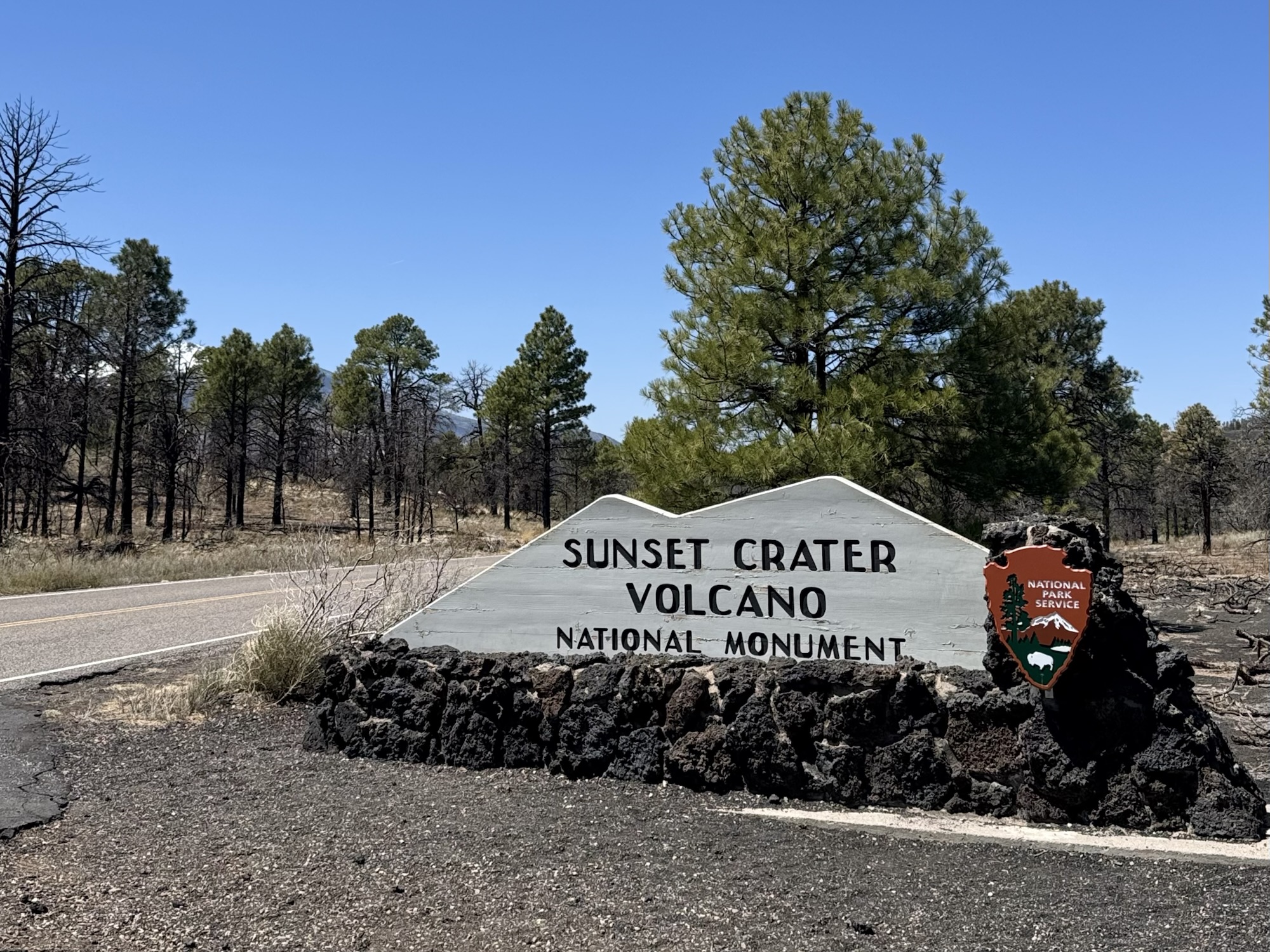
After spending the entire (HOT) morning exploring all of the neighborhoods of Wupatki National Monument, we headed back toward 89A to visit some other indigenous sites. We’d quickly visited Walnut Canyon NM and the next door Sunset Crater Volcano NM the summer before this, so we super glad to have another excuse to be in the area.
Interestingly, we learned that Sunset Crater Volcano’s eruption and subsequent ash-covering-everything is what caused displacement of the Sinagua people, aka the residents of Tuzigoot (our next stop after this). And the reason it became a National Monument in 1930 is because a movie production company wanted to basically blow it up to cause an avalanche for their movie. So, thanks Herbert Hoover!
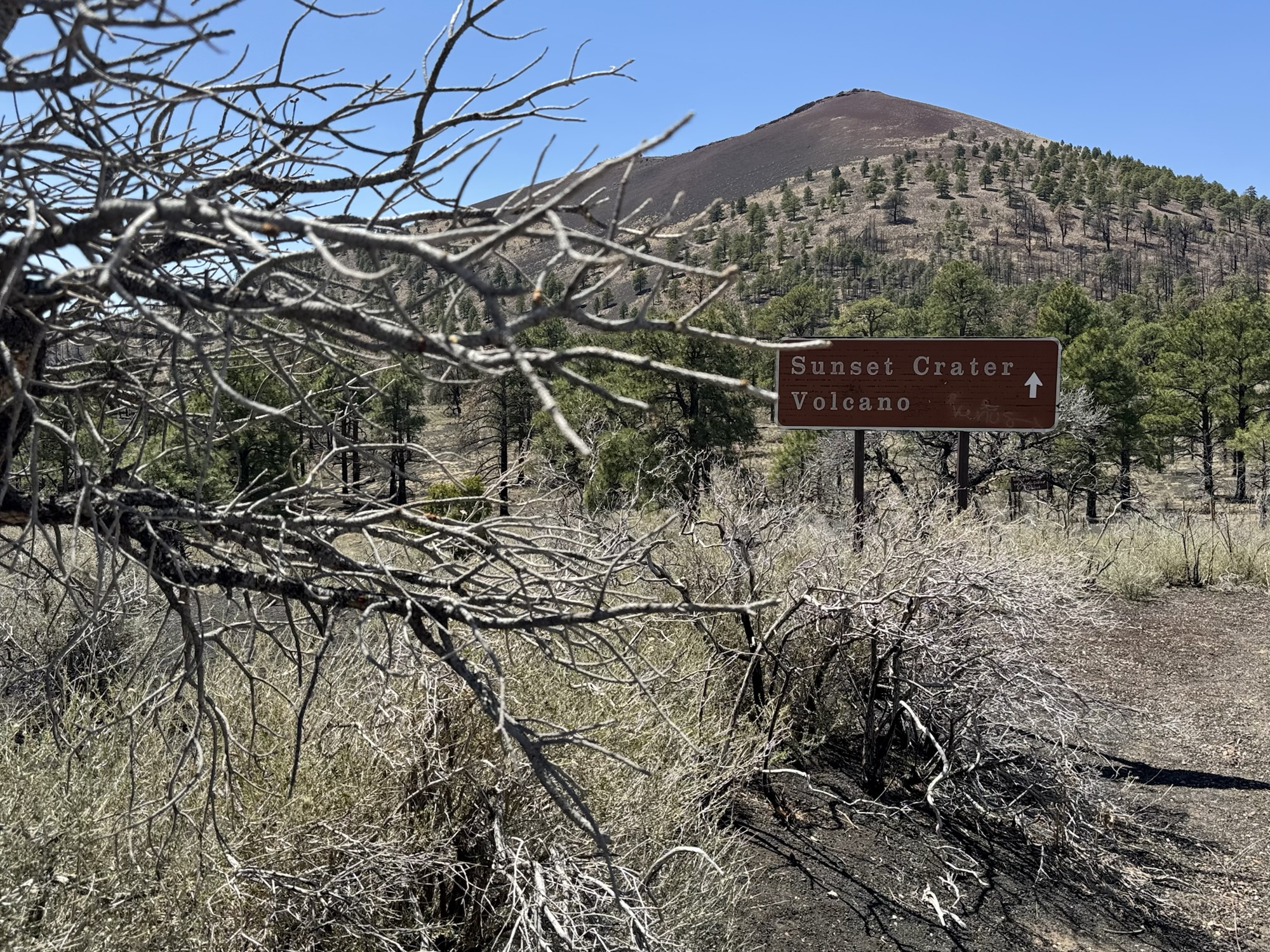
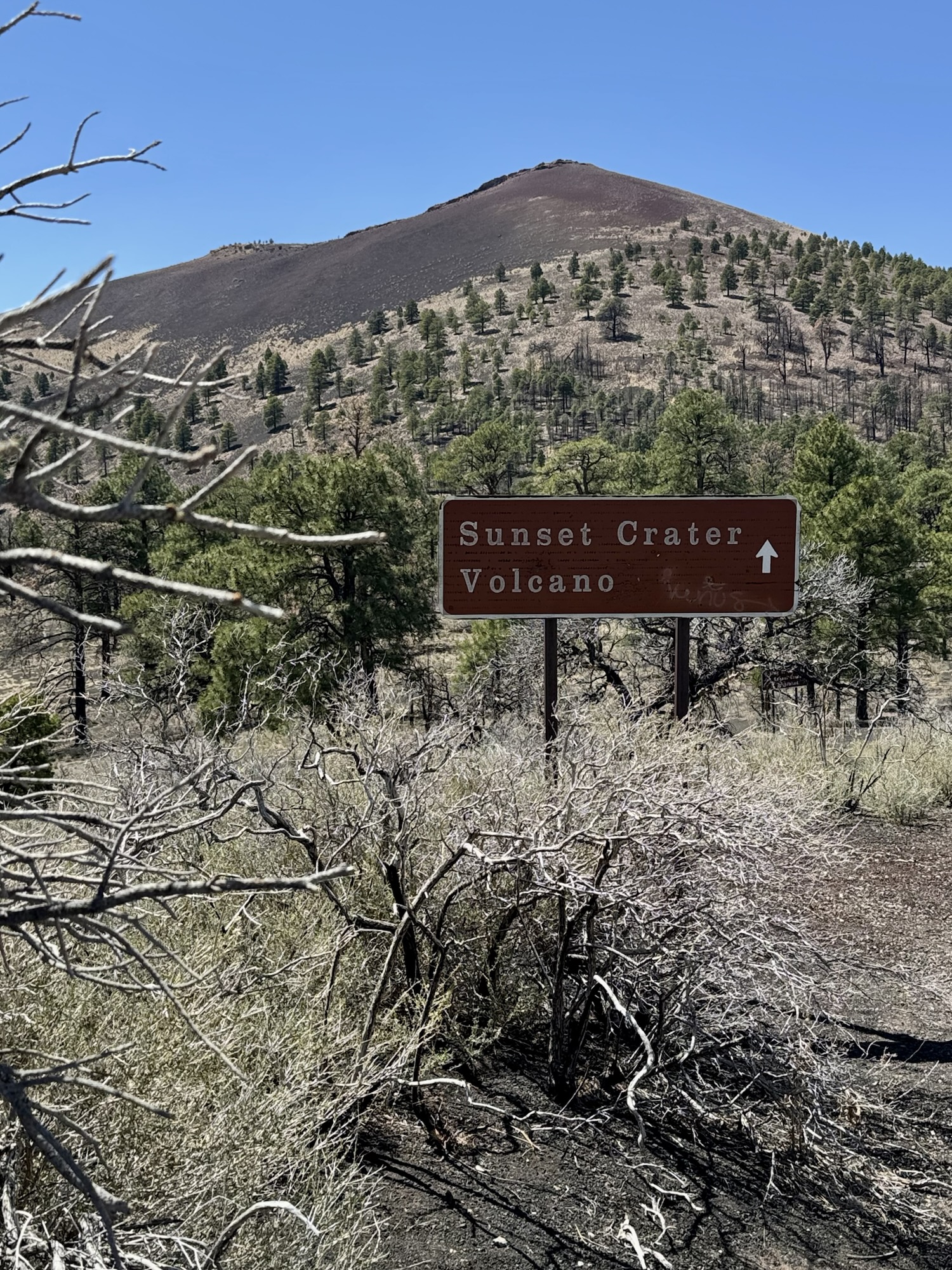
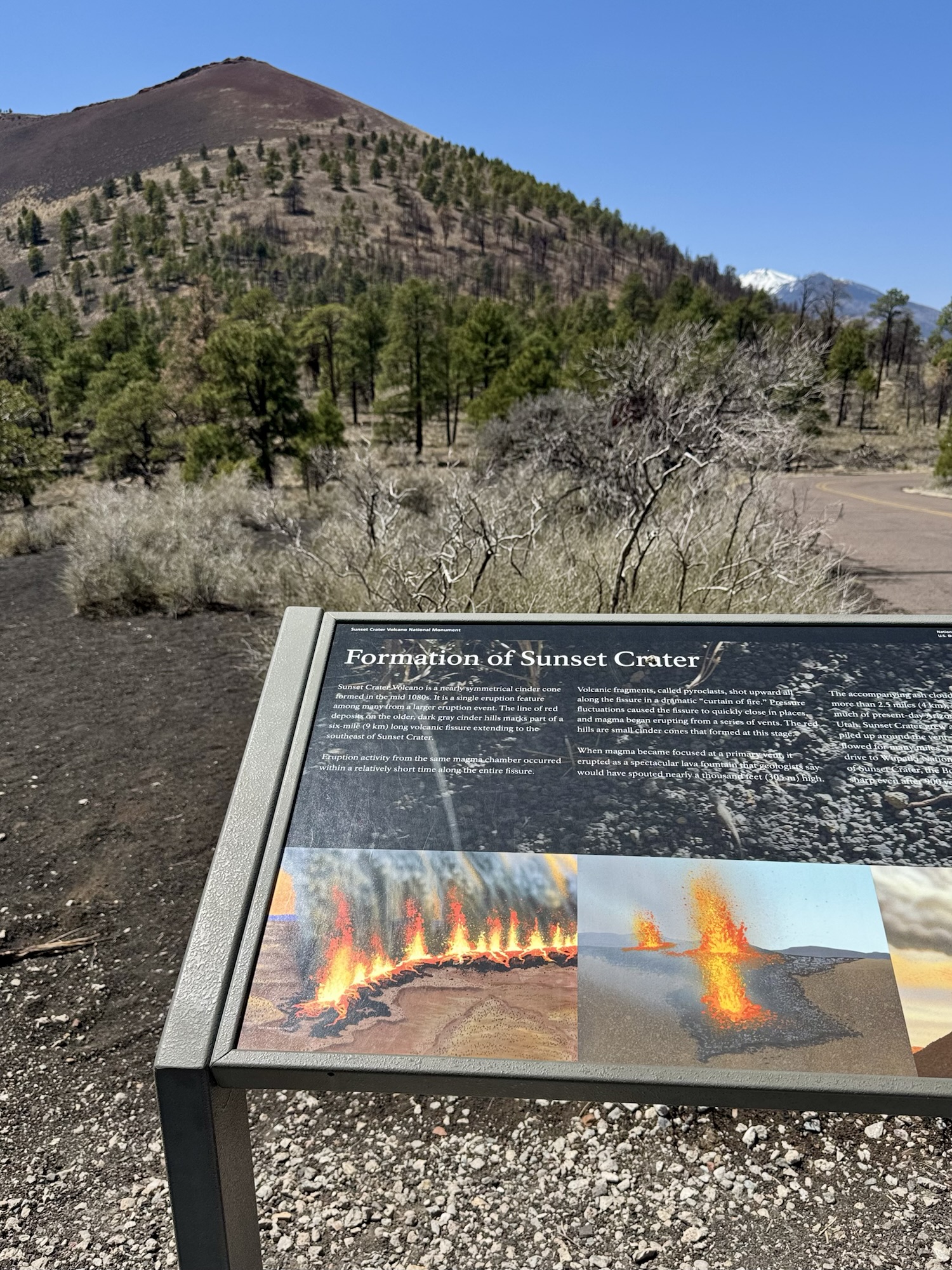

“Sunset Crater Volcano is a nearly symmetrical cinder cone formed in the mid 1080’s. It is a single eruption feature among many from a larger eruption event. The line of red deposits on the older, dark gray cinder hills marks part of a six-mile (9 km) long volcanic fissure extending to the southeast of Sunset Crater... Eruption activity from the same magma chamber occurred within a relatively short time along the entire fissure… Volcanic fragments, called pyroclasts, shot upward all along the fissure in a dramatic ‘curtain of fire.’ Pressure fluctuations caused the fissure to quickly close in places, and magma began erupting from a series of vents. The red hills are small cinder cones that formed at this stage… When magma became focused at a primary vent, it erupted as a spectacular lava fountain that geologists say would have sprouted nearly a thousand feet (305 m) high… The accompanying ash cloud, estimated to have risen more than 2.5 miles (4 km), would have been visible across much of present-day Arizona, New Mexico, and parts of Utah. Sunset Crater grew as the shower of cinders and ash piled up around the event. Lava broke out of the base and flowed for many miles. The Kana-a flow is visible on the drive to Wupatki National Monument. On the other side of Sunset Crater, the Bonito Lava Flow remains jagged and sharp even after 900 years.”


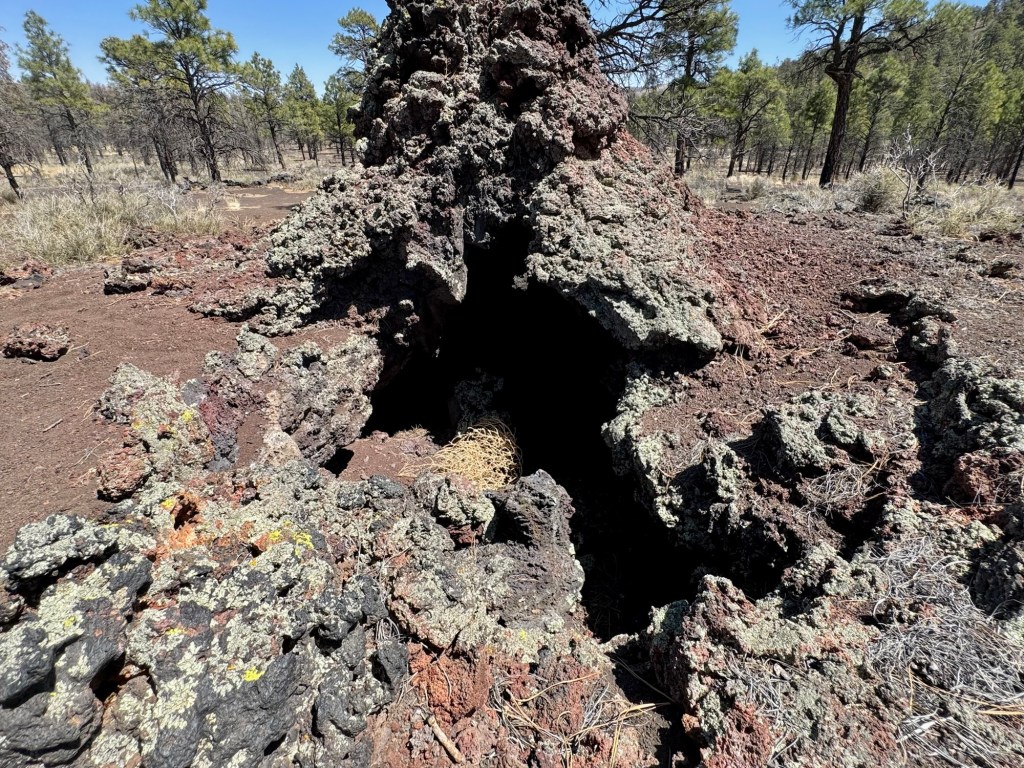
Geocaching has become a really entertaining way for us to break up the long drives that we’re always doing, and this was no exception. We had already seen the really cool Earth crack while geocaching at Wupatki. I thought nothing could top that. That was, until Ike crawled inside of an active fumarole to find this one.
We parked just off the road in a flat (black) sandy spot, basically the only meaningfully shaded area around. Then walked aimlessly into the woods using the coordinates Ike had. There were bunches of charred wood everywhere. Maybe from the fire that came through here in 2022?
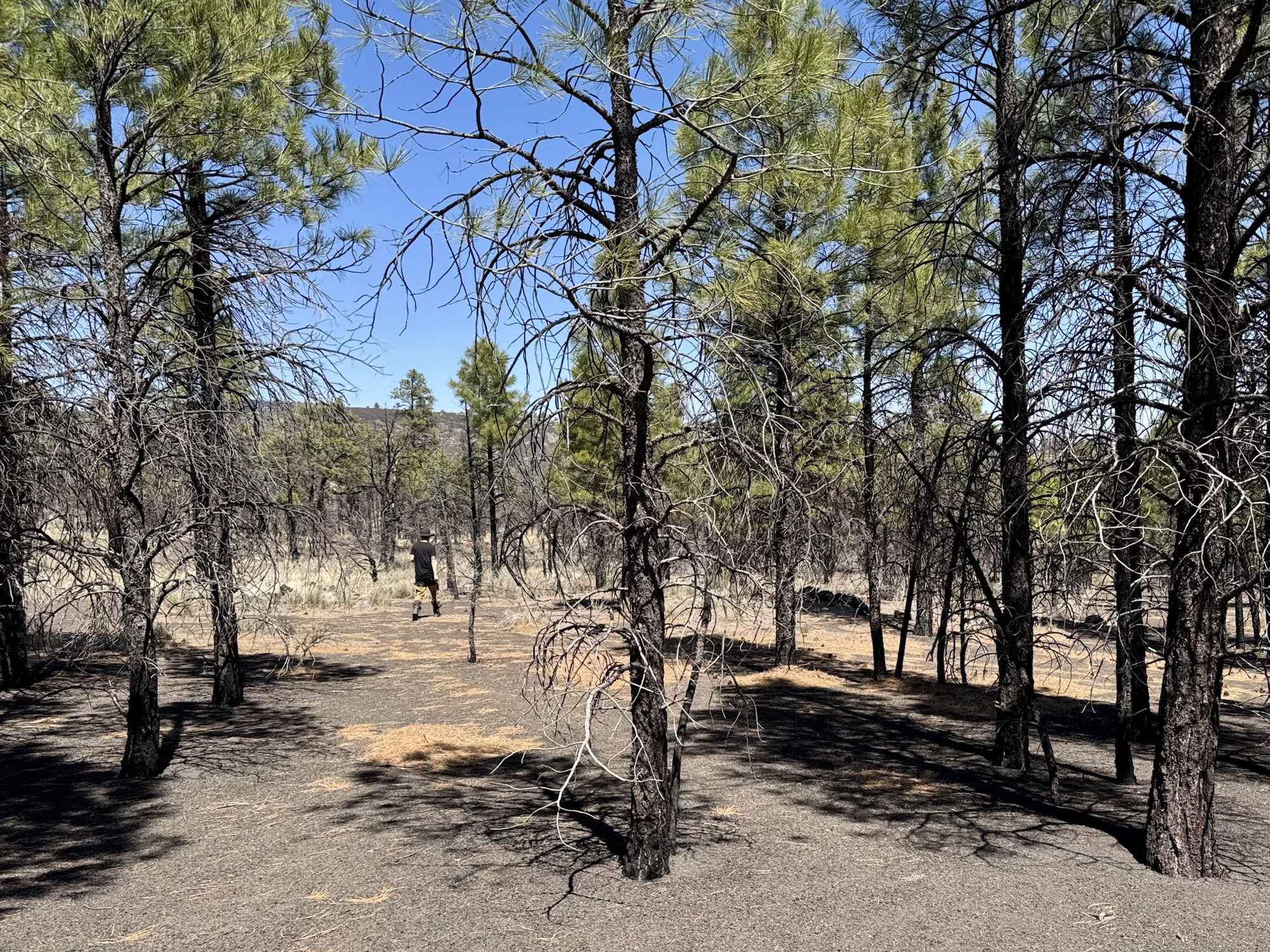

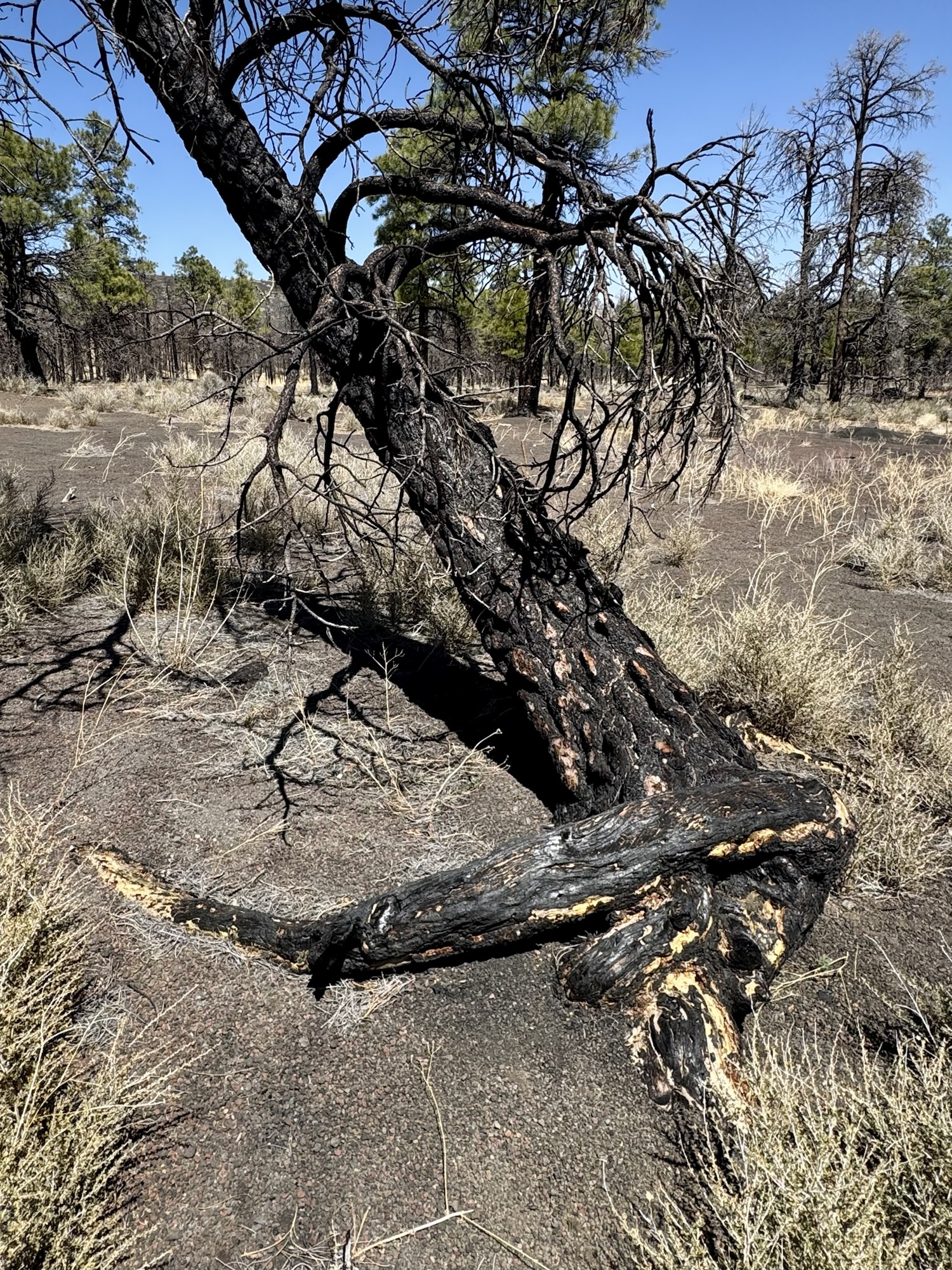


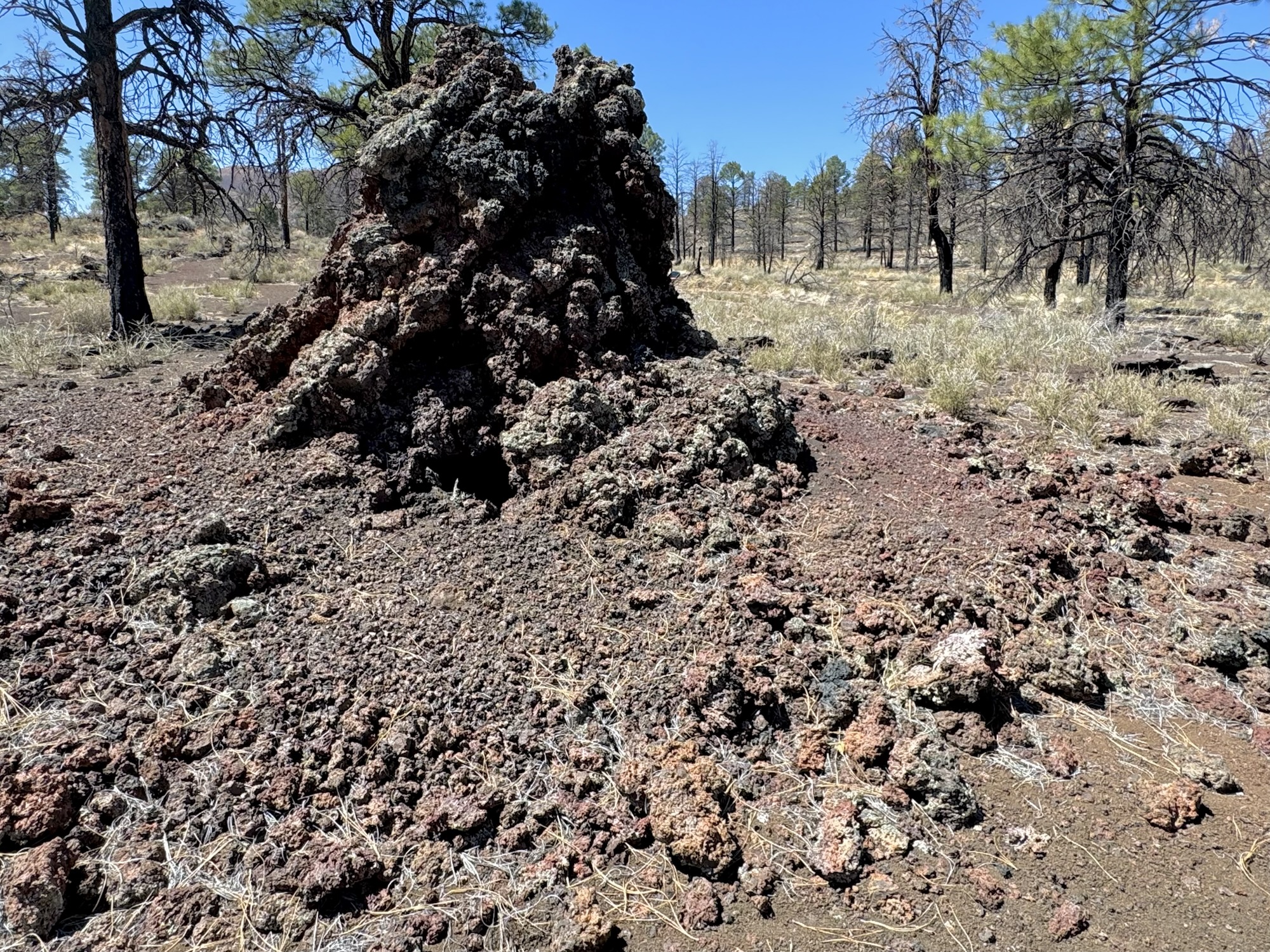
Then all of a sudden: an actual fumarole!

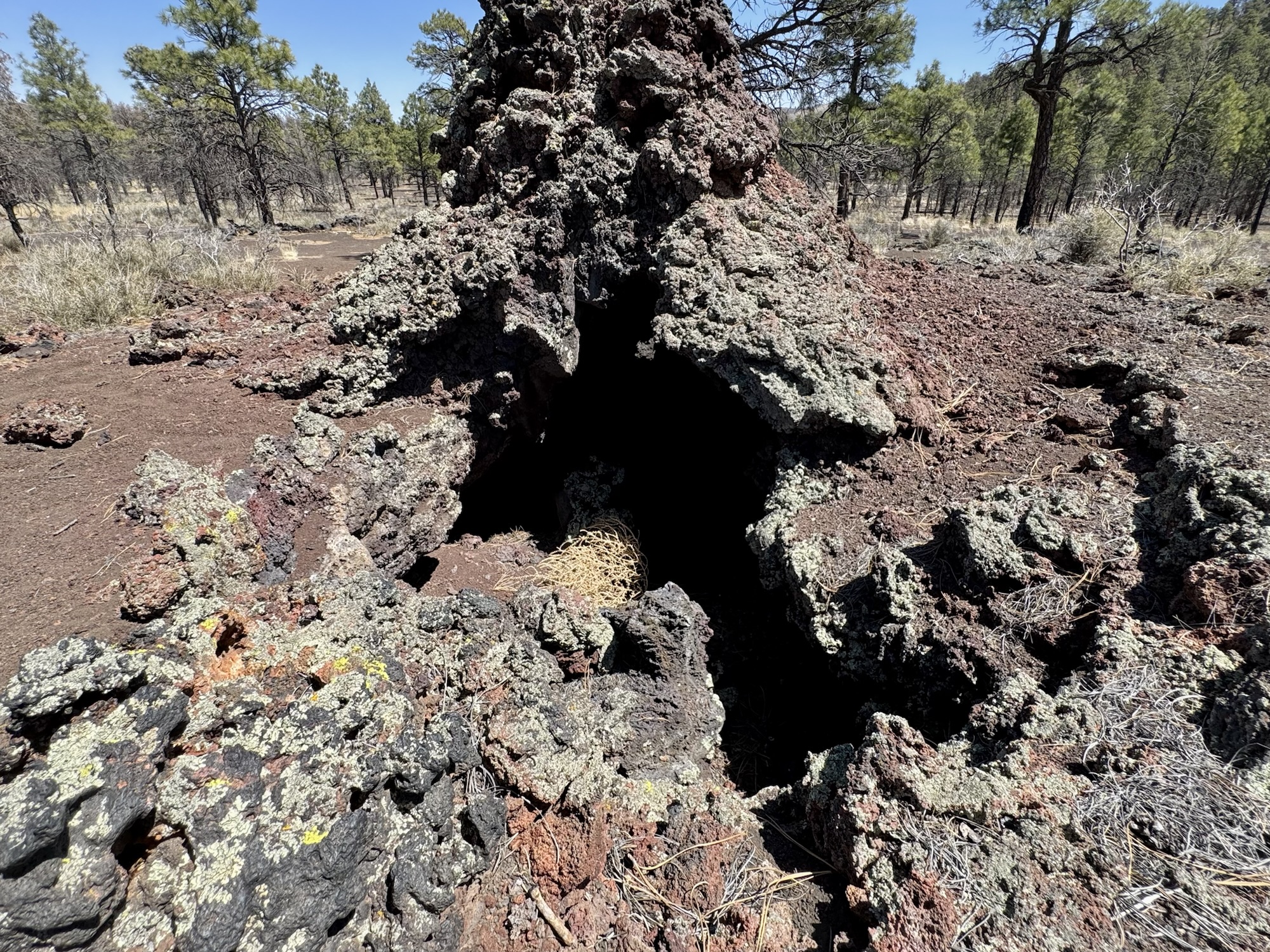

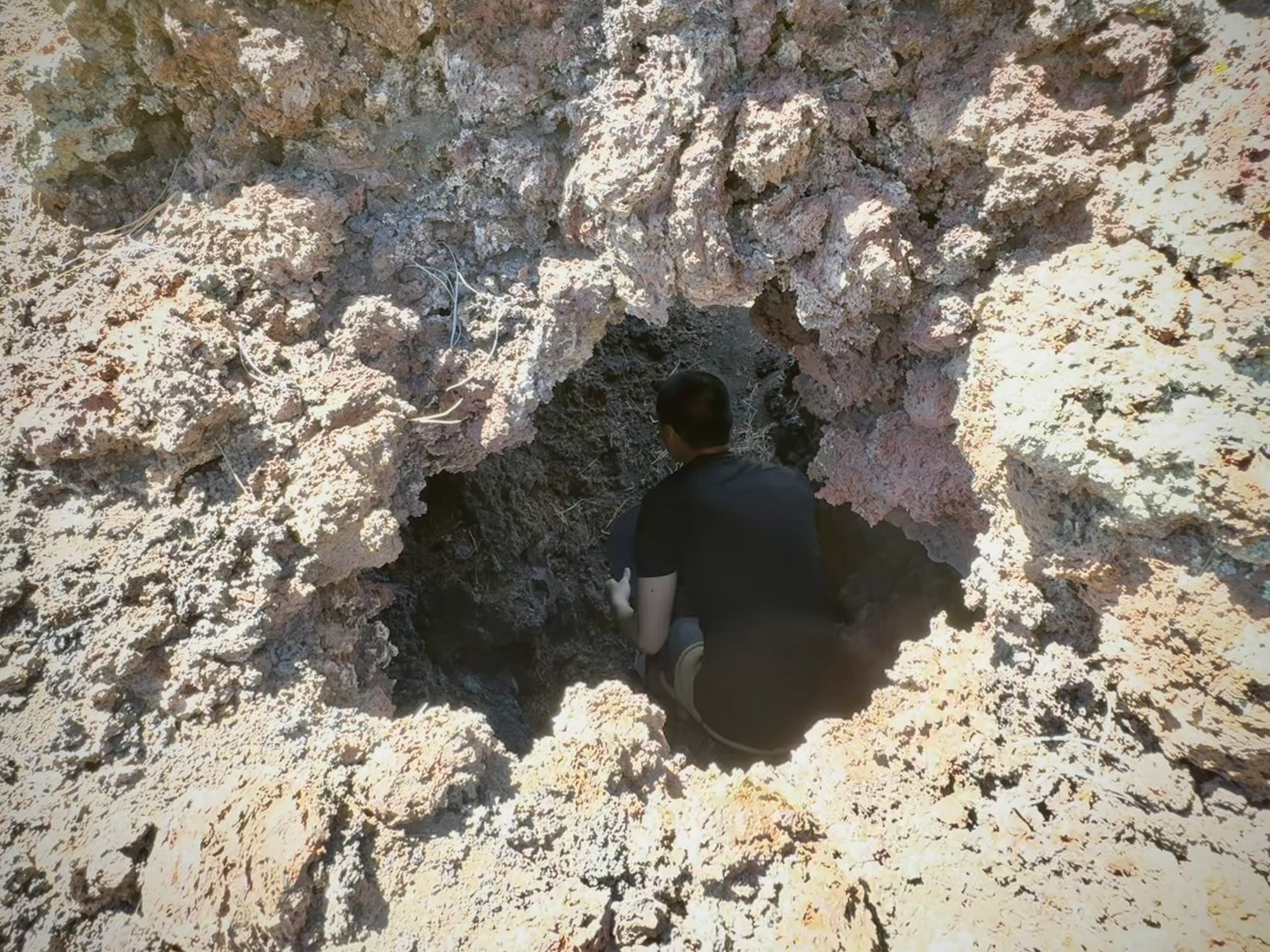
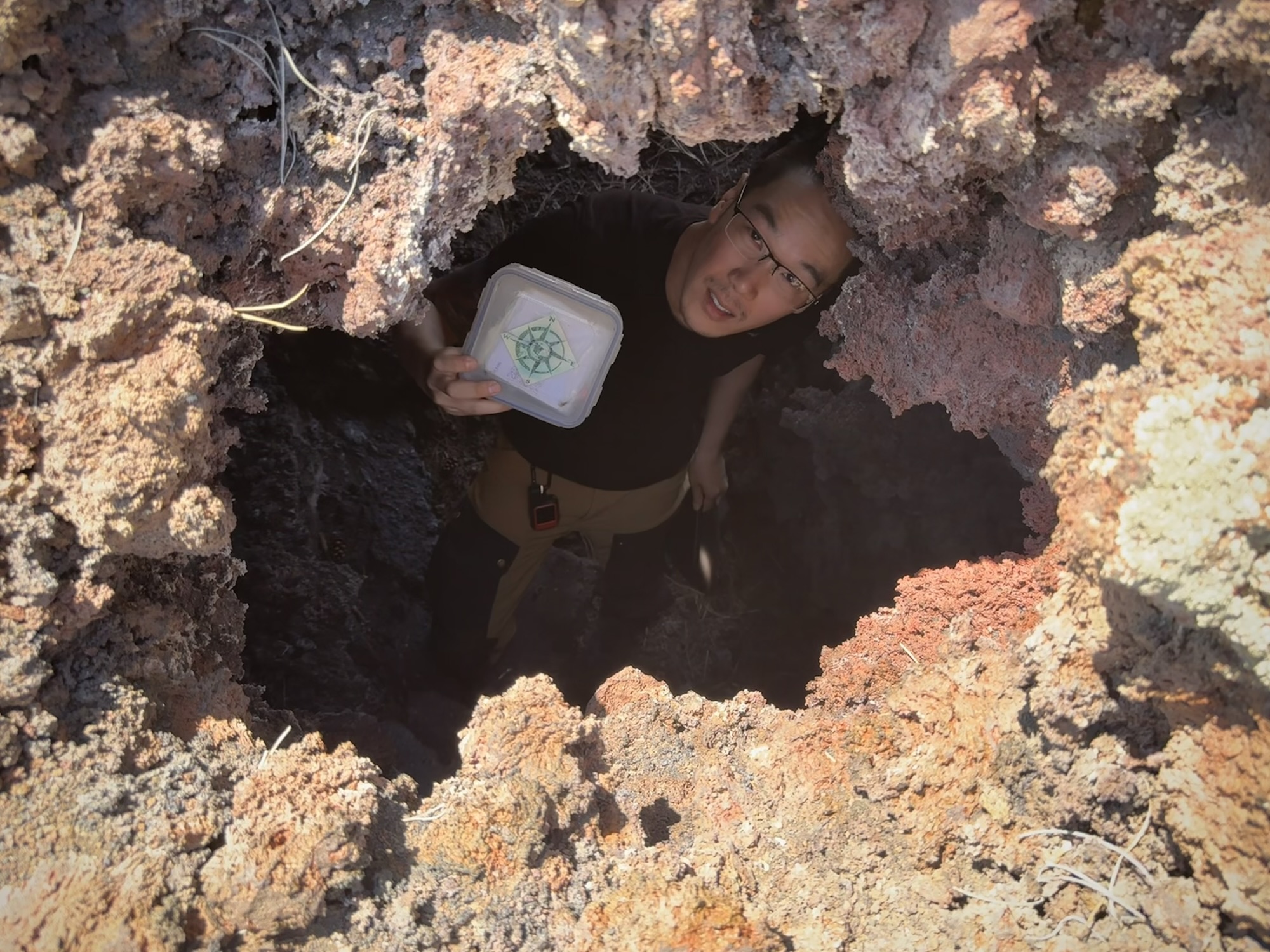
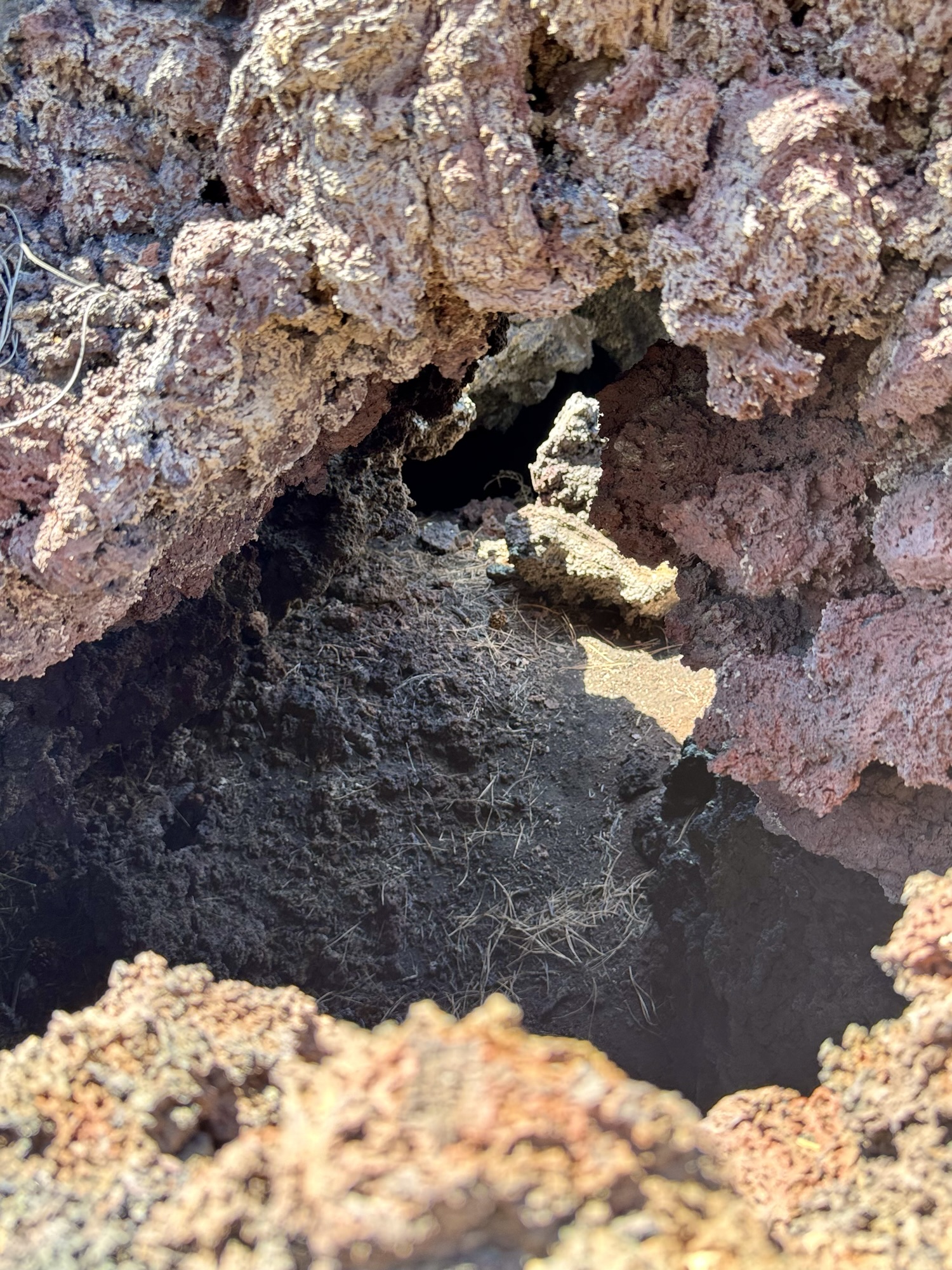
How awesome is that?
We learned so much about fumaroles and other geothermal features while we were in Yellowstone and in Lassen, so it was super satisfying to connect the dots while we were here.
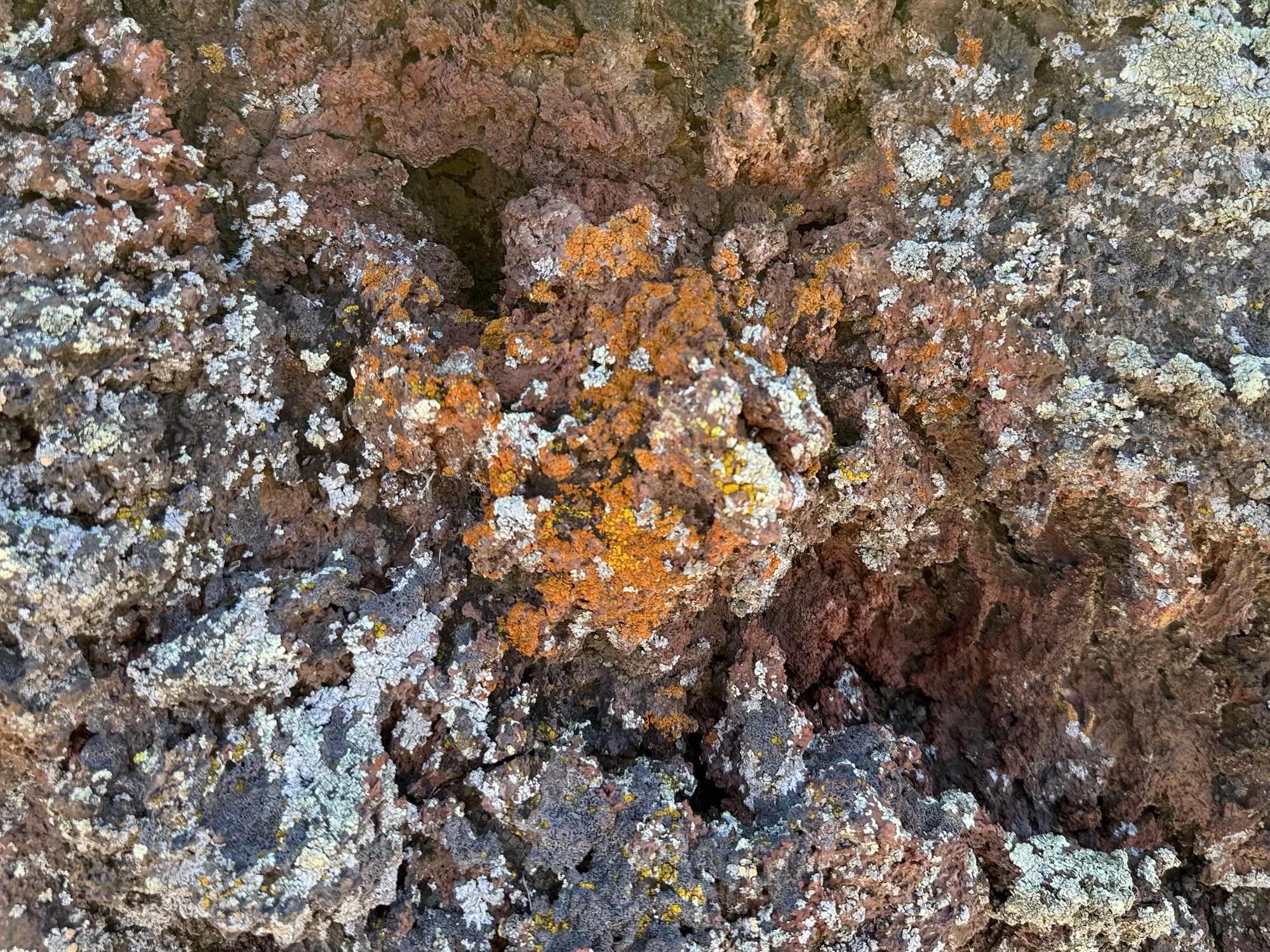
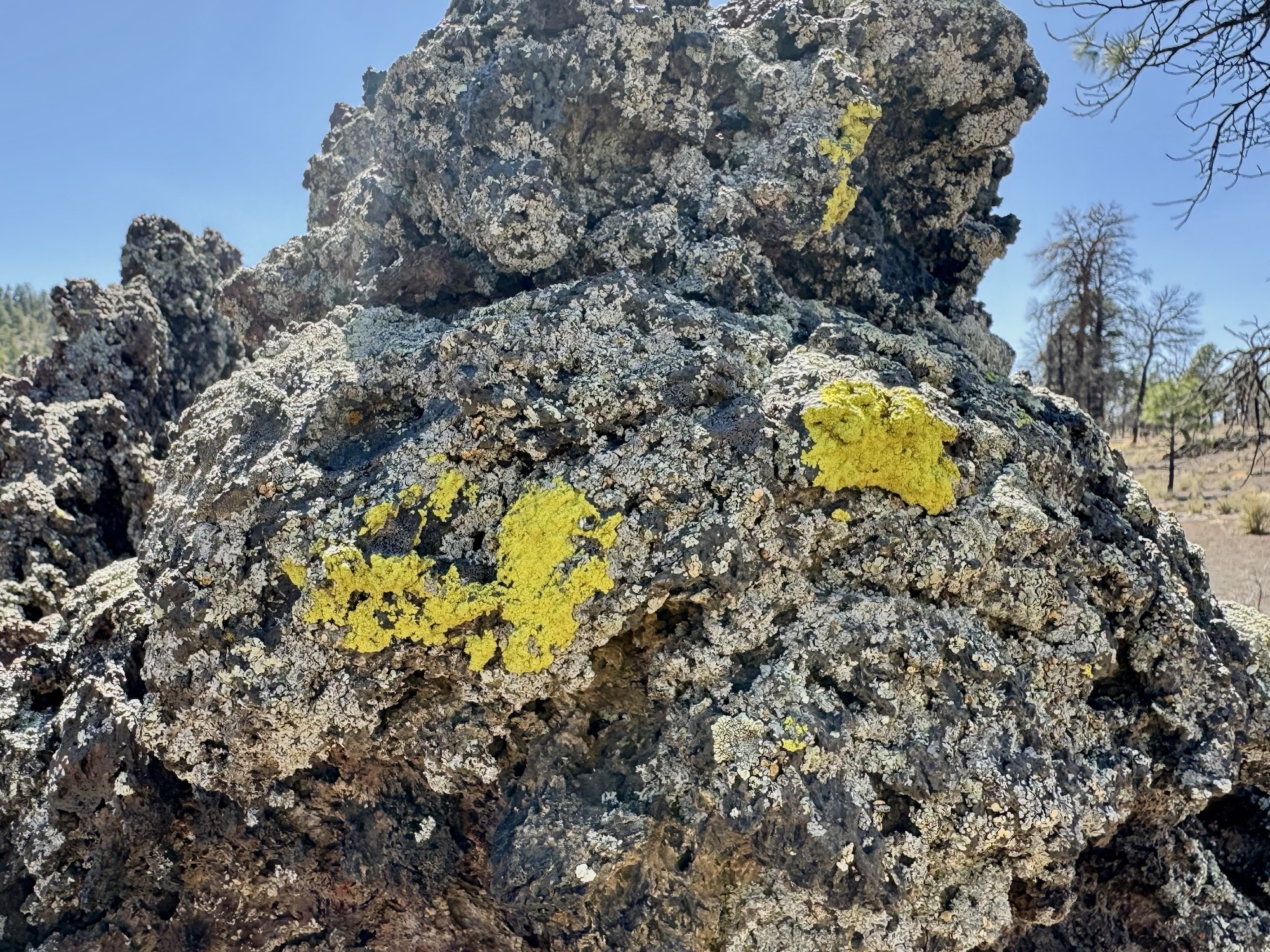
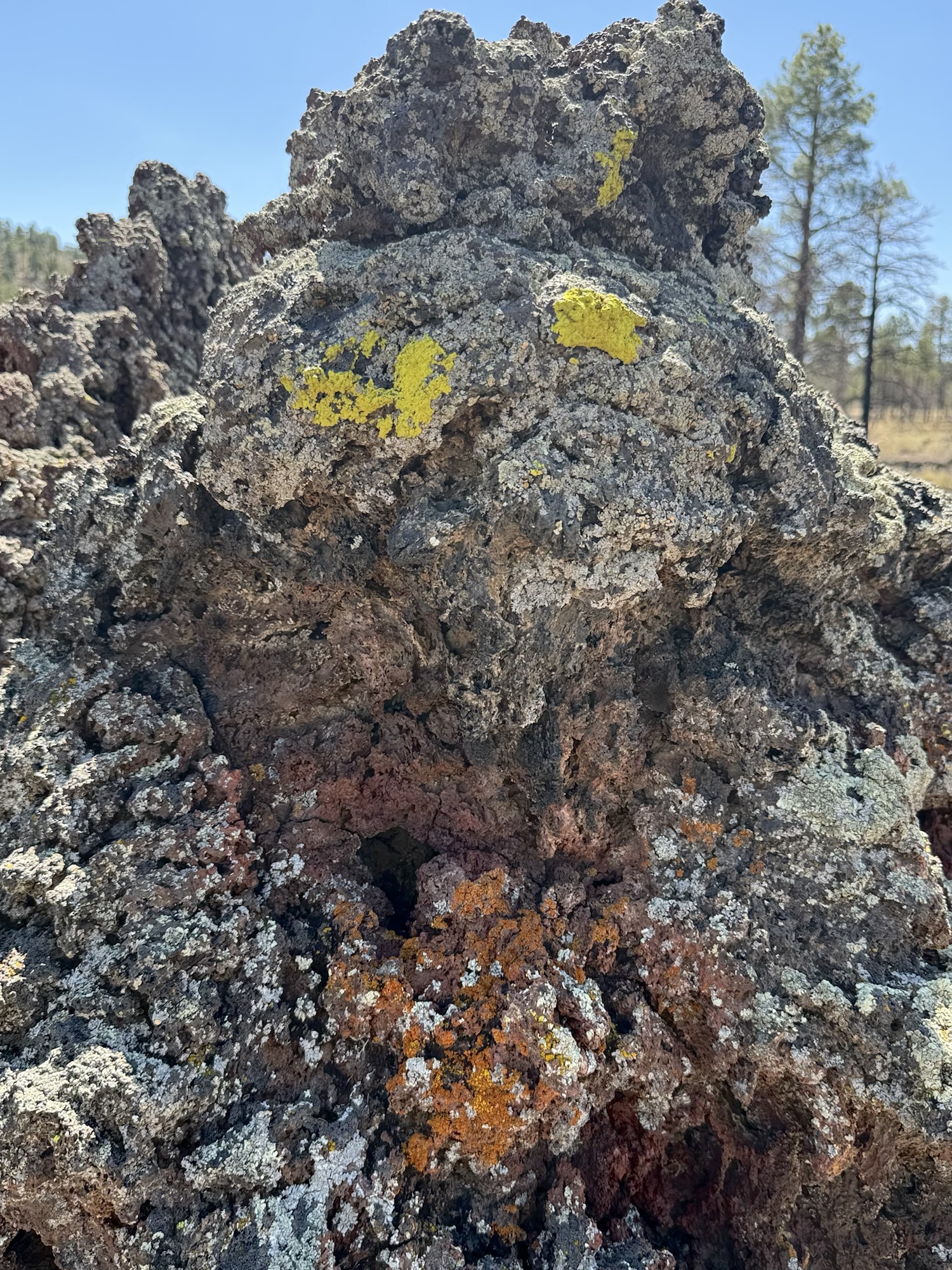

It was so cool to think about this being active. It’s all hardened, sharp, lava rock now – with spots of neon colored moss? mold? lichen? These were the same growths we saw alllll over Hot Creek Geologic Site near Mammoth Lakes, CA. Like I said, connecting the dots. 🙂
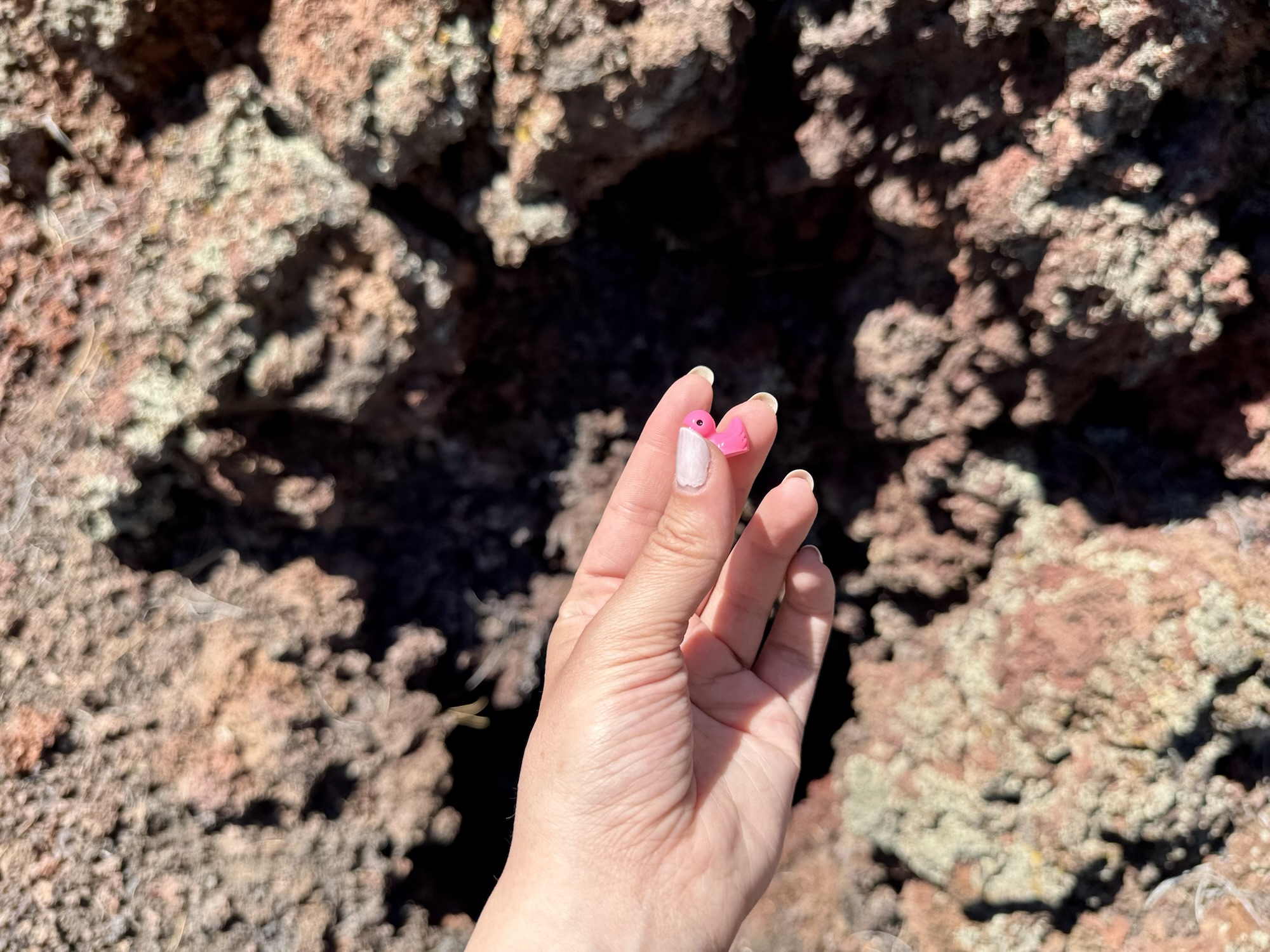
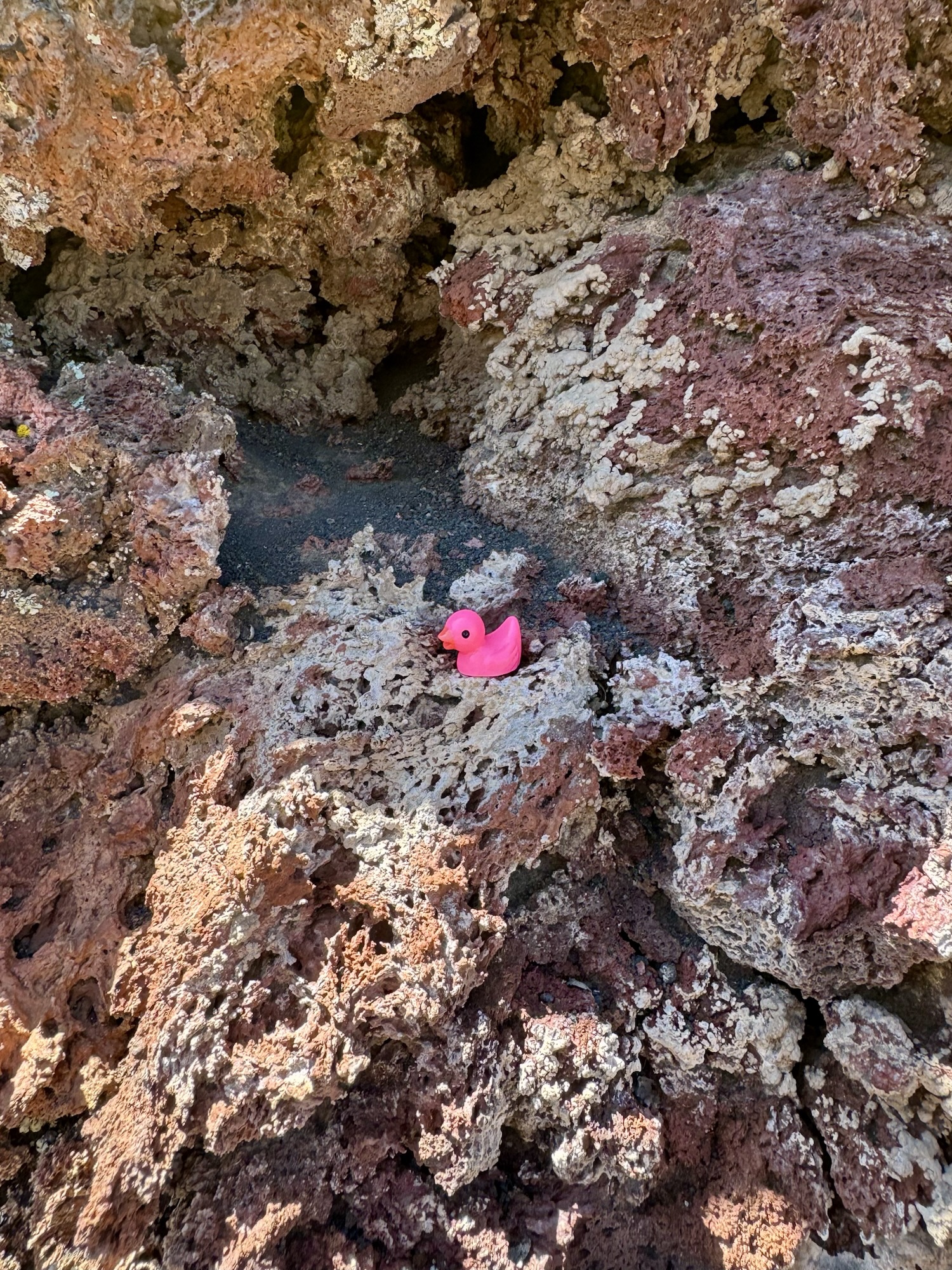
Had a little photoshoot with the tiny duck we scooped from the geocache. Lil cutie.

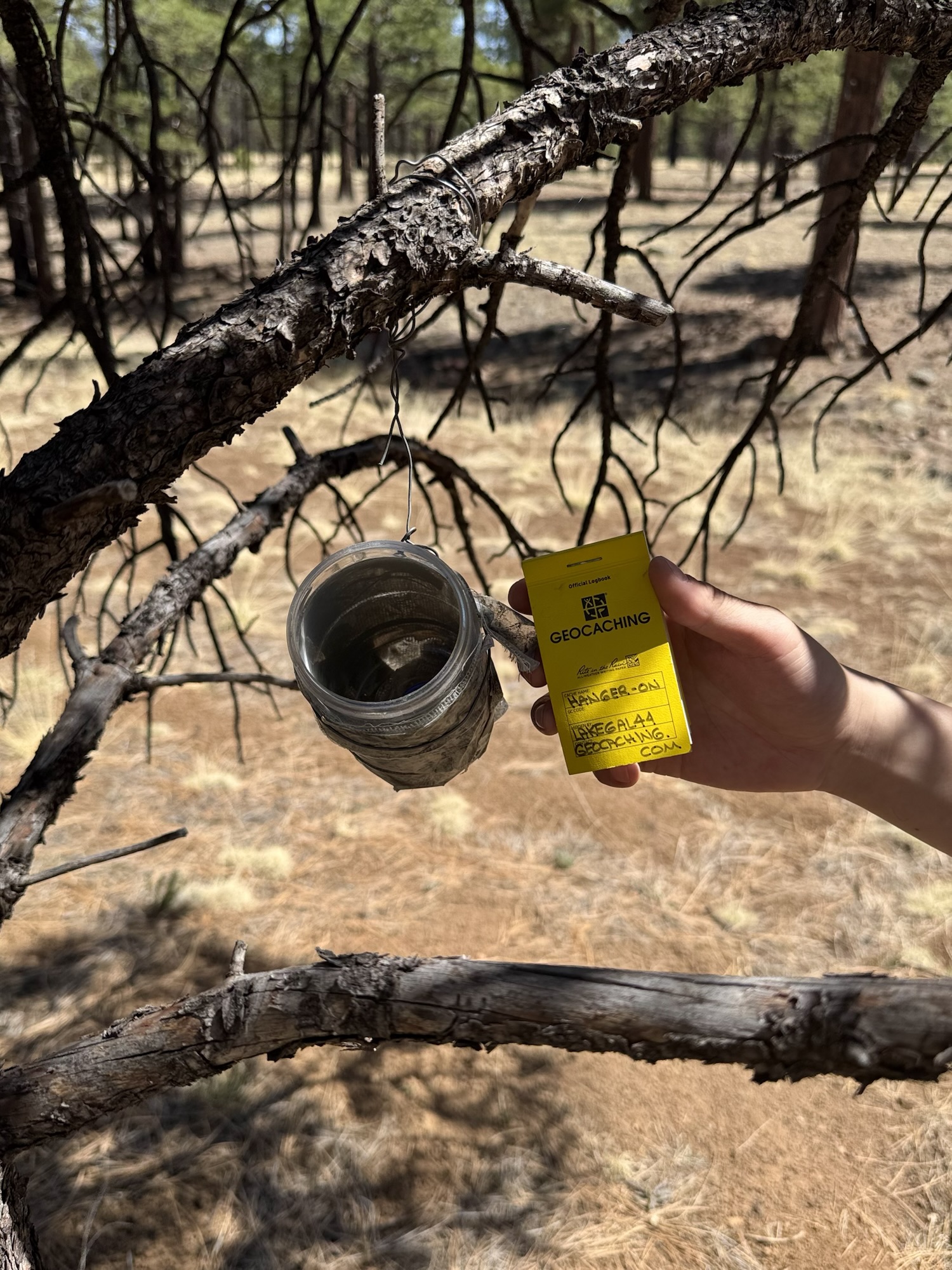
On our way out of the area, we stopped at the entrance in search of two more geocaches – one on each side of the road somewhere in the woods. The first we found hanging on a tree. The second, on the other side, ultimately alluded us… but we did find this awesome pile of super old trash.
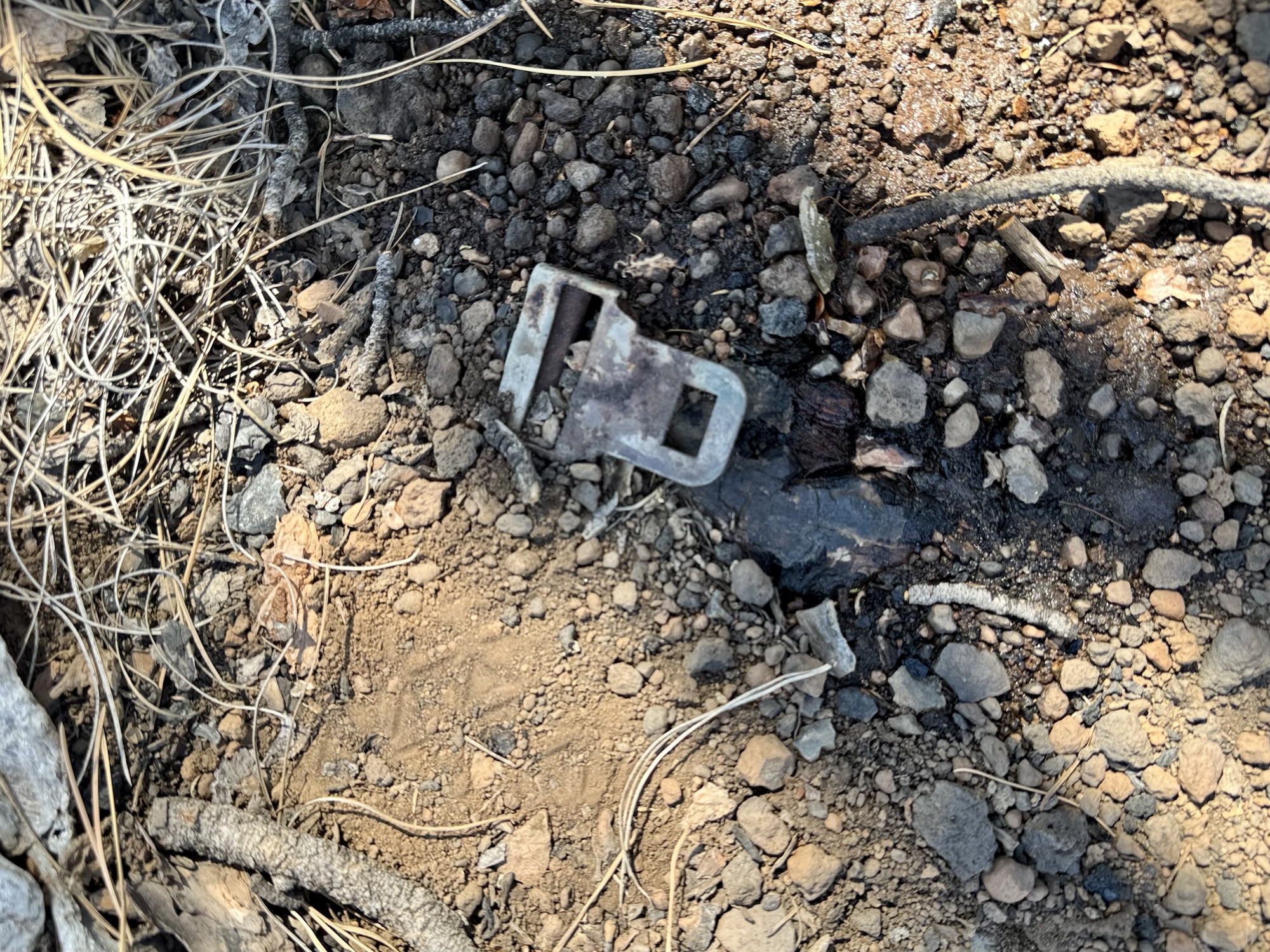

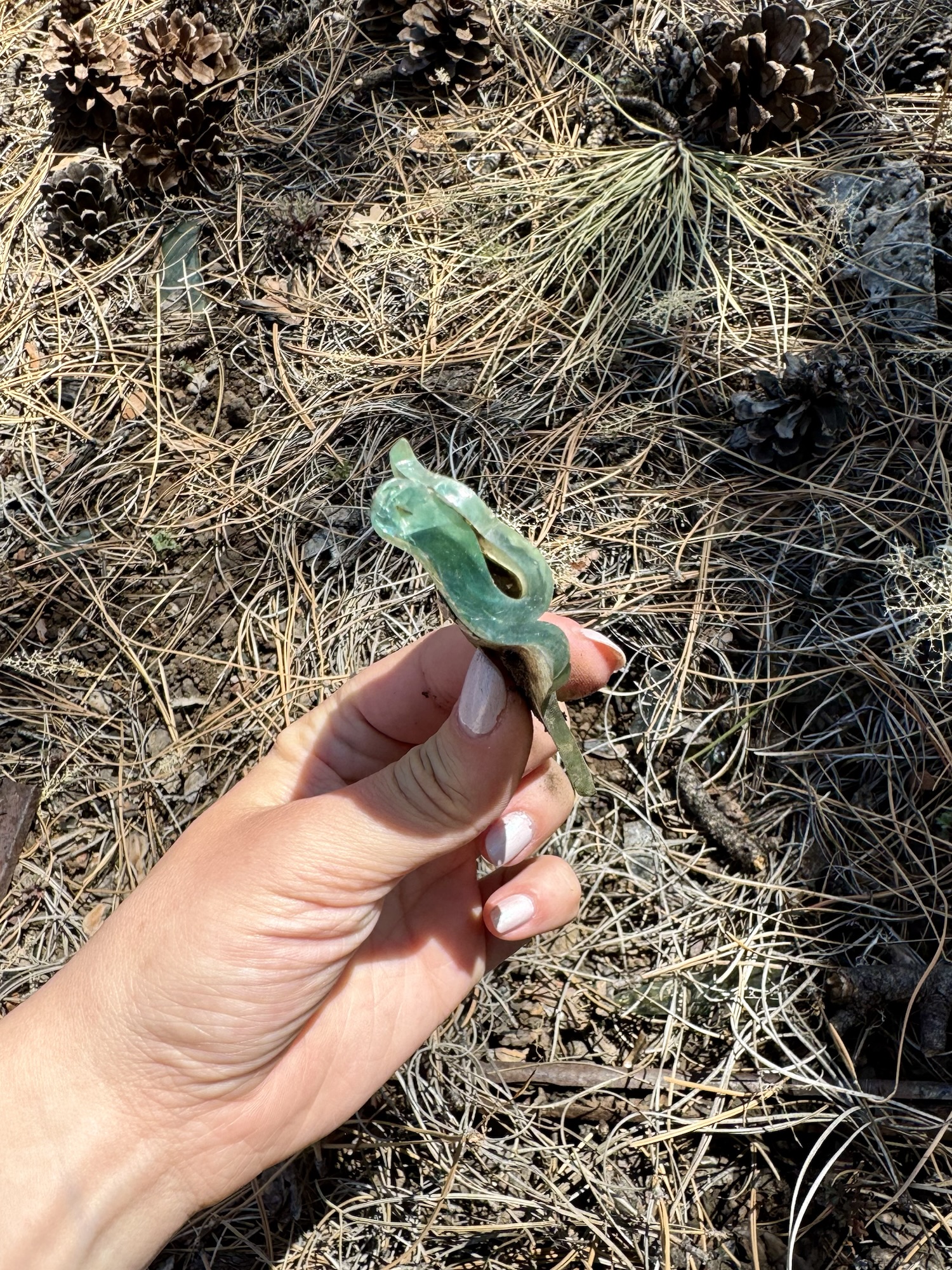
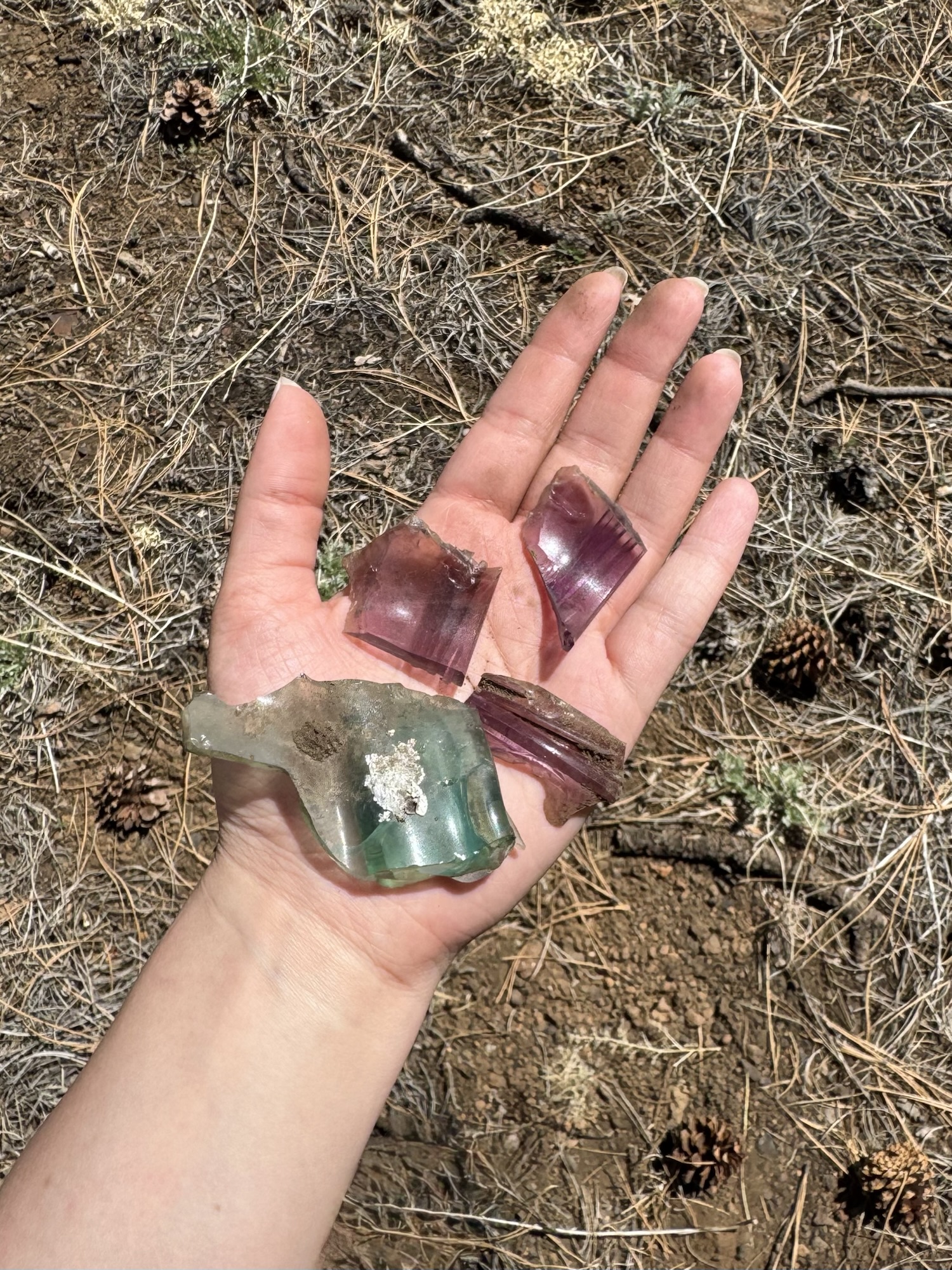

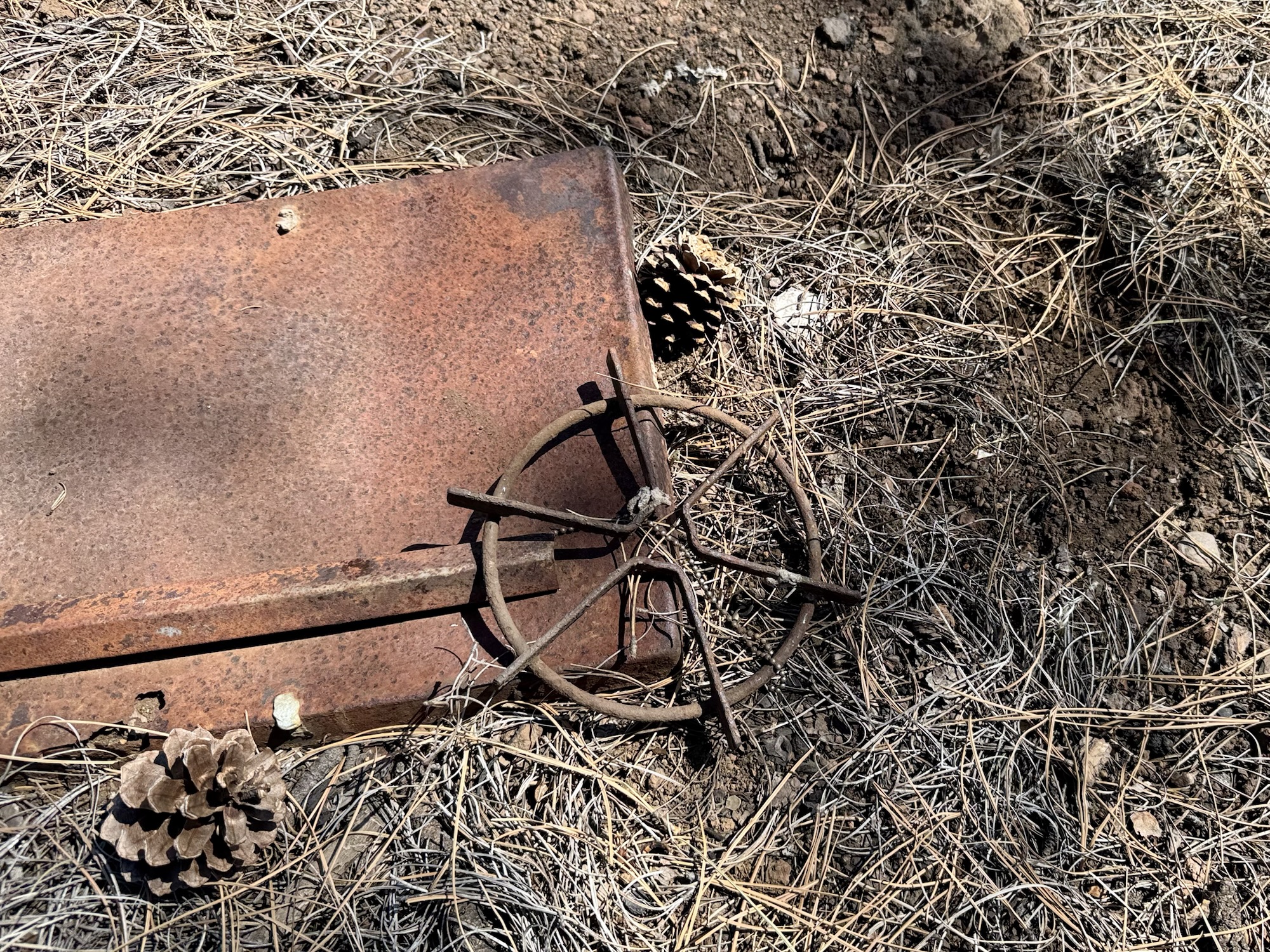
You know we love a good ol’ junk pile, especially as collectors of antique glass and other cool old stuff ourselves. The purple is magnesium glass and it becomes more purple the longer it’s exposed to the Sun’s UV rays.
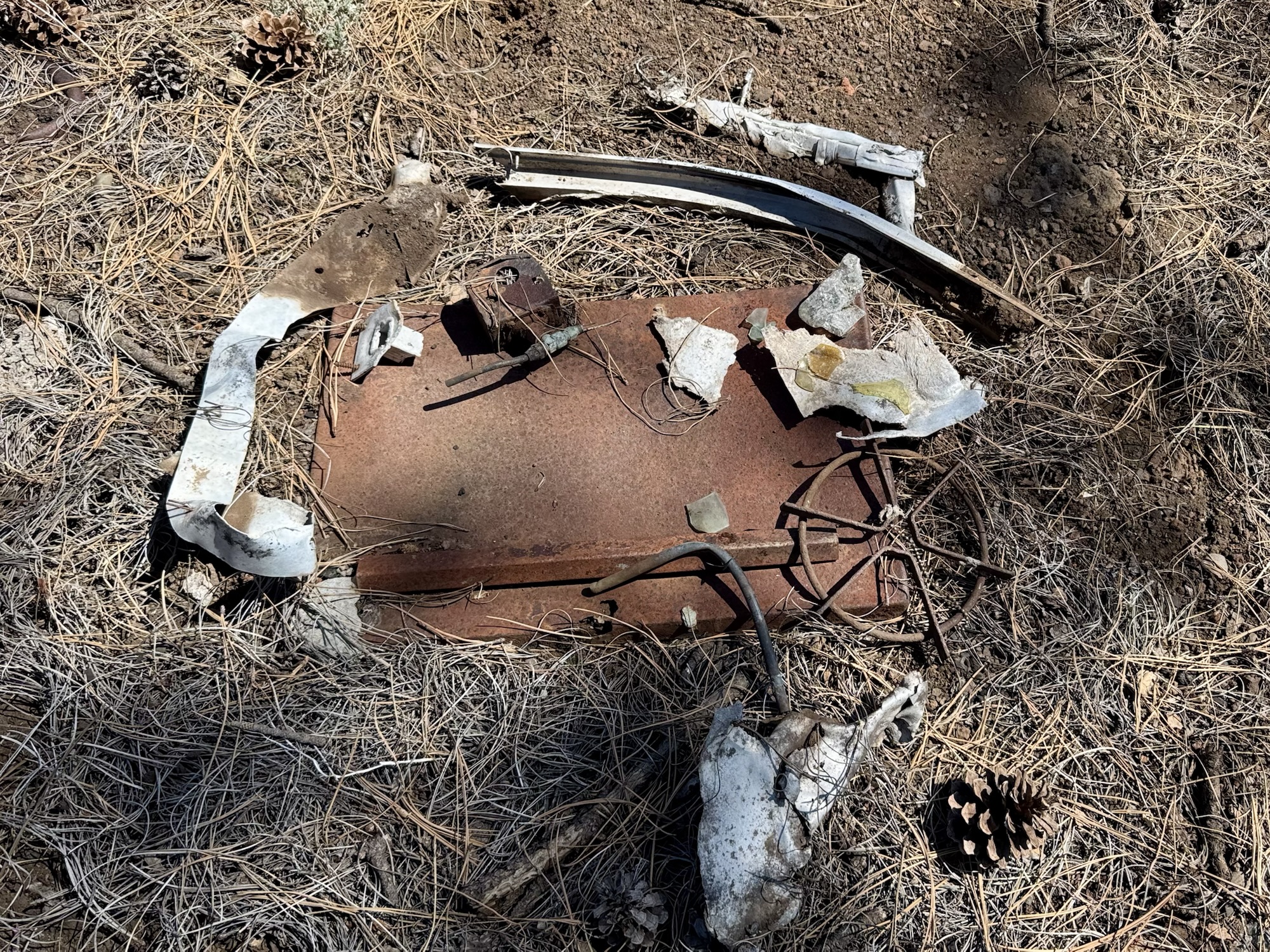

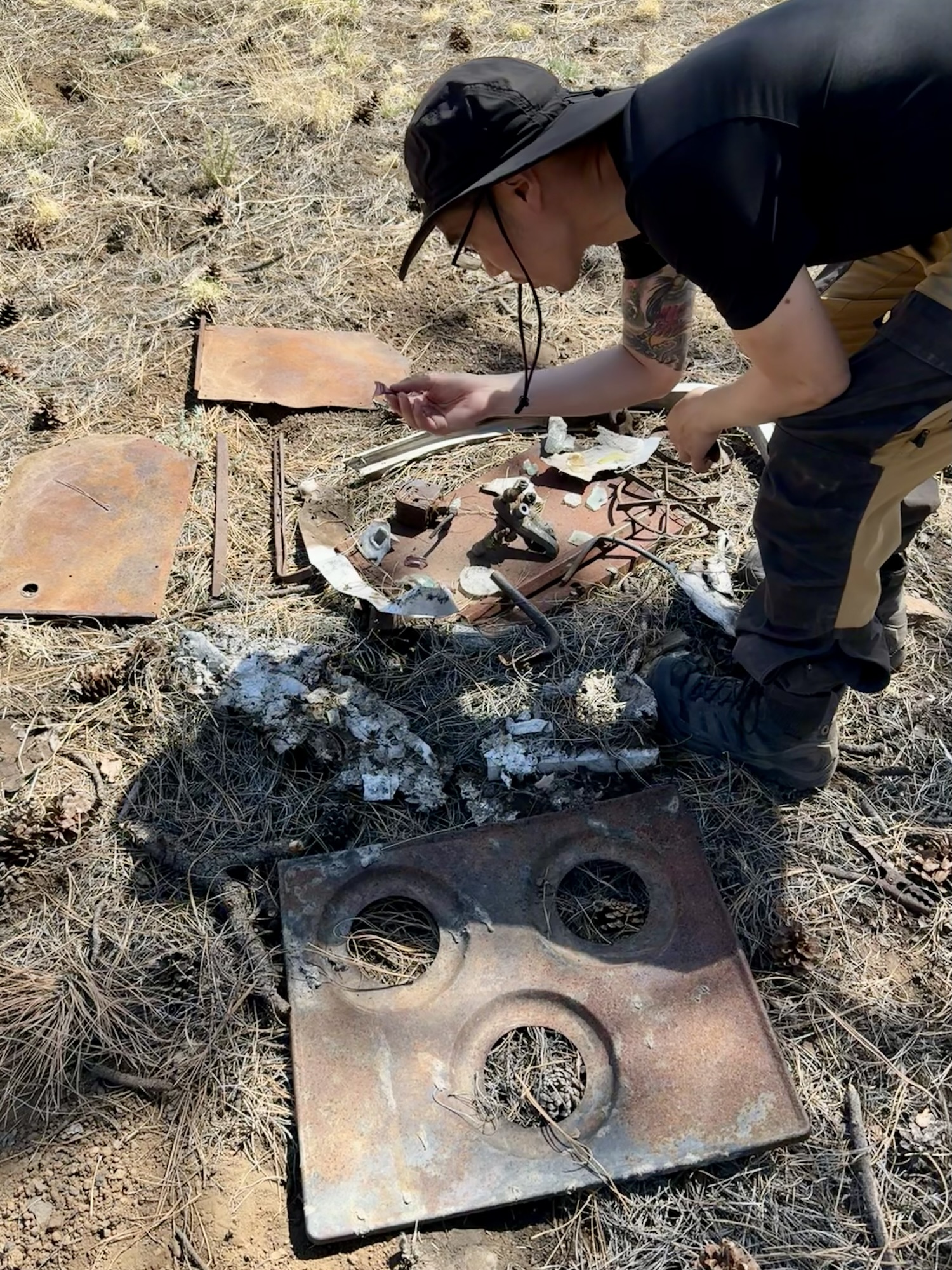
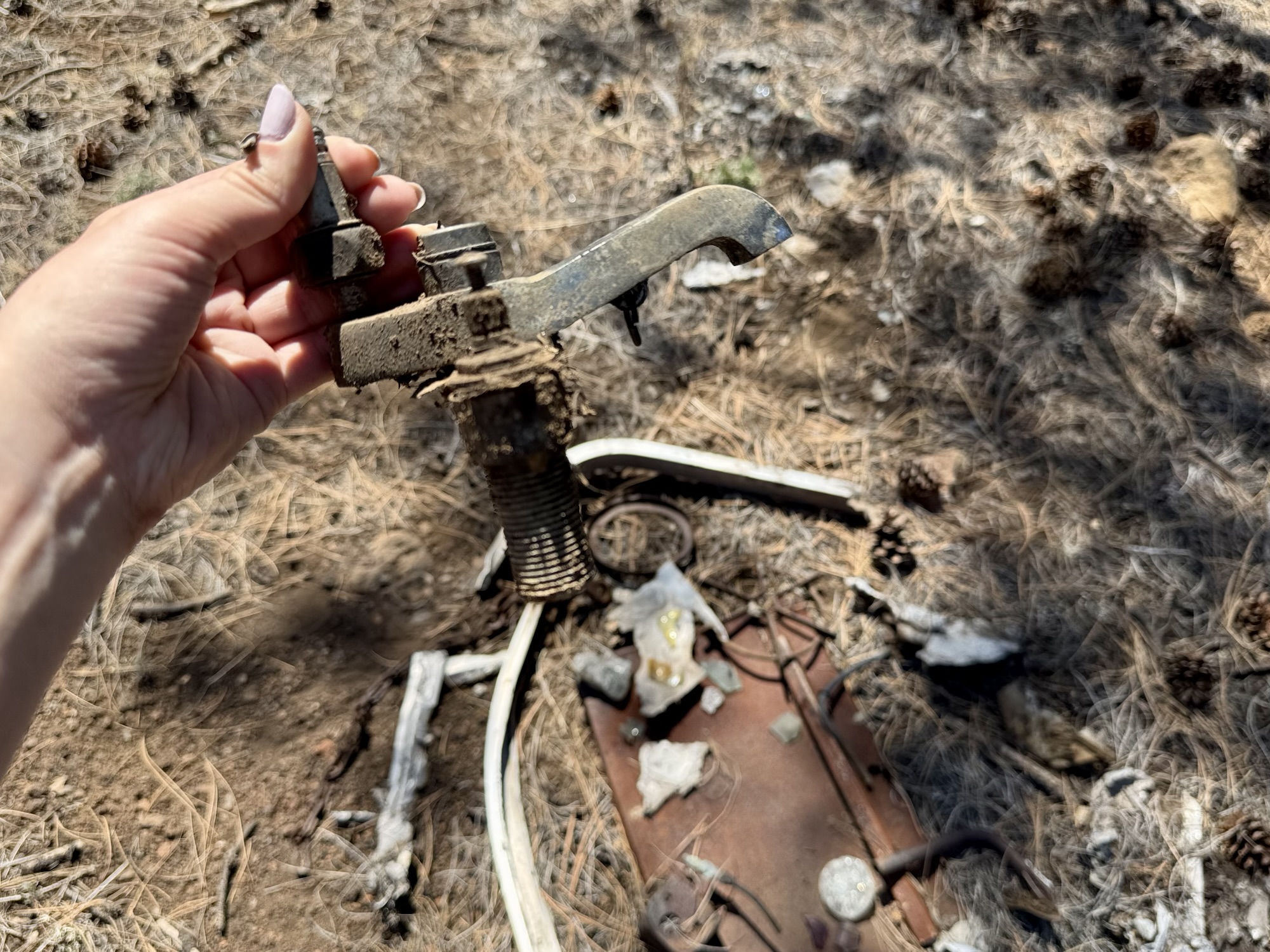
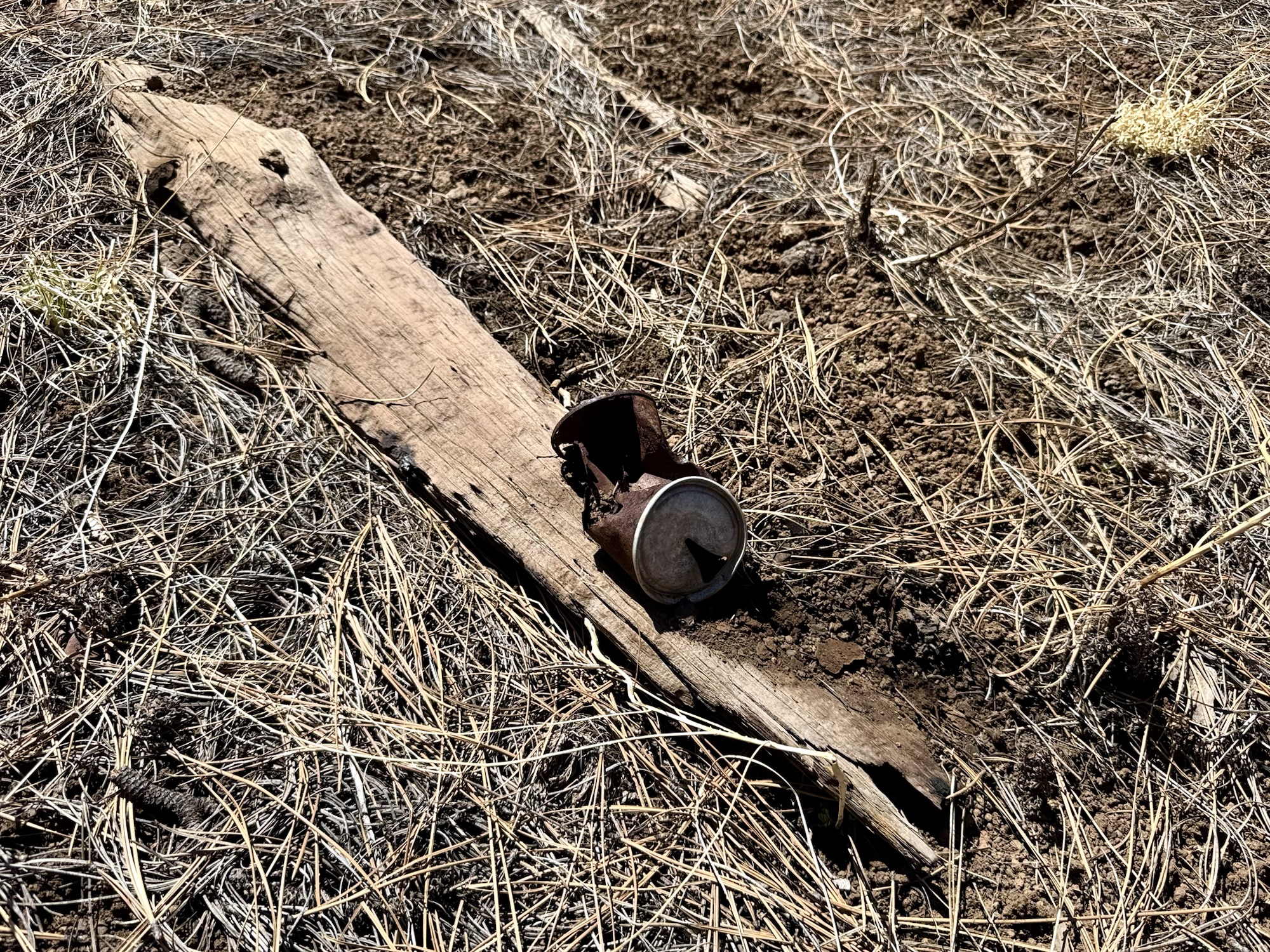
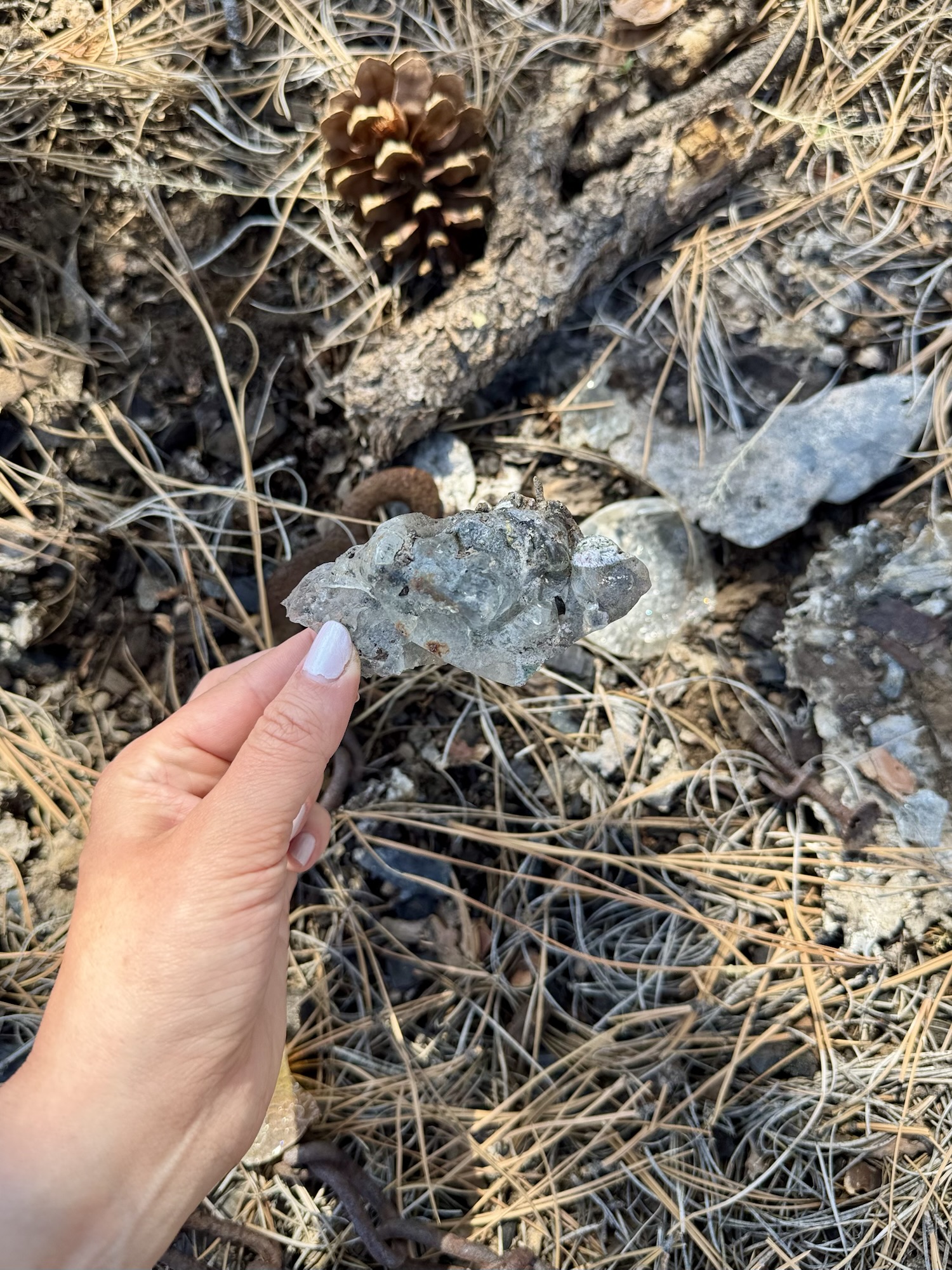
So hey, if you’re ever heading in or out of Sunset Crater Volcano NM and you wander into the woods for a while and come across this treasure pile I left there… just know that’s me saying hi. 😉
We headed back to the car and on the way to the next amazing indigenous metropolis: Tuzigoot National Monument.

Learn more about Sunset Crater Volcano via NPS:
https://www.nps.gov/sucr/index.htm
Sunset Crater Volcano via Wikipedia:
https://en.wikipedia.org/wiki/Sunset_Crater


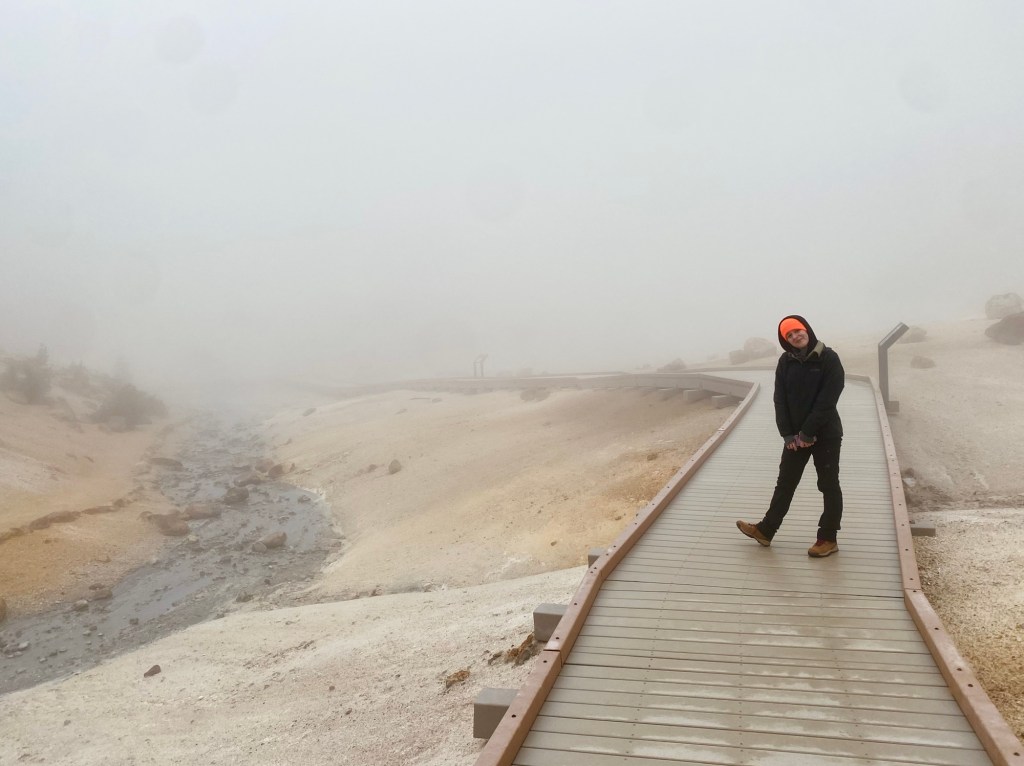
 Caitlyn is outside.
Leave a comment